Salmon Salad Recipe: Easy, Healthy & Delicious in 15 Minutes
Learn how to make a healthy, flaky salmon salad in just 15 minutes with fresh herbs and creamy dressing. Get the recipe today for easy prep!
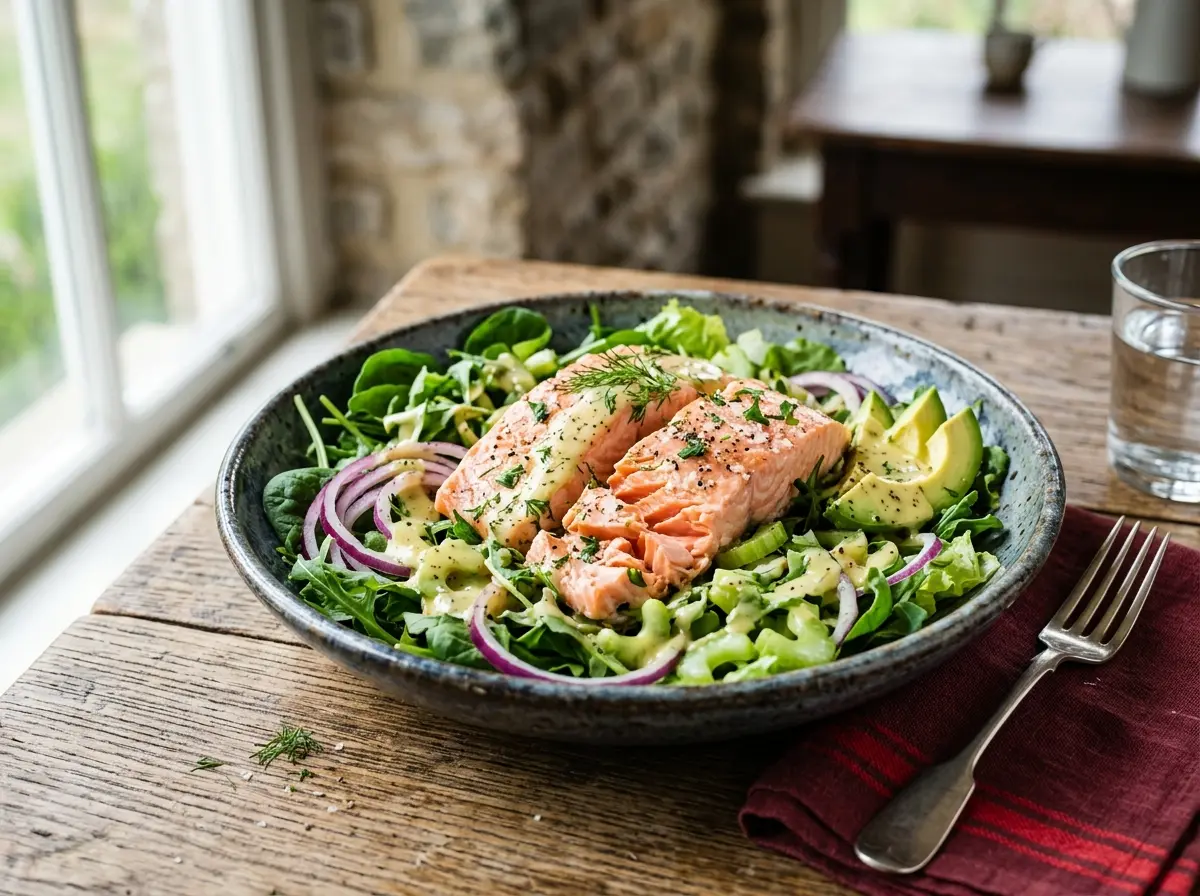
This salmon salad combines tender, flaky fish with crisp vegetables and a light dressing for a nutritious meal that’s ready in just 15 minutes. The balance of protein, healthy fats, and fresh flavors makes it perfect for lunch, dinner, or meal prep. Whether you’re using leftover cooked salmon or starting from scratch, this versatile dish delivers restaurant-quality results at home.
The beauty of a well-made salmon salad lies in its simplicity and nutritional density. Each bite offers omega-3 fatty acids, lean protein, and vibrant vegetables that support heart health and sustained energy. The combination of textures—from the tender salmon to the crisp vegetables—creates a satisfying meal that feels both indulgent and wholesome.
Introduction
The popularity of salmon salad recipes has surged as more people discover this protein-packed dish that combines convenience with exceptional nutrition. Unlike heavy, mayo-laden salads, this healthy salmon salad focuses on fresh ingredients and lighter dressings that complement rather than mask the fish’s natural flavor. The versatility of this dish makes it suitable for everything from quick weekday lunches to elegant dinner parties.
Why Salmon Salad is a Healthy Choice
Salmon provides one of the richest sources of omega-3 fatty acids available in common protein sources. These essential fats support brain function, reduce inflammation, and promote cardiovascular health. A single serving of salmon salad delivers approximately 25-30 grams of high-quality protein, making it an excellent choice for muscle maintenance and satiety.
The additional vegetables in this easy salmon salad contribute fiber, vitamins, and antioxidants that work synergistically with the fish’s nutrients. This combination creates a meal that supports stable blood sugar levels and provides sustained energy throughout the day.
Quick Overview of Recipe Benefits
This recipe offers multiple advantages for busy home cooks. The preparation time remains under 15 minutes from start to finish, making it ideal for meal prep or last-minute meals. The dish keeps well in the refrigerator for up to three days, allowing for batch preparation.
Cost-effectiveness represents another major benefit, especially when using canned salmon as a base. The flexibility to customize ingredients based on seasonal availability or dietary preferences makes this a go-to recipe for year-round enjoyment.
Ingredients
The foundation of any exceptional salmon salad recipe lies in selecting quality ingredients that complement each other. The key is balancing rich, fatty salmon with crisp vegetables and acidic elements that brighten the overall flavor profile. Understanding how each component contributes to the final dish helps create consistently delicious results.
Fresh vs. Canned Salmon Options
Fresh salmon offers superior texture and flavor when properly cooked, but canned salmon provides convenience and consistent results. Wild-caught canned salmon typically contains higher omega-3 levels than farmed varieties. When choosing canned options, look for products packed in water rather than oil to control the final dish’s fat content.
Fresh salmon fillets should be cooked to an internal temperature of 145°F (63°C) for optimal flakiness. Skin-on fillets often provide better moisture retention during cooking. The skin can be easily removed after cooking if desired.
Leftover grilled salmon works exceptionally well in this application. The smoky flavors from grilling add complexity that pairs beautifully with fresh vegetables and light dressings.
Essential Herbs and Vegetables
Fresh dill represents the classic herb pairing with salmon, providing a bright, slightly tangy flavor that enhances the fish without overwhelming it. Parsley adds freshness and color, while chives contribute a mild onion flavor that complements both the salmon and other vegetables.
Celery provides crucial crunch and helps absorb excess moisture from other ingredients. Red onion adds sharpness when used sparingly, while cucumber contributes cooling freshness that balances richer elements.
Consider seasonal variations like cherry tomatoes in summer or diced bell peppers for added sweetness and crunch. These additions can transform a basic salmon salad into a more substantial, colorful meal.
Healthy Dressing Alternatives
Traditional mayonnaise-based dressings can overpower salmon’s delicate flavor and add unnecessary calories. Greek yogurt mixed with lemon juice creates a tangy, protein-rich alternative that maintains creaminess while reducing fat content. This substitution adds probiotics and extra protein to the final dish.
Olive oil-based vinaigrettes work exceptionally well with salmon salad, particularly when enhanced with Dijon mustard for emulsification and flavor depth. The acidity from vinegar or citrus juice helps brighten the overall taste profile.
For those following specific dietary patterns, avocado-based dressings provide healthy fats while maintaining a creamy texture. Mashed avocado combined with lime juice and seasonings creates a nutrient-dense binding agent.
Step-by-Step Instructions
Proper technique ensures your chopped salmon salad achieves the perfect balance of flavors and textures. The key lies in handling each component appropriately and combining them in the correct sequence. Temperature control and timing play crucial roles in achieving restaurant-quality results at home.
Cooking Techniques for Flaky Salmon
Pan-searing salmon fillets over medium-high heat creates an excellent base for salad preparation. Heat the pan until a drop of water sizzles immediately upon contact. Pat salmon fillets completely dry and season with salt and pepper before cooking.
Place the salmon skin-side up in the hot pan and avoid moving it for the first 4-5 minutes. This allows proper browning and prevents sticking. The fish will naturally release from the pan when ready to flip.
Flip once and cook for an additional 3-4 minutes, depending on thickness. The internal temperature should reach 145°F (63°C) for food safety while maintaining moisture. Allow the cooked salmon to cool completely before flaking to prevent the salad from becoming warm and wilted.
Preparing the Salad Base
Dice vegetables into uniform pieces approximately ¼ inch in size for consistent texture and appearance. This size allows each bite to contain multiple components while maintaining structural integrity. Pat vegetables dry after washing to prevent excess moisture in the final salad.
Salt the diced vegetables lightly and allow them to drain in a colander for 10-15 minutes if time permits. This technique, called purging, removes excess water that could dilute the dressing and make the salad soggy.
Prepare herbs by chopping them just before assembly to maintain maximum flavor and prevent oxidation. Bruised or blackened herbs will negatively impact both taste and visual appeal.
Combining and Dressing the Salad
Begin by flaking the cooled salmon into bite-sized pieces using a fork or your hands. Aim for chunks approximately ½ to ¾ inch in size to maintain texture while ensuring easy eating. Remove any remaining skin or bones during this process.
Add the prepared vegetables to the flaked salmon and toss gently to distribute evenly. This preliminary mixing helps prevent the dressing from pooling at the bottom of the bowl.
Apply the dressing gradually, starting with half the planned amount and tossing thoroughly before adding more. This approach prevents over-dressing and allows you to adjust the consistency to your preference.
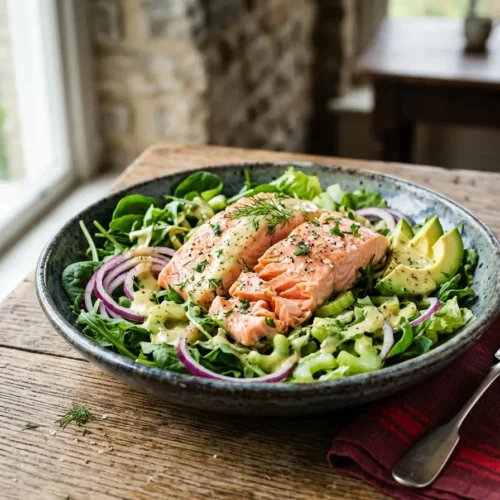
Fresh Herb Salmon Salad
Equipment
- Large skillet
- Digital Kitchen Scale
- Large mixing bowl
- Fine mesh strainer
- Sharp chef's knife
- Cutting board
- Fork for Flaking
- Citrus Juicer
- Measuring cups and spoons
Ingredients
- 1.5 pounds Fresh Salmon Fillets skin-on, about 680g
- 2 tablespoons Extra Virgin Olive Oil divided
- 1 teaspoon Sea Salt fine grain
- 1/2 teaspoon Black Pepper freshly ground
- 1 cup Cooked Quinoa cooled, about 185g
- 4 cups Mixed Greens baby spinach and arugula, about 120g
- 1 large English Cucumber diced, about 300g
- 2 medium Roma Tomatoes diced, seeds removed
- 1/4 cup Red Onion finely diced, about 40g
- 1/4 cup Fresh Dill chopped
- 2 tablespoons Fresh Chives chopped
- 1 large Ripe Avocado about 200g
- 3 tablespoons Fresh Lemon Juice from 1 large lemon
- 2 tablespoons Extra Virgin Olive Oil
- 1 tablespoon Dijon Mustard whole grain preferred
- 1 clove Garlic minced
- 1/2 teaspoon Sea Salt or to taste
Instructions
- Pat salmon fillets completely dry with paper towels. Season both sides evenly with salt and pepper, allowing seasoning to rest for 5 minutes at room temperature.
- Heat 1 tablespoon olive oil in a large skillet over medium-high heat. When oil shimmers, carefully place salmon skin-side up in the pan. Cook for 4-5 minutes without moving until golden crust forms.
- Flip salmon carefully and cook another 3-4 minutes for medium doneness (internal temperature 145°F/63°C). Remove from heat and let cool for 10 minutes.
- Remove skin and flake salmon into bite-sized chunks using a fork. Discard any bones and set flaked salmon aside to cool completely.
- In a large mixing bowl, mash the avocado until smooth and creamy using a fork or potato masher.
- Whisk in fresh lemon juice, olive oil, Dijon mustard, minced garlic, and salt until well combined and creamy. Taste and adjust seasoning as needed.
- Add cooled quinoa to the avocado dressing and toss gently to coat evenly.
- Fold in mixed greens, diced cucumber, tomatoes, red onion, fresh dill, and chives until well distributed.
- Gently fold in the flaked salmon, being careful not to break it up too much. Toss lightly to combine all ingredients.
- Taste and adjust seasoning with additional lemon juice, salt, or pepper as desired. Serve immediately for best texture and flavor.
Notes
For perfectly cooked salmon, use a meat thermometer to check internal temperature reaches 145°F (63°C). The fish should flake easily and appear opaque throughout. STORAGE:
Store assembled salad in refrigerator for up to 2 days in an airtight container. Add dressing just before serving to prevent wilting. Cooked salmon can be prepared up to 3 days ahead. SCALING:
For 2 servings, halve all ingredients. For 6-8 servings, multiply by 1.5-2. Quinoa can be batch-cooked and stored in refrigerator for up to 5 days. TROUBLESHOoting:
If avocado dressing seems too thick, thin with 1-2 tablespoons warm water. If salmon breaks apart too much during mixing, fold it in last and handle very gently.
Nutrition Highlights (Per Serving – Approximate)
Understanding your food’s composition is key to balanced eating. Here is an approximate nutritional breakdown calculated for a standard serving based on wholesome preparation guidelines:
Culinary Selection Notes
- Adjusting sweetener densities or using refined-sugar alternatives will directly optimize the overall glycemic load without breaking structural balance.
- Focusing on high-quality whole fats maximizes trace micronutrient retention across low-temperature or baking environments.
Tips and Tricks
Mastering the nuances of quick salmon salad preparation involves understanding common pitfalls and how to avoid them. Professional techniques can elevate a simple dish into something extraordinary. These insider tips ensure consistent results every time you prepare this versatile meal.
How to Avoid Overcooking Salmon
Overcooking represents the most common mistake when preparing salmon for salad use. The fish continues cooking from residual heat even after removal from the heat source. Remove salmon from heat when it’s slightly underdone to achieve perfect doneness after resting.
Visual cues help determine proper doneness better than relying solely on cooking times. The flesh should appear opaque throughout but still retain a slight translucency in the very center. The surface should flake easily when tested with a fork, but the interior should remain moist.
Cold water baths can halt the cooking process immediately if you suspect overcooking. Submerge the cooked salmon briefly in ice water, then drain thoroughly before proceeding with the flaking process.
Texture Variations and Customizations
Different flaking techniques create varying textures in the final salad. Large, chunky pieces provide a more rustic appearance and allow the salmon’s flavor to dominate. Finely flaked salmon integrates more thoroughly with other ingredients, creating a more uniform taste profile.
Consider the intended serving method when choosing flaking size. Salmon salad sandwich fillings benefit from smaller, more uniform pieces that spread easily. Lettuce wrap applications work better with larger, more distinct salmon pieces.
Temperature serving preferences also affect preparation techniques. Room temperature salmon salad offers maximum flavor development, while chilled versions provide refreshing summer appeal.
Kid-Friendly and Family Variations
Children often prefer milder flavors and familiar textures when trying new foods. Reduce strong flavors like onions or herbs initially, gradually increasing them as palates adapt. Sweet vegetables like cherry tomatoes or bell peppers appeal more to younger taste preferences.
Presentation modifications can increase acceptance among reluctant eaters. Serve the salmon salad in familiar formats like sandwiches or wraps rather than as a standalone salad. Individual portions in small bowls create ownership and control over the eating experience.
Involving children in age-appropriate preparation tasks builds enthusiasm for trying the finished product. Simple tasks like washing vegetables or mixing ingredients provide investment in the final outcome.
Storage and Meal Prep
Proper storage techniques extend the life of your flaky salmon salad while maintaining food safety and optimal taste. Understanding which components store well together and which should be kept separate ensures maximum freshness. Strategic meal prep approaches can provide several days’ worth of healthy meals with minimal daily preparation.
Best Practices for Refrigeration
Store completed salmon salad in airtight containers in the refrigerator at temperatures below 40°F (4°C). Glass containers with tight-fitting lids provide superior freshness retention compared to plastic alternatives. The salad maintains peak quality for 2-3 days when properly stored.
Place a paper towel in the bottom of storage containers to absorb excess moisture that naturally occurs during refrigeration. Replace the paper towel daily to maintain optimal texture and prevent sogginess.
Avoid storing salmon salad at room temperature for extended periods. The combination of fish and mayonnaise-based dressings creates favorable conditions for bacterial growth when kept in the temperature danger zone.
Make-Ahead Component Preparation
Prepare salmon up to two days in advance and store it separately from other components until assembly time. This approach prevents vegetables from releasing moisture into the fish, maintaining better texture in the final product.
Chop vegetables the night before and store them in separate containers with paper towels to absorb moisture. This preparation method saves significant time during busy mornings while ensuring crisp textures.
Prepare dressings in advance and store them separately from solid ingredients. This technique prevents premature softening of vegetables and allows for better flavor control during final assembly.
Serving Suggestions Throughout the Week
Transform leftover salmon salad into different meals throughout the week to prevent monotony. Day one might feature the salad over mixed greens, while day two could present it as a sandwich filling with fresh bread.
Consider portion control by dividing the prepared salad into individual serving containers immediately after preparation. This approach supports healthy eating goals and provides grab-and-go convenience for busy schedules.
Refresh stored salmon salad with additional fresh herbs or a squeeze of lemon juice before serving. These simple additions restore brightness and enhance flavors that may have mellowed during storage.
Variations and Add-Ons
The versatility of salmon salad recipes allows for countless creative adaptations based on dietary needs, cultural preferences, and seasonal ingredient availability. These variations maintain the core nutritional benefits while introducing exciting new flavor profiles. Understanding basic modification principles enables endless customization possibilities.
Low-Carb and Keto-Friendly Versions
Traditional salmon salad naturally aligns with low-carb eating patterns, making it an excellent choice for ketogenic diets. Replace any grain-based components with additional vegetables or nuts to maintain satiety while keeping carbohydrate counts minimal.
Avocado additions provide healthy fats that support ketosis while contributing creamy texture without dairy products. Half an avocado per serving significantly increases the fat content while adding beneficial fiber and potassium.
Consider serving the salad over cauliflower rice or zucchini noodles instead of traditional grains. These vegetable substitutes provide volume and satisfaction while maintaining the low-carb profile.
Salmon Salad Sandwich and Wrap Ideas
Transform your canned salmon salad into portable meals using various bread and wrap options. Whole grain breads provide fiber and complex carbohydrates that complement the protein-rich salmon. Sourdough offers tangy flavors that pair exceptionally well with fish-based salads.
Lettuce wraps create a fresh, low-carb alternative to traditional bread-based sandwiches. Large butter lettuce or iceberg lettuce leaves provide natural cups that hold the salad securely while adding crisp texture contrast.
Tortilla wraps offer convenience and portability for on-the-go meals. Choose whole wheat or spinach varieties for added nutritional value and interesting color presentations.
Mediterranean and International Twists
Mediterranean-inspired versions incorporate olives, capers, and sun-dried tomatoes for bold, briny flavors that complement salmon beautifully. Mediterranean seasonings like oregano and basil create authentic flavor profiles reminiscent of coastal cuisine.
Asian-influenced preparations might include sesame oil, rice vinegar, and fresh ginger for umami-rich results. Edamame beans and shredded carrots add color and texture while maintaining the healthy focus.
Scandinavian variations often feature dill prominently, along with pickled vegetables and mustard-based dressings. These preparations honor salmon’s cultural significance in Nordic cuisine while providing familiar comfort food appeal.
Nutritional Information
Understanding the nutritional profile of healthy salmon salad helps inform dietary decisions and meal planning strategies. This dish provides exceptional nutrient density relative to its calorie content, making it valuable for various health and fitness goals. The combination of complete proteins, healthy fats, and diverse micronutrients supports overall wellness.
Protein Content and Health Benefits
Each serving of salmon salad delivers approximately 25-30 grams of high-quality, complete protein containing all essential amino acids. This protein content supports muscle maintenance, immune function, and satiety regulation. The biological value of salmon protein ranks among the highest available in common food sources.
The omega-3 fatty acids in salmon provide anti-inflammatory benefits that support cardiovascular health and cognitive function. EPA and DHA, the active forms of omega-3s, are readily available in salmon without requiring conversion from plant-based sources.
Regular consumption of salmon-based meals has been associated with reduced risk of heart disease, improved brain function, and better mood regulation. These benefits extend beyond basic nutrition to long-term health optimization.
Calorie Counts and Ingredient Highlights
A typical serving of salmon salad contains approximately 250-300 calories, depending on preparation methods and ingredient choices. This calorie count provides substantial satiety while fitting comfortably into most dietary frameworks.
The majority of calories come from healthy fats and high-quality proteins, with minimal contribution from processed carbohydrates. This macronutrient distribution supports stable blood sugar levels and sustained energy release.
Vegetable components contribute essential vitamins, minerals, and antioxidants with minimal caloric impact. These micronutrients work synergistically with salmon’s nutrients to enhance overall absorption and utilization.
Conclusion
This easy salmon salad represents the perfect intersection of nutrition, convenience, and flavor that modern home cooks demand. The 15-minute preparation time makes it accessible for busy schedules, while the exceptional nutritional profile supports health-conscious eating goals. The versatility of this dish ensures it never becomes boring, with endless possibilities for customization and adaptation.
Recap of Key Points
Success with grilled salmon salad depends on proper salmon preparation, thoughtful ingredient selection, and appropriate storage techniques. The key lies in balancing flavors and textures while maintaining the nutritional integrity that makes this dish so valuable.
Temperature control during cooking and proper cooling techniques ensure food safety while preserving optimal texture and flavor. These fundamental techniques apply regardless of which variation or customization approach you choose.
Meal prep strategies extend the value of your preparation time, providing multiple meals from a single cooking session. This efficiency makes healthy eating more sustainable and less time-consuming over the long term.
Encouragement to Try Making Salmon Salad at Home
The approachable nature of this recipe makes it perfect for cooking beginners while offering enough sophistication to satisfy experienced home chefs. The forgiving nature of salmon salad preparation means small variations in technique rarely result in failure.
Start with the basic version and gradually experiment with different ingredients and techniques as your confidence grows. Each iteration teaches valuable lessons about flavor balance and ingredient interaction that apply to many other recipes.
The investment in learning this versatile dish pays dividends in improved nutrition, meal variety, and cooking confidence. Your family and friends will appreciate having a go-to recipe that consistently delivers delicious, healthy results with minimal effort required.