Moroccan Tea: The Art of Atay
From the souks of Marrakech to your kitchen — everything you need to brew the perfect glass of Moroccan mint tea.
There is something almost ceremonial about a glass of Moroccan tea. The moment the host lifts a tall, ornate teapot high above a row of delicate glasses and lets the amber stream fall in a long, theatrical arc, you know you are experiencing something far beyond a simple drink. Atay — as it is called in Darija (Moroccan Arabic) — is a cornerstone of Moroccan hospitality, a symbol of welcome, friendship, and shared time.
Whether you have tasted it on a rooftop terrace in Fez, in a Berber tent in the Sahara, or at a friend’s table, the flavour lingers: sweet, minty, slightly bitter from the gunpowder green tea, and wonderfully fragrant. The good news? You can recreate that exact experience at home. This guide covers every detail — history, ingredients, step-by-step brewing method, regional variations, and tips straight from Moroccan households.
The History and Culture of Moroccan Tea
Tea arrived in Morocco in the early 18th century, reportedly introduced by British merchants trading along the Atlantic coast. The Moroccans, already masters of hospitality, quickly embraced it and transformed the drink into something uniquely their own. Gunpowder green tea — named for its tightly rolled pellets — became the base, paired with fresh spearmint (nana) and generous helpings of sugar.
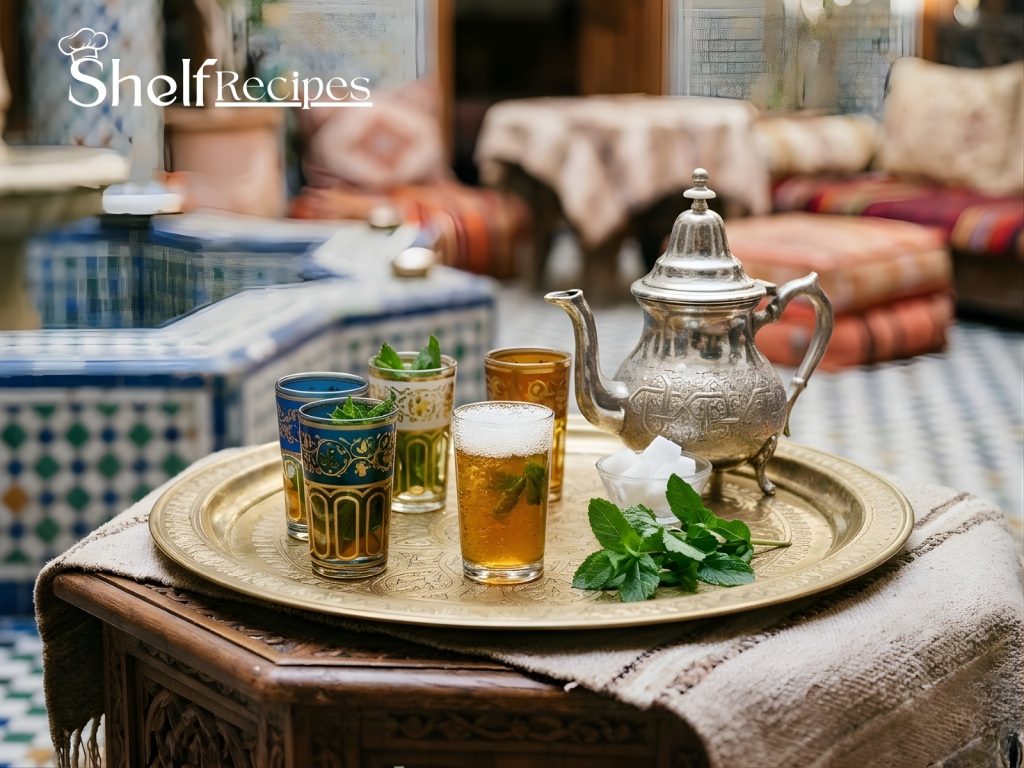
Traditional Moroccan silver teapot pouring mint tea into ornate glasses on a brass tray.
A classic Moroccan tea service: the braided teapot, hand-painted glasses, and sugar cone.
Today, Moroccan tea is deeply woven into the social fabric of the country. Refusing a glass is considered impolite; accepting it is an act of trust. The traditional saying goes: “The first glass is as gentle as life, the second is as strong as love, the third is as bitter as death” — a poetic reminder that tea is meant to be savoured through multiple rounds, each slightly different from the last.
Why Three Glasses? The Ritual Behind the Pour
The three-glass tradition is more than poetry — it reflects a real change in flavour profile. As the tea steeps longer and the mint leaves release more of their volatile oils, each pour becomes progressively stronger and more aromatic. The high-altitude pour (lifting the teapot 30–40 cm above the glasses) is not just showmanship: it aerates the liquid, cools it slightly, and creates the characteristic frothy head that signals a well-made atay.
This ritual also creates a meaningful pause in the day. In Moroccan homes and businesses alike, stopping for tea means stopping for conversation, reflection, and connection — values that align closely with Islamic principles of community (ummah) and generosity (karam).
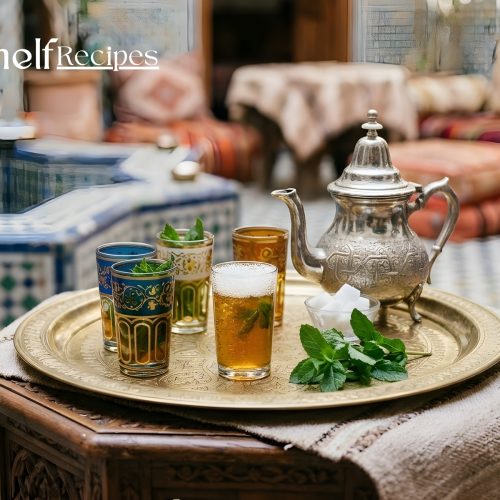
Moroccan Tea
Ingredients
- Gunpowder Green Tea Atay Akhdar: This is non-negotiable. The tightly rolled pellets of Chinese gunpowder green tea — widely known under brand names like “Temple of Heaven” — have a bold, slightly smoky flavour that holds its own against the sweet mint. Regular green tea bags will not give the same result.
- Fresh Spearmint Nana: Use fresh spearmint, not peppermint. Moroccans use Mentha spicata (spearmint), which has a sweeter, milder character. A generous handful per pot is standard — never a pinch.
- Sugar Traditional Moroccan tea is sweet — noticeably so by most Western standards. A cone of white sugar (qerfa) is the classic choice. You may adjust to taste, but do not skip it entirely: the sugar balances the tannins of the green tea.
- Water Use filtered or bottled water. The mineral content of tap water can affect flavour significantly.
- Optional Additions: Wormwood shiba / Artemisia absinthium is added in some regions for an extra bitter-herbal note. Rose petals, orange blossom water, or dried sage also appear in seasonal or regional variations.
Instructions
Making Moroccan tea is a practice in patience and intention. Follow these steps for a result that honours the tradition:
What You Will Need
- A traditional Moroccan teapot (or any small stainless-steel or silver-plated teapot)
- Moroccan tea glasses (thin, tall glasses with painted rims — but regular heatproof glasses work)
- A small strainer (optional)
- A kettle
- A stovetop or hot plate
The Method
Rinse the teapot with boiling water
- to warm it and remove any residue from previous use.
Add the gunpowder tea:
- Use approximately 1 heaped teaspoon (about 3–4 g) per 4–6 glasses. Place the dry pellets in the pot.
Wash the tea:
- Pour a small amount of boiling water (about 50 ml) over the tea leaves, swirl gently for 10–15 seconds, then pour this liquid away. This removes excess tannins and any bitterness from the first steep.
Add the mint:
- Pack a generous handful of fresh spearmint sprigs into the pot on top of the washed leaves. Do not be shy — Moroccan tea is a mint tea in every sense.
Add sugar:
- Break off or spoon in 3–5 teaspoons of sugar (adjust to preference).
Fill with boiling water:
- Pour about 500–600 ml of freshly boiled water over the mint and tea. Place the pot on very low heat or a warming plate for 3–4 minutes. Do not boil — you want a gentle infusion.
The taste test:
- Pour a single glass, taste it, and if needed, return it to the pot and adjust sugar or steep time.
The high pour:
- Lift the pot well above the glasses (30–40 cm) and pour in a thin, steady stream to aerate the tea and create a frothy top. Serve immediately.
Looking for More Ramadan Inspiration? Moroccan tea is a beloved staple during Ramadan — perfect for Iftar and Suhoor. Explore our full collection of Ramadan Recipes — from hearty soups to festive sweets, all halal and family-approved.
Nutrition Highlights (Per Serving – Approximate)
Moroccan tea is one of the lightest beverages you can enjoy — naturally low in calories and rich in beneficial plant compounds. Here’s a breakdown for one standard glass (~150 ml) brewed with the traditional recipe:
Why It’s a Smart Choice
- Virtually zero fat and zero protein — it’s a hydrating drink, not a meal replacement.
- Green tea’s EGCG polyphenols are linked to improved heart health and reduced inflammation.
- Spearmint provides Vitamin A and C in small amounts, plus digestive benefits.
- Naturally low in sodium — a heart-friendly alternative to sugary sodas.
- Reduce sugar to 1 tsp per pot to make it lighter without losing flavour.
- Gunpowder green tea (3g brewed): ~2 kcal, trace minerals
- Fresh spearmint (5g): ~1 kcal, Vitamin A & C
- Sugar (1 tsp / 4g per glass): ~16 kcal, 4g sugar
- Total ~20 kcal/glass with 1 tsp sugar — up to ~45 kcal with traditional sweetness
What to Serve With Moroccan Tea
Tea is rarely served alone in Morocco. Traditional accompaniments include:
- Chebakia — sesame and honey fried pastry, especially during Ramadan
- Briwat — almond-filled crispy pastry rolls
- Sellou (Sfouf) — a dense, nutty sweet made with toasted flour, almonds, and sesame
- Dates and figs — simple, natural sweetness that pairs beautifully with the mintiness
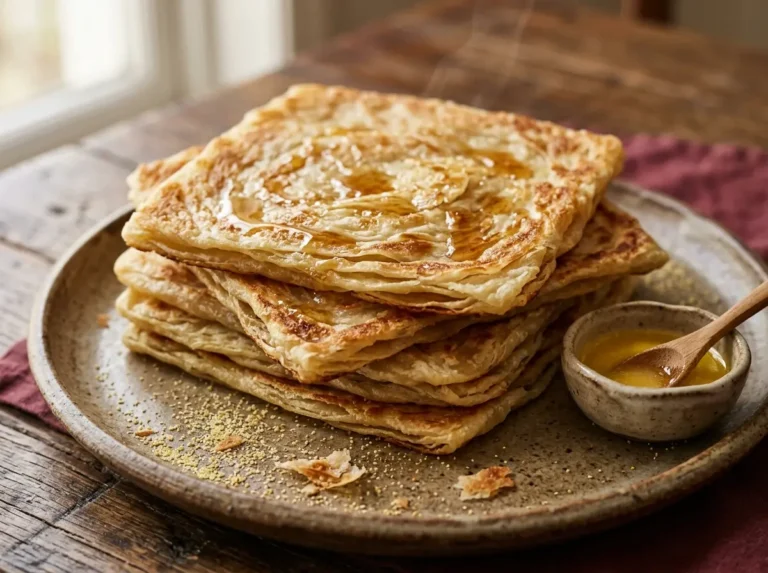
- Msemen (Moroccan flatbread) with butter and honey for a more filling teatime
For the perfect tea-time pairing, try our hearty Moroccan Harira Soup — a rich, spiced tomato and lentil soup that complements the lightness of mint tea beautifully.
Regional Variations Across Morocco
Morocco is a large and geographically diverse country, and tea customs vary from region to region:
- Northern Morocco (Tetouan, Tangier): Fresh spearmint is dominant, sometimes blended with a small amount of dried absinthe wormwood (shiba).
- The Sahara (Drâa, Tafilalet): Tea is brewed over an open flame in a small kettle; the three-glass tradition is strictly observed. Dried mint is sometimes used when fresh is unavailable.
- Amazigh (Berber) communities: Tea may be flavoured with wild thyme (zaâtar), rosemary, or desert sage, reflecting the aromatic plants of the Atlas Mountains.
- Marrakech and southern cities: Roses and orange blossom water are popular additions, giving the tea a floral, perfumed note.
Can You Make Moroccan Tea Without a Traditional Teapot?
Absolutely. While a slender Moroccan teapot with a long curved spout makes the high-altitude pour easier and more dramatic, any small teapot or even a French press will work for infusion. The key is the quality of your tea and mint — not the vessel.
Health Benefits of Moroccan Mint Tea
Beyond its taste and cultural significance, Moroccan tea carries genuine wellness benefits. According to research published on Healthline, green tea is rich in polyphenols and antioxidants that support cardiovascular health and cognitive function. Spearmint adds its own benefits — it has been studied for its digestive-soothing properties and natural antimicrobial compounds. Together, they make a drink that is as nourishing as it is delicious.
- Rich in antioxidants (EGCG from green tea)
- Aids digestion and reduces bloating (spearmint)
- Naturally hydrating
- Low in calories when consumed with moderate sugar
- May support oral health — mint has known antibacterial properties
Of course, the high sugar content in traditional preparations is worth moderating if you are mindful of sugar intake. Reducing to 1–2 teaspoons per pot still produces a beautifully flavoured tea while keeping it lighter.
Conclusion: More Than a Drink
Moroccan tea is not simply a beverage you make and consume. It is a ritual, a language, and a bridge between people. The act of preparing it — carefully washing the leaves, packing in the mint, measuring the sugar, and performing the long pour — is itself a form of respect for your guests and for a tradition that has endured for centuries.
Whether you are making it for a quiet moment alone or for a table full of family and friends, take your time. Brew it slowly. Pour it high. And if you share it, share it with the same warmth that has made Moroccan tea famous across the world.
Try this recipe this week and let the aroma of fresh mint and gunpowder green tea fill your kitchen. It may just become your new favourite ritual.
🍵 Have you tried making Moroccan tea at home? Do you prefer it with a touch of wormwood or extra sweet? Drop your experience in the comments below — we love hearing how different families brew their atay!