Cucumber Salad: 5 Quick Herb-Infused Secrets Guaranteed Delicious
Discover a quick, herb-infused cucumber salad with crisp texture and vibrant flavors. Perfect for easy, healthy meals. Get the recipe today.
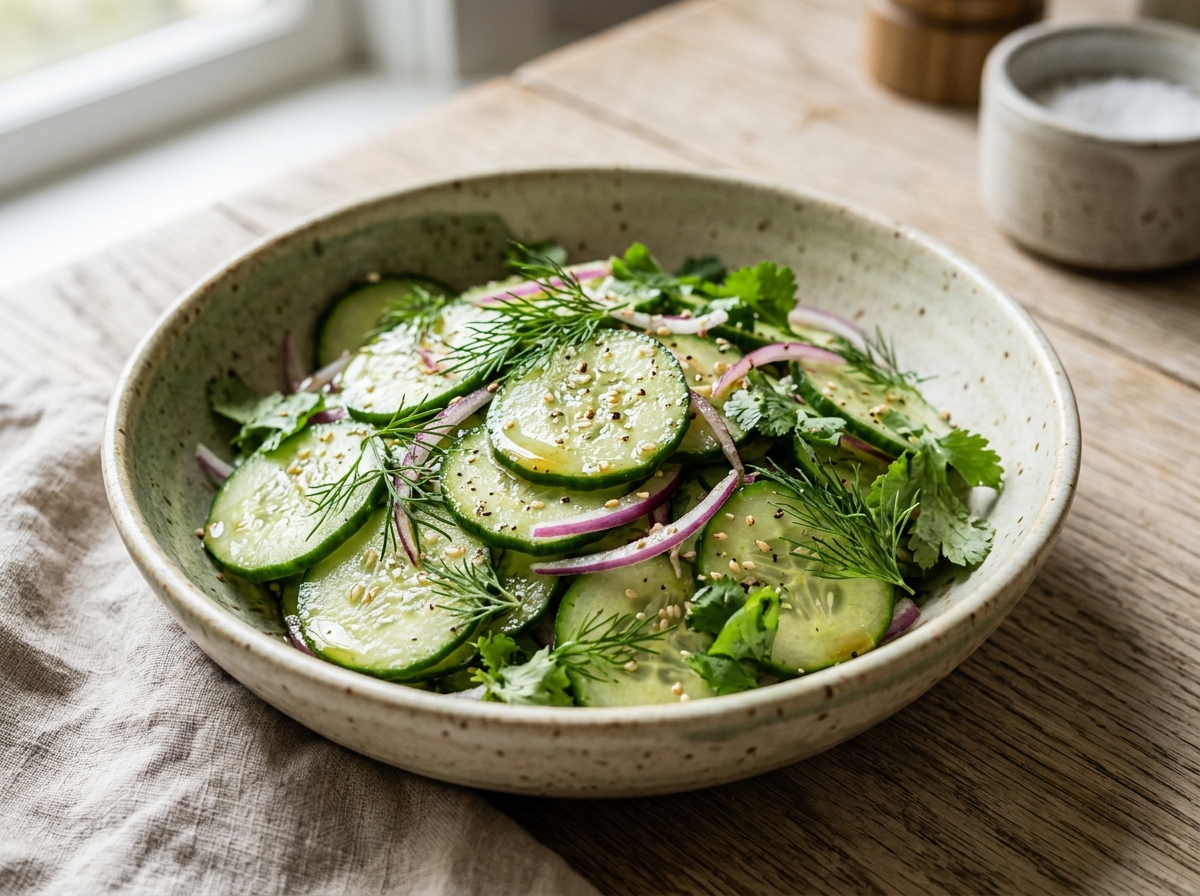
A refreshing cucumber salad brings instant cooling relief to any meal, combining crisp textures with vibrant flavors that awaken your taste buds. This versatile dish transforms humble cucumbers into a culinary masterpiece using simple preparation techniques and fresh herbs. Whether you’re seeking a quick side dish or a healthy snack, mastering the art of cucumber salad opens doors to endless flavor possibilities.
The secret lies in proper preparation methods that prevent watery disappointments and enhance natural cucumber sweetness. With just a few professional techniques, you’ll create restaurant-quality results that stay crisp for hours. Every bite delivers satisfying crunch paired with aromatic herbs that complement both casual lunches and elegant dinner parties.
Introduction to Cucumber Salad
Why Cucumber Salad Is a Refreshing Choice
Cucumber salad recipe variations span cultures worldwide, each bringing unique flavor profiles that celebrate this hydrating vegetable. The dish’s popularity stems from its ability to provide instant refreshment while requiring minimal cooking skills or equipment. Professional chefs appreciate how cucumber’s neutral base accepts bold seasonings without overwhelming delicate palates.
Asian cucumber salad traditions emphasize balance between sweet, sour, and savory elements through carefully measured dressings. Korean cucumber salad incorporates fermented flavors that add depth and probiotic benefits to the mix. These regional approaches demonstrate how simple ingredients can create complex taste experiences when handled with proper technique.
The beauty of an easy cucumber salad lies in its adaptability to dietary restrictions and personal preferences. Vegan preparations use plant-based dressings, while those seeking creamy cucumber salad options can incorporate dairy-free alternatives. This flexibility makes it an ideal choice for entertaining diverse groups or accommodating family members with different nutritional needs.
Health Benefits of Cucumber Salad
Healthy cucumber salad preparations deliver exceptional hydration benefits, as cucumbers contain approximately 96% water content by weight. This high moisture level supports kidney function, aids digestion, and helps maintain optimal body temperature during warm weather. Regular consumption contributes to daily fluid intake goals without adding excessive calories or sodium.
The vegetable provides essential minerals including potassium, magnesium, and silica that support cardiovascular health and bone strength. Fresh herbs commonly paired with cucumbers offer antioxidant compounds that combat cellular damage from environmental stressors. Dill, mint, and parsley contain vitamins A, C, and K that enhance immune function and promote healthy skin.
Fiber content in cucumber skins aids digestive health when vegetables are properly washed and left unpeeled. The combination of high water content and soluble fiber creates satiety without significant caloric density. This makes cucumber salad an excellent choice for weight management programs or anyone seeking nutrient-dense meal components.
Essential Ingredients and Variations
Classic Herbs and Dressings
Traditional herb combinations elevate basic cucumber preparations into memorable culinary experiences through aromatic complexity. Fresh dill provides bright, grassy notes that complement cucumber’s subtle sweetness without competing for attention. Mint adds cooling properties that enhance the dish’s refreshing qualities, particularly during summer months when temperatures soar.
Parsley contributes earthy undertones and vibrant color contrast that makes presentations more visually appealing. Chives offer mild onion flavors without the harsh bite of raw garlic or shallots. These herbs work synergistically to create layered flavor profiles that develop complexity as ingredients meld together during chilling time.
Vinegar-based dressings provide acidic balance that brightens cucumber’s naturally mild taste while preventing enzymatic browning. Rice vinegar offers subtle sweetness, while apple cider vinegar adds tangy complexity that pairs beautifully with fresh herbs. Lemon juice serves as an excellent substitute, providing vitamin C alongside its acidic properties.
Regional Variations (Korean, Japanese, Mediterranean)
Korean cucumber salad incorporates gochugaru (red pepper flakes) and sesame oil to create spicy, nutty flavor dimensions. The preparation method involves heavy salting followed by thorough rinsing, which removes excess water while concentrating natural cucumber flavors. Sesame seeds add textural interest and healthy fats that complement the spicy elements perfectly.
Japanese cucumber salad typically features rice vinegar, mirin substitute (using rice syrup), and wakame seaweed for umami depth. The technique emphasizes precise knife work, creating paper-thin slices that absorb dressing more effectively than thicker cuts. This attention to detail reflects Japanese culinary philosophy regarding ingredient respect and presentation standards.
Mediterranean approaches incorporate olive oil, fresh oregano, and crumbled cheese alternatives for richness and complexity. Sun-dried tomatoes add concentrated flavor bursts that contrast beautifully with cucumber’s cooling properties. Red onion provides sharp contrast, while olives contribute briny elements that tie the composition together harmoniously.
Natural Sweeteners and Healthy Oil Alternatives
Maple syrup provides natural sweetness that balances acidic dressing components without creating cloying results. Honey offers floral notes that complement herb selections, though vegans can substitute agave nectar for similar sweetening effects. Date paste creates caramel-like richness while adding beneficial minerals and fiber to the overall nutritional profile.
Avocado oil delivers neutral flavor with high smoke point stability, making it ideal for dressings that may be stored for extended periods. Olive oil contributes fruity complexity but should be extra virgin quality for optimal flavor development. Sesame oil works best as a finishing element rather than primary dressing base due to its intense flavor concentration.
Coconut oil in liquid form provides tropical undertones that pair exceptionally well with Asian-inspired preparations. Walnut oil offers nutty richness that complements herb-heavy variations beautifully. These premium oils should be stored properly in cool, dark locations to prevent rancidity that would compromise final dish quality.
Step-by-Step Preparation Guide
How to Select Fresh Cucumbers
Choose cucumbers with firm texture and bright green color that indicates peak freshness and optimal water content. Avoid specimens with soft spots, yellowing areas, or wrinkled skin that suggests moisture loss and declining quality. The best cucumber salad starts with vegetables that feel heavy for their size and produce a hollow sound when gently tapped.
English cucumbers offer superior texture due to their thinner skins and fewer seeds compared to standard varieties. Persian cucumbers provide concentrated flavor in smaller packages, making them ideal for individual serving presentations. Garden variety cucumbers work well when properly prepared but require more careful seed removal to prevent watery results.
Organic options often provide better flavor development since they’re allowed to ripen naturally without artificial acceleration methods. Check the stem end for freshness indicators – it should appear recently cut rather than dried or darkened. Store selected cucumbers in refrigerator crisper drawers until ready to prepare for optimal texture retention.
Proper Slicing Techniques and Seed Removal
Sharp knife skills ensure uniform thickness that promotes even dressing absorption and consistent texture throughout the salad. Use a mandoline slicer set to 1/8-inch thickness for professional results, or practice steady hand movements with a well-maintained chef’s knife. Consistent slicing creates visual appeal while ensuring every bite delivers the same flavor intensity and textural experience.
Remove seeds from larger cucumber varieties by cutting lengthwise and using a spoon to scrape out the central cavity. Seeds contain excess water that dilutes dressing flavors and creates soggy results over time. English cucumbers typically require minimal seed removal due to their naturally smaller seed development.
Score cucumber skins lightly with a fork before slicing to create decorative edges and increased surface area for dressing adhesion. This technique works particularly well for presentation-focused preparations where visual appeal matters as much as taste. The scoring process also helps break down tough skin fibers that might otherwise create chewy textures.
Salting and Draining to Reduce Wateriness
Salt cucumber slices generously and allow them to drain in a colander for 30 minutes minimum to extract excess moisture. This crucial step prevents watery disappointments that plague many home cooks attempting quick cucumber salad preparations. The osmotic process draws out cellular water while concentrating natural flavors for more intense taste development.
Use coarse kosher salt or sea salt rather than table salt for better control over sodium levels and more effective moisture extraction. The larger crystal size provides better coverage without over-salting, which can create unpleasantly briny results. Toss sliced cucumbers thoroughly to ensure even salt distribution across all surfaces.
Rinse salted cucumbers thoroughly under cold running water to remove excess salt before patting completely dry with clean kitchen towels. Press gently but firmly to remove surface moisture without crushing delicate cucumber structure. This preparation method creates the ideal foundation for dressing application and extended storage capability.
Preparing Dressings and Marinades
Whisk dressing ingredients vigorously to create stable emulsions that coat cucumber surfaces evenly without separating. Start with acid components like vinegar or citrus juice, then slowly incorporate oils while whisking continuously. This technique ensures proper blending and prevents oil from pooling at the surface during storage periods.
Allow dressings to rest at room temperature for 15 minutes before application to permit flavor development and ingredient integration. Taste and adjust seasoning levels gradually, remembering that flavors will intensify as ingredients meld together during chilling time. Bold seasonings should be applied conservatively initially, then increased as needed after tasting.
Prepare herb-infused dressings by bruising fresh leaves gently before mixing to release essential oils more effectively. This technique maximizes aromatic impact while preventing herbs from becoming brown or bitter during storage. Strain herb-heavy dressings if smoother consistency is desired for elegant presentations.
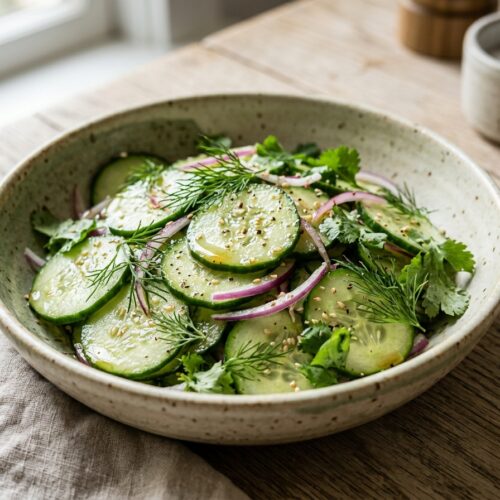
Herb-Infused Cucumber Salad
Equipment
- Large mixing bowl
- Mandoline Slicer or Sharp Knife
- Fine mesh strainer
- Kitchen Scale
- Whisk
- Measuring cups and spoons
Ingredients
- 2 lbs English Cucumbers about 900g, thinly sliced
- 4 medium Radishes thinly sliced
- 1 medium Red Bell Pepper julienned
- 2 tsp Sea Salt for drawing moisture
- 1/4 cup Plain Greek Yogurt 60ml, probiotic-rich
- 3 tbsp Extra Virgin Olive Oil 45ml
- 2 tbsp Apple Cider Vinegar 30ml
- 1 tbsp Honey or maple syrup for vegan option
- 1/4 cup Fresh Dill finely chopped
- 2 tbsp Fresh Mint finely chopped
- 2 tbsp Fresh Parsley finely chopped
- 1 tbsp Fresh Chives finely chopped
- 1/2 tsp Black Pepper freshly ground
Instructions
- Using a mandoline slicer or sharp knife, slice the cucumbers into thin rounds (about 1/8-inch or 3mm thick). Transfer to a large mixing bowl.
- Thinly slice the radishes and julienne the red bell pepper. Add to the bowl with cucumbers.
- Sprinkle 2 teaspoons of sea salt over the vegetables and toss thoroughly. Let stand for 10 minutes to draw out excess moisture.
- Transfer the salted vegetables to a fine mesh strainer and gently press to remove excess liquid. Rinse briefly under cold water and pat dry with paper towels.
- In a clean mixing bowl, whisk together Greek yogurt, olive oil, apple cider vinegar, and honey until smooth and well combined.
- Add the chopped dill, mint, parsley, and chives to the dressing. Whisk until evenly distributed.
- Season with freshly ground black pepper and taste for balance. Adjust sweetness or acidity as needed.
- Add the drained vegetables back to the large mixing bowl and pour the herb dressing over them.
- Toss gently but thoroughly to ensure all vegetables are evenly coated with the dressing.
- Cover and refrigerate for at least 30 minutes before serving to allow flavors to meld and the salad to chill properly.
- Give the salad a final gentle toss before serving. Serve chilled as a refreshing side dish or light appetizer.
Notes
The 10-minute salting process is crucial for removing excess water from cucumbers, preventing a watery salad. Don't skip the rinsing and drying step to avoid oversalting. SCALING:
Easily double for 8 servings or halve for 2 servings. Maintain the 2:1 ratio of vegetables to dressing for best results. STORAGE:
Store covered in refrigerator for up to 3 days. The salad may release some liquid over time - simply drain before serving. Best consumed within 24 hours for optimal crispness. TROUBLESHOOTING:
If salad becomes watery after storage, drain excess liquid and add a pinch more salt and herbs to refresh. For extra crunch, add fresh vegetables just before serving. DIETARY NOTES:
Vegetarian and gluten-free as written. For vegan version, substitute Greek yogurt with cashew cream and use maple syrup instead of honey. Low-carb friendly at approximately 6g net carbs per serving.
Nutrition Highlights (Per Serving – Approximate)
Understanding your food’s composition is key to balanced eating. Here is an approximate nutritional breakdown calculated for a standard serving based on wholesome preparation guidelines:
Culinary Selection Notes
- Adjusting sweetener densities or using refined-sugar alternatives will directly optimize the overall glycemic load without breaking structural balance.
- Focusing on high-quality whole fats maximizes trace micronutrient retention across low-temperature or baking environments.
Serving and Pairing Suggestions
Best Side Dishes to Complement
Quick cucumber salad pairs beautifully with grilled proteins like seasoned chicken breast, herb-crusted fish, or plant-based alternatives that benefit from cooling accompaniments. The refreshing qualities help balance rich, savory main dishes while providing textural contrast to soft or tender preparations. Consider serving alongside cucumber gazpacho for a cohesive menu theme.
Mediterranean grain bowls benefit from cucumber additions that provide hydrating elements and fresh herb flavors. The salad works particularly well with quinoa, bulgur, or rice preparations that need acidic components to brighten overall taste profiles. Legume-based dishes like hummus, falafel, or lentil preparations gain refreshing contrast when paired with properly prepared cucumber mixtures.
Sandwich and wrap applications showcase cucumber salad’s versatility as both filling and side accompaniment. The crisp texture adds satisfying crunch to soft breads while preventing sogginess through proper moisture management techniques. Consider pairing with other fresh salads like fruit salad for colorful, healthy meal combinations.
Meal Prep and Make-Ahead Tips
Best cucumber salad preparations for meal prep require modified techniques that account for extended storage periods and texture preservation. Prepare cucumbers through the salting and draining process, then store separately from dressing components until serving time. This prevents premature softening while maintaining optimal crispness for up to three days refrigerated.
Pre-cut herb preparations lose potency quickly, so consider storing whole leaves in damp paper towels within sealed containers. Chop herbs immediately before assembly to maximize aromatic impact and prevent oxidation browning. Dressings can be prepared up to one week in advance when stored in airtight containers in refrigerated conditions.
Portion individual servings in glass containers to prevent plastic absorption of acidic dressing components. Layer ingredients strategically with heavier items at bottom and delicate herbs on top to prevent crushing during transport. Allow 10-15 minutes for flavors to meld after combining before serving for optimal taste development.
Storage and Troubleshooting
How to Store Cucumber Salad for Freshness
Proper storage maintains cucumber salad quality for 2-3 days when ingredients are handled correctly from preparation through refrigeration. Use glass containers rather than plastic to prevent absorption of acidic dressing elements that can create off-flavors over time. Airtight sealing prevents moisture loss while protecting from refrigerator odor contamination.
Store dressed salads in coldest refrigerator sections, typically bottom shelves where temperature remains most consistent. Avoid door storage where temperature fluctuations occur frequently during normal use. Keep herbs fresh by placing stems in water like cut flowers, then covering leaves with plastic bags secured with rubber bands.
Separate storage of components extends freshness significantly compared to pre-mixed preparations. Keep prepared cucumbers, dressings, and herb garnishes in individual containers until serving time. This method allows for portion control while preventing texture degradation that occurs when acidic dressings remain in contact with vegetables for extended periods.
Troubleshooting Common Issues (watery salad, soggy dressing)
Watery cucumber salad results from insufficient moisture removal during preparation or inadequate drainage time before dressing application. Extend salting periods to 45 minutes for particularly watery cucumber varieties, and press gently with clean kitchen towels to remove surface moisture. Double-drain by transferring to fresh colander after initial salt treatment for stubborn moisture issues.
Soggy dressing occurs when emulsions break down due to excessive water content or improper mixing techniques. Re-whisk separated dressings vigorously, adding small amounts of oil gradually while mixing to re-establish stable emulsions. Consider adding small amounts of mustard powder or tahini as natural emulsifying agents for problematic preparations.
Over-seasoned results can be corrected by adding fresh cucumber slices to absorb excess salt or acid, then removing them before serving. Alternatively, incorporate neutral ingredients like chopped lettuce or mild herbs to dilute concentrated flavors. Prevention remains the best approach through gradual seasoning additions and frequent tasting during preparation phases.
Frequently Asked Questions (FAQ)
Can I make cucumber salad without salt preparation?
While possible, skipping the salting step often results in watery, diluted flavors that disappoint even casual diners. The minimal time investment provides significantly better texture and taste results. Quick preparations can use 15-minute salt treatments for acceptable results when time constraints exist.
How long does homemade cucumber salad stay fresh?
Properly prepared old fashioned cucumber salad maintains peak quality for 2-3 days when stored correctly in refrigerated conditions. Japanese cucumber salad and other Asian variations may last slightly longer due to higher acid content that provides natural preservation effects.
What’s the best cucumber variety for salads?
English cucumbers provide superior results due to thin skins and minimal seed content, though Persian and garden varieties work well with proper preparation. Choose firm specimens regardless of variety, and adjust preparation techniques based on seed content and skin thickness for optimal results.
Can cucumber salad be frozen for later use?
Freezing destroys cucumber cellular structure, creating mushy textures unsuitable for salad applications. Fresh preparation provides the best results, though individual components like herb-infused oils can be frozen separately for future dressing preparations.
Why does my creamy cucumber salad separate?
Creamy variations separate when dairy or dairy alternatives combine with acidic ingredients without proper emulsification techniques. Use room temperature ingredients and whisk vigorously while adding liquids gradually. Consider using stabilizing agents like mustard or tahini for more stable results.
How can I reduce cucumber bitterness?
Bitterness typically indicates overripe cucumbers or inadequate peeling of thick-skinned varieties. Choose younger, smaller cucumbers when possible, and remove all skin from garden varieties. Salt treatment also helps draw out bitter compounds along with excess moisture.
Creating the perfect cucumber salad requires attention to preparation details and quality ingredient selection. Master these fundamental techniques, and you’ll produce consistently excellent results that showcase cucumber’s natural refreshing qualities. Whether preparing simple weeknight sides or elegant entertaining options, proper method execution ensures success every time you enter the kitchen.
Experiment with regional variations and seasonal herb combinations to keep this versatile dish exciting throughout the year. Remember that the best results come from fresh, high-quality ingredients treated with respect and proper technique. Your family and guests will appreciate the care invested in creating these refreshing, healthy additions to any meal occasion.