Beef Bacon Carbonara: Easy, Delicious Homemade Pasta Recipe
Learn how to make beef bacon carbonara in 20 minutes with this easy, foolproof recipe that delivers creamy, delicious results every time. Get the recipe.
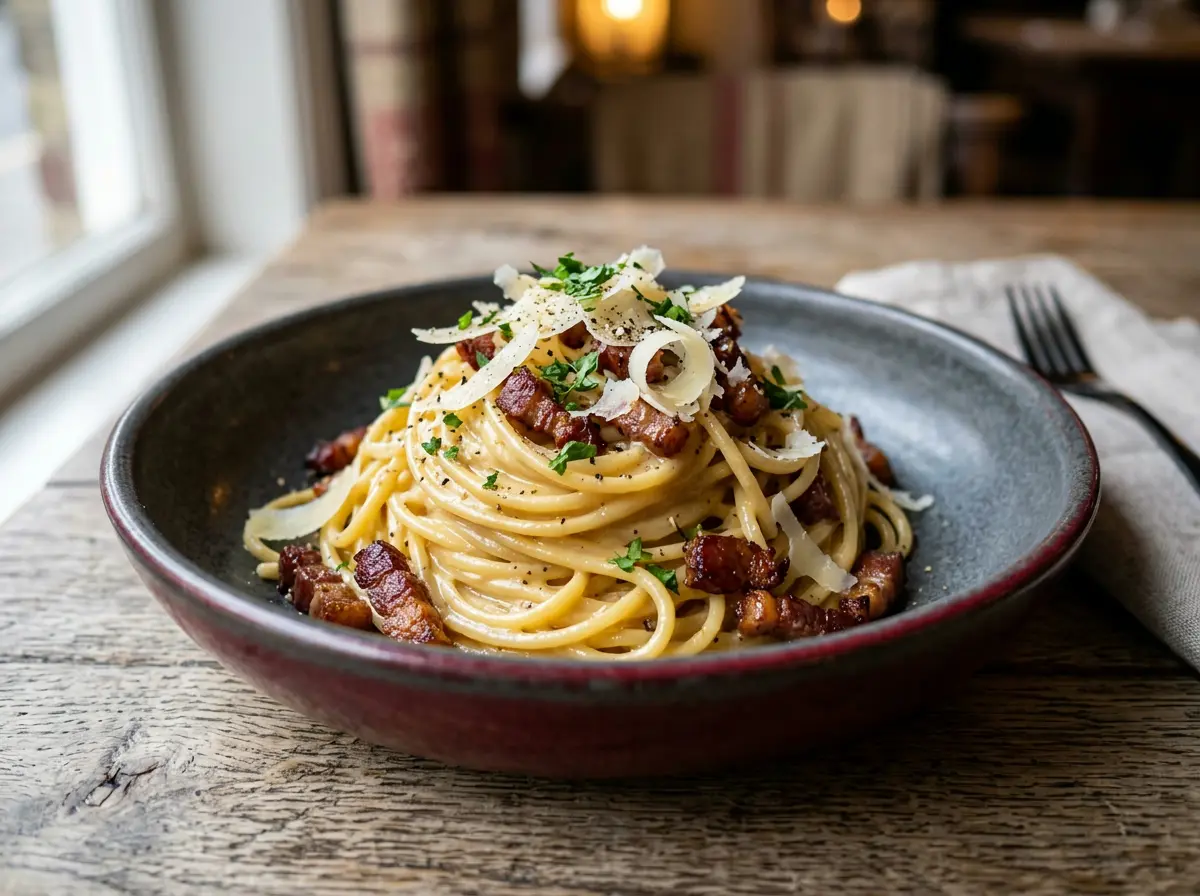
Nothing beats the comfort of a perfectly executed beef bacon carbonara when you’re craving a restaurant-quality meal at home. This Italian classic transforms simple pantry staples into a luxuriously creamy dish that delivers rich, savory flavors in every bite. The silky sauce clings beautifully to each strand of pasta, creating that signature texture that makes carbonara so irresistible.
The magic happens when hot pasta meets the egg-cheese mixture, creating an emulsion that’s neither too thick nor too thin. Steam rises from the bowl, carrying the intoxicating aroma of crispy beef bacon and sharp cheese. Each forkful delivers the perfect balance of salty, creamy, and satisfying elements that define this beloved comfort food.
Introduction to Beef Bacon Carbonara
Traditional carbonara originated in the Lazio region of Italy, where it became a staple among coal workers who needed hearty, satisfying meals. This beef bacon carbonara variation honors those roots while accommodating modern dietary preferences. The dish relies on technique rather than exotic ingredients, making it accessible to home cooks worldwide.
What sets this easy carbonara recipe apart is the focus on timing and temperature control. Unlike cream-based pasta dishes, authentic carbonara achieves its signature creaminess through the careful emulsification of eggs, cheese, and starchy pasta water. The result is a lighter yet incredibly satisfying sauce that coats every piece of pasta.
The beauty of homemade carbonara lies in its simplicity and speed. From start to finish, this dish comes together in less than 20 minutes, making it perfect for weeknight dinners or impressive weekend meals. The key is having all your ingredients prepped and ready before you begin cooking.
Ingredients Overview
Quality ingredients make all the difference in creating an exceptional beef bacon carbonara. Each component plays a specific role in building the dish’s complex flavor profile. Understanding these roles helps you make informed substitutions when necessary.
The protein element comes from high-quality beef bacon, which provides the smoky, salty foundation that defines carbonara. Fresh eggs create the creamy base, while aged cheese adds sharp, nutty notes that balance the richness. Pasta serves as both the vehicle and texture contrast that makes each bite interesting.
Freshly cracked black pepper isn’t just a garnish—it’s an essential flavor component that cuts through the richness and adds aromatic complexity. The pasta cooking water becomes a crucial ingredient for achieving the perfect sauce consistency, so never discard it until your dish is complete.
Preparing the Beef Bacon
Proper beef bacon preparation sets the foundation for your entire dish. The goal is achieving perfectly crispy pieces that maintain their texture even after mixing with the pasta. This requires careful attention to heat levels and timing.
Choosing Quality Beef Bacon
Look for beef bacon with a good balance of lean meat and fat marbling. The fat content ensures proper rendering and flavor development, while the lean portions provide satisfying texture. Avoid overly lean varieties that may become tough or dry during cooking.
Thickness matters when selecting beef bacon for carbonara. Medium-cut pieces work best because they render properly without becoming overly crispy. Thick-cut bacon may not cook evenly, while thin-cut versions can overcook quickly and become bitter.
Fresh beef bacon from the deli counter often provides superior results compared to pre-packaged options. The improved texture and flavor justify the slight extra cost, especially for a dish where the bacon is a star ingredient.
Cooking Methods for Crispy Texture
Start cooking beef bacon in a cold pan to allow the fat to render slowly and evenly. This prevents the meat from seizing and ensures maximum crispiness. Medium heat works better than high heat for achieving the perfect texture.
Render the bacon until it reaches a deep golden-brown color and sounds crispy when stirred. The rendered fat becomes part of your sauce base, so don’t drain it completely. Leave about two tablespoons of fat in the pan for optimal flavor.
Remove the cooked bacon to a paper towel-lined plate, but keep it warm. Cold bacon can seize when mixed with hot pasta, disrupting the sauce emulsification process.
Mastering the Carbonara Sauce
The carbonara sauce represents the heart and soul of this beef bacon carbonara recipe. Success depends entirely on understanding the science behind emulsification and temperature control. This knowledge transforms what seems like a simple egg-and-cheese mixture into restaurant-quality perfection.
Understanding the Egg Tempering Technique
Egg tempering prevents the dreaded scrambled egg texture that ruins many carbonara attempts. The technique involves gradually raising the egg temperature through controlled heat exposure. This creates a smooth, creamy sauce instead of chunky curdles.
Remove your pan from direct heat before adding the egg mixture. The residual heat from the pasta and pan provides sufficient warmth for proper emulsification. Working off the heat gives you better control over the process.
Whisk the eggs vigorously while adding small amounts of hot pasta water. This creates a stable emulsion that won’t break when combined with the pasta. The constant motion prevents any single area from overheating.
Incorporating Cheese: Parmesan vs Pecorino Romano
Traditional carbonara uses Pecorino Romano for its sharp, salty flavor profile. However, Parmesan offers a milder, nuttier taste that many home cooks prefer. A combination of both cheeses provides the best flavor balance for this easy carbonara recipe.
Freshly grated cheese melts more smoothly than pre-grated varieties, which often contain anti-caking agents. These additives can prevent proper melting and create a grainy sauce texture. Invest in a good microplane grater for the best results.
Room temperature cheese incorporates more easily than cold cheese straight from the refrigerator. Pull your cheese from the fridge 30 minutes before cooking to ensure smooth integration.
Using Pasta Water for Creamy Sauce
Starchy pasta water acts as the binding agent that transforms eggs and cheese into a silky sauce. The starch content varies depending on pasta shape and cooking time, so taste and adjust as needed. Proper pasta water should feel slightly slippery between your fingers.
Reserve at least one cup of pasta water before draining. You’ll likely use only half, but having extra ensures you can achieve the perfect consistency. Add pasta water gradually—you can always add more, but you can’t remove excess liquid easily.
The pasta water should be hot but not boiling when you add it to the egg mixture. Water that’s too hot will scramble the eggs, while water that’s too cool won’t create proper emulsification.
Cooking the Pasta
Perfect pasta forms the foundation of any great beef bacon carbonara. The cooking process affects both texture and sauce adherence, making it crucial to get every detail right. Proper technique ensures your pasta provides the ideal vehicle for the rich, creamy sauce.
Selecting Pasta Shapes for Best Flavor
Spaghetti remains the traditional choice for carbonara because its long strands hold sauce beautifully. However, other long pasta shapes like linguine or bucatini work equally well. The key is choosing pasta with enough surface area to carry the sauce effectively.
Short pasta shapes like rigatoni or penne can work for this quick carbonara, but they require slight technique adjustments. These shapes hold sauce internally rather than coating externally, creating a different eating experience that some prefer.
Avoid delicate pasta shapes like angel hair, which can become mushy when mixed with the warm sauce. The pasta needs enough structural integrity to maintain its texture throughout the mixing and serving process.
Cooking Tips for Perfect Al Dente
Use abundant salted water—at least four quarts for one pound of pasta. The large water volume maintains temperature when you add the pasta, ensuring even cooking. Salt the water until it tastes like mild seawater for proper pasta seasoning.
Cook pasta one to two minutes less than the package directions suggest. The pasta will continue cooking when mixed with the hot sauce, reaching perfect al dente texture by serving time. This prevents overcooking and maintains the ideal bite.
Stir the pasta frequently during cooking to prevent sticking and ensure even heat distribution. Properly cooked pasta should offer slight resistance when bitten but show no hard, chalky center when broken.
Combining Pasta and Sauce
The final assembly represents the most critical phase of creating perfect beef bacon carbonara. This step requires confidence, speed, and proper technique to achieve the signature creamy consistency. Understanding the process prevents common mistakes that can ruin an otherwise perfect dish.
Step-by-Step Mixing Instructions
Transfer the hot, drained pasta directly to the pan containing the rendered bacon fat. The residual heat helps create the proper environment for sauce formation. Toss quickly to coat every strand with the flavorful fat.
Remove the pan from heat completely before adding the egg-cheese mixture. Pour the mixture over the pasta while tossing continuously with tongs or a large fork. The constant motion prevents the eggs from setting in one spot and creates smooth emulsification.
Add pasta water gradually while tossing, starting with just a few tablespoons. The sauce should become glossy and coat the pasta without pooling in the bottom of the pan. This process typically takes 30 to 60 seconds of vigorous tossing.
Achieving the Ideal Creamy Consistency
The perfect carbonara sauce coats pasta like silk without being thick or gluey. It should flow smoothly when the pasta is lifted but not run off completely. This consistency comes from proper emulsification rather than added thickeners.
If your sauce appears too thick, add pasta water one tablespoon at a time while tossing. If it seems too thin, continue tossing off the heat to allow some moisture to evaporate. The residual heat will help achieve the right texture.
Taste and adjust seasoning at this stage, adding black pepper and additional cheese as needed. Remember that the beef bacon provides significant saltiness, so taste before adding more salt. The sauce should be well-seasoned but balanced.
Tips for Perfect Carbonara
Mastering this beef bacon carbonara requires understanding both the science and artistry behind the technique. These professional tips address common challenges and help you achieve consistent results every time you make this classic carbonara recipe.
Troubleshooting Common Mistakes
Scrambled eggs typically result from adding the egg mixture to pasta that’s too hot or working over direct heat. Always remove the pan from the burner and let it cool slightly before combining ingredients. If scrambling occurs, immediately add cold pasta water while whisking vigorously.
Dry, clumpy sauce usually indicates insufficient pasta water or inadequate mixing. The sauce should look glossy and flow smoothly around the pasta. Add warm pasta water gradually while tossing until you achieve the proper consistency.
Bland flavor often comes from underseasoned pasta water or insufficient cheese. Salt your cooking water generously and use high-quality, freshly grated cheese for the best flavor development. Don’t forget that fresh black pepper is essential, not optional.
Ingredient Substitutions and Variations
Turkey bacon provides a leaner alternative to beef bacon while maintaining similar flavor profiles. Cook it slightly longer to achieve proper crispiness, as turkey bacon contains less fat than beef varieties. The reduced fat content may require adding a small amount of olive oil.
Vegetarian versions can substitute mushrooms or sun-dried tomatoes for the meat component. These ingredients provide umami depth and textural interest that mimics the original bacon’s role. Sauté them until golden and slightly crispy for best results.
Dairy-free adaptations work well with high-quality nutritional yeast and plant-based milk. The technique remains the same, but you may need slightly more liquid to achieve proper sauce consistency. Choose unsweetened varieties to maintain the dish’s savory profile.
Carbonara Meal Prep and Storage
While beef bacon carbonara tastes best when served immediately, proper storage and reheating techniques allow you to enjoy leftovers safely. Understanding these methods helps you plan meals efficiently without compromising food safety or quality.
Make-Ahead Tips
Prepare components separately for best results when meal prepping. Cook and store the beef bacon in the refrigerator for up to three days. Grate cheese and store it in airtight containers to maintain freshness and prevent clumping.
Pre-cook pasta until just shy of al dente, then rinse with cold water to stop cooking. Toss with a small amount of oil to prevent sticking and store refrigerated. This method allows quick assembly when you’re ready to finish the dish.
Avoid preparing the complete dish in advance, as the egg-based sauce doesn’t maintain its texture well over time. Fresh preparation ensures the creamy consistency that defines great carbonara.
Storing Leftovers Safely
Refrigerate leftover carbonara within two hours of cooking to prevent bacterial growth. Store in shallow containers to promote rapid cooling and maintain food safety standards. Properly stored carbonara keeps for up to three days in the refrigerator.
Never leave carbonara at room temperature for extended periods. The egg-based sauce creates an environment where bacteria can multiply rapidly. When in doubt about storage time, discard the dish for safety.
Portion leftovers into individual serving sizes for easier reheating and portion control. This method prevents repeatedly heating and cooling the entire batch, which can compromise both safety and quality.
Best Practices for Reheating
Gentle reheating preserves the sauce’s creamy texture better than high-heat methods. Use low heat on the stovetop, adding small amounts of water or milk to restore moisture. Stir frequently to prevent the sauce from separating or curdling.
Microwave reheating works but requires careful attention to prevent overheating. Use 50% power and stir every 30 seconds until warmed through. Add a tablespoon of water before heating to help maintain sauce consistency.
Avoid reheating carbonara more than once, as repeated heating cycles break down the emulsion and create food safety risks. Heat only what you plan to consume immediately for best results.
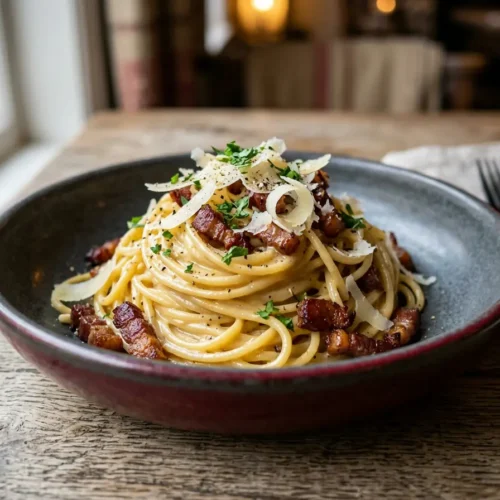
Beef Bacon Carbonara
Equipment
- Large Pasta Pot
- Large Skillet or Sauté Pan
- Fine mesh strainer
- Mixing bowl
- Whisk
- Tongs
- Microplane Grater
- Digital Kitchen Scale
Ingredients
- 1 pound Spaghetti or Linguine 454g, preferably bronze-cut for better sauce adherence
- 1 tablespoon Kosher Salt 15g, for pasta water
- 8 ounces Beef Bacon 227g, thick-cut halal beef bacon, diced into 1/2-inch pieces
- 4 large Egg Yolks preferably organic, at room temperature
- 1 large Whole Egg organic, at room temperature
- 1 cup Pecorino Romano Cheese 100g, freshly grated, plus extra for serving
- 1/2 cup Parmigiano-Reggiano Cheese 50g, freshly grated
- 1 teaspoon Freshly Ground Black Pepper 2g, plus extra for serving
- 2 tablespoons Fresh Flat-Leaf Parsley finely chopped, for garnish
Instructions
- Bring a large pot of water to a rolling boil. Add 1 tablespoon (15g) kosher salt to the water. The water should taste like the sea.
- In a mixing bowl, whisk together 4 egg yolks, 1 whole egg, 1 cup (100g) grated Pecorino Romano, 1/2 cup (50g) grated Parmigiano-Reggiano, and 1 teaspoon (2g) freshly ground black pepper. Whisk vigorously until the mixture is smooth and pale yellow. Set aside at room temperature.
- Cut 8 ounces (227g) beef bacon into 1/2-inch dice. Pat dry with paper towels to remove excess moisture for better crisping.
- Heat a large skillet over medium heat. Add the diced beef bacon and cook for 8-10 minutes, stirring occasionally, until deeply golden and crispy. Do not drain the rendered fat.
- Meanwhile, add 1 pound (454g) pasta to the boiling salted water. Cook according to package directions minus 1 minute for al dente texture. Reserve 1 cup (240ml) of the starchy pasta cooking water before draining.
- When pasta is nearly done, remove the skillet with bacon from heat and let it cool for 30 seconds to prevent the eggs from scrambling.
- Add the drained hot pasta directly to the skillet with the beef bacon and rendered fat. Toss quickly with tongs to coat the pasta.
- Remove the skillet from heat completely. Immediately pour the egg and cheese mixture over the pasta while tossing continuously with tongs. The residual heat will gently cook the eggs into a creamy sauce.
- Add 1/4 cup (60ml) of the reserved pasta water and continue tossing. If the sauce appears too thick, add more pasta water 1 tablespoon at a time until you achieve a silky, creamy consistency that coats each strand.
- Taste and adjust seasoning with additional black pepper if needed. The cheese provides sufficient salt, so additional salt is rarely necessary.
- Divide the carbonara among 4 warmed serving bowls immediately. Garnish with freshly chopped parsley, additional grated cheese, and freshly ground black pepper.
- Serve immediately while hot. Carbonara waits for no one and is best enjoyed fresh from the pan.
Notes
The key to perfect carbonara is temperature control. Remove the pan from heat before adding the egg mixture, and toss continuously to create a creamy emulsion rather than scrambled eggs. Room temperature eggs incorporate more smoothly. METRIC CONVERSIONS:
All measurements include both imperial and metric equivalents for precision. Use a kitchen scale for cheese measurements to ensure proper sauce consistency. TROUBLESHOOTING:
If the sauce breaks or appears grainy, immediately add hot pasta water while whisking vigorously off the heat. If too thick, thin with pasta water; if too thin, add more grated cheese. STORAGE:
Carbonara is best served immediately and does not reheat well due to the egg-based sauce. Leftover ingredients can be stored separately: cooked bacon (3 days refrigerated), grated cheese (1 week refrigerated). SCALING:
This recipe easily doubles for 8 servings. Use a larger skillet and increase pasta water accordingly. For 2 servings, halve all ingredients but maintain the same cooking techniques.
Nutrition Highlights (Per Serving – Approximate)
Understanding your food’s composition is key to balanced eating. Here is an approximate nutritional breakdown calculated for a standard serving based on wholesome preparation guidelines:
Culinary Selection Notes
- Adjusting sweetener densities or using refined-sugar alternatives will directly optimize the overall glycemic load without breaking structural balance.
- Focusing on high-quality whole fats maximizes trace micronutrient retention across low-temperature or baking environments.
Frequently Asked Questions
Can I make beef bacon carbonara ahead of time? While the components can be prepped separately, carbonara tastes best when assembled fresh. The egg-based sauce doesn’t maintain its creamy texture well when stored complete. Prepare ingredients in advance, then combine them just before serving.
What’s the secret to preventing scrambled eggs? Temperature control is crucial for smooth sauce formation. Always remove the pan from heat before adding the egg mixture, and toss continuously while adding pasta water gradually. The residual heat provides sufficient warmth for proper emulsification.
Why is my carbonara sauce too thick or too thin? Sauce consistency depends on the pasta water ratio and mixing technique. Add pasta water gradually until you achieve a glossy coating that flows smoothly. If too thin, continue tossing off heat to allow moisture evaporation.
Can I substitute different types of pasta? Long pasta shapes like spaghetti, linguine, or bucatini work best for carbonara because they hold sauce effectively. Short pasta shapes can work but create a different eating experience. Avoid delicate pasta that may become mushy when mixed with the sauce.
How do I reheat leftover carbonara safely? Use gentle heat on the stovetop or 50% power in the microwave, stirring frequently. Add small amounts of water or milk to restore moisture and prevent sauce separation. Never reheat carbonara more than once for food safety reasons.
Conclusion with Serving Suggestions and Garnish Ideas
Mastering this beef bacon carbonara opens the door to countless pasta possibilities and builds essential cooking techniques you’ll use repeatedly. The skills you develop—from proper emulsification to temperature control—transfer to many other dishes beyond this single recipe. These fundamentals create a foundation for confident cooking in your own kitchen.
Serve your homemade carbonara immediately while the sauce maintains its silky texture and the pasta stays perfectly al dente. Present it in warmed bowls to maintain temperature throughout the meal. A simple green salad with lemon vinaigrette provides a refreshing contrast to the rich, creamy pasta.
Garnish options include freshly cracked black pepper, additional grated cheese, and finely chopped fresh parsley for color contrast. Consider serving alongside marry me chicken pasta for variety, or explore other cream-based options like fettuccine alfredo and creamy cajun pasta for future meal planning inspiration.