Creamy Cajun Pasta: Easy Delicious 30-Minute Recipe
Learn how to make creamy cajun pasta in 30 minutes with simple ingredients and foolproof steps. Get the recipe and enjoy a delicious meal today.
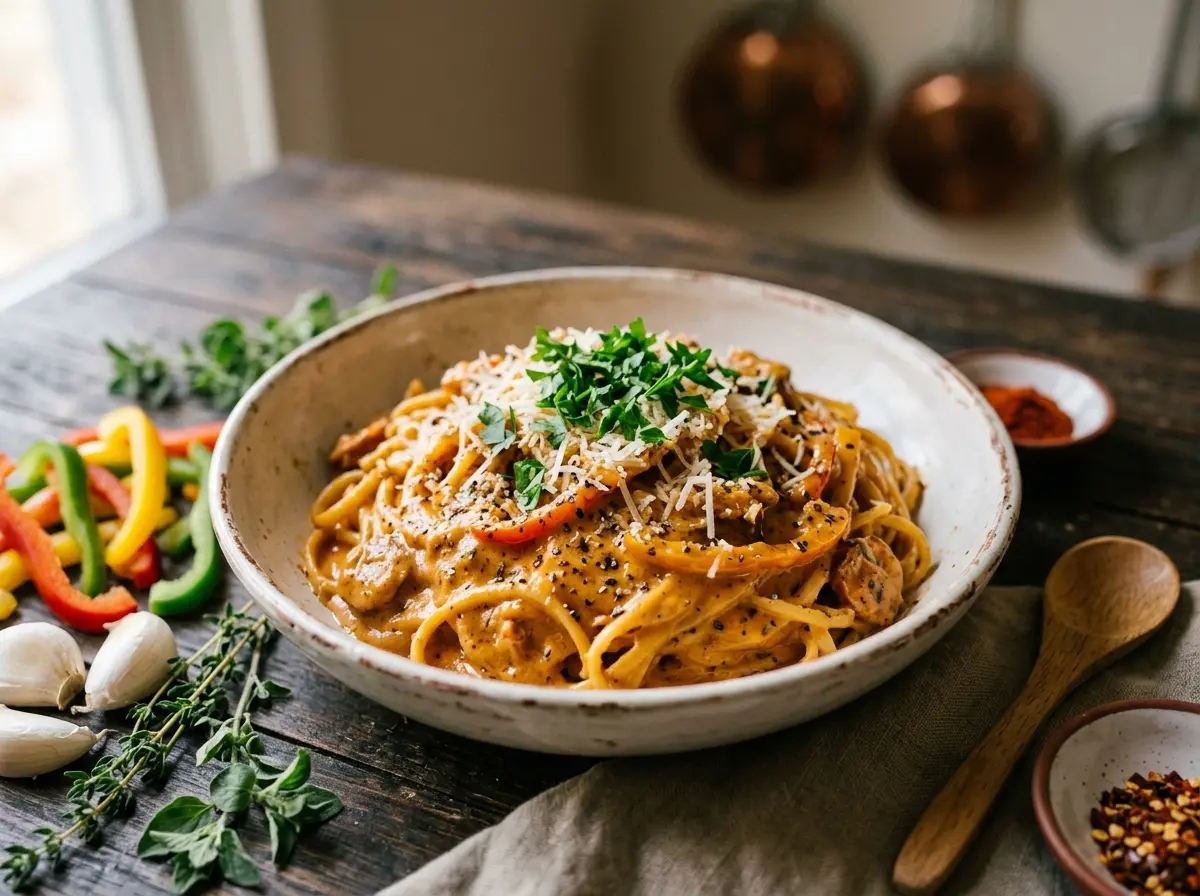
Creamy cajun pasta brings bold Louisiana flavors to your dinner table with rich, smoky spices balanced by velvety sauce. This satisfying dish combines tender pasta with a perfectly seasoned cream base that delivers warmth without overwhelming heat. In just 30 minutes, you’ll have a restaurant-quality meal that rivals any Cajun kitchen.
The aroma of paprika, cayenne, and garlic sautéing together creates an irresistible foundation for this comfort food favorite. Each bite delivers layers of flavor from the creamy cajun sauce that coats every strand of pasta beautifully. This versatile recipe adapts easily to your preferred protein or keeps vegetarian while maintaining authentic Cajun character.
Introduction to Creamy Cajun Pasta
Cajun cuisine originated in Louisiana through French Acadian settlers who developed bold, rustic cooking techniques using local ingredients. The signature spice blends create complex heat profiles that awaken your palate without masking other flavors. Modern one pot cajun pasta adaptations make these traditional tastes accessible for weeknight cooking.
What Makes Cajun Pasta Unique
Authentic Cajun seasoning combines paprika, cayenne, garlic powder, and oregano to create distinctive smoky heat. Unlike Italian pasta dishes that rely on herbs and olive oil, Cajun versions embrace bold spices and rich cream bases. The key lies in building layers of flavor through proper spice timing and temperature control.
Traditional Cajun cooking emphasizes the “holy trinity” of onions, celery, and bell peppers as aromatic foundation vegetables. These ingredients provide sweetness and texture that balance the heat from cayenne and black pepper. The cream component mellows the spices while creating luxurious mouthfeel.
Overview of Ingredients and Key Flavors
Quality pasta selection impacts the final dish significantly, with shapes like penne, fettuccine, or rigatoni holding sauce effectively. Heavy cream provides richness while butter adds silky texture and helps spices bloom properly. Fresh garlic and onions create aromatic depth that dried seasonings cannot replicate.
Protein additions like chicken, shrimp, or andouille sausage transform this into a complete meal. Vegetarian versions rely on mushrooms, bell peppers, and extra seasoning to maintain robust flavor profiles. Parmesan cheese adds umami depth while helping bind the sauce components together.
Ingredients Breakdown
Understanding each component’s role helps you make successful substitutions and customize heat levels effectively. Quality ingredients make noticeable differences in final flavor, especially with spices and dairy products. Fresh versus dried herbs impact aroma and visual appeal significantly.
Essential Spices and Seasonings
Paprika provides the signature red color and mild smoky flavor that defines Cajun cuisine. Sweet paprika works best for family-friendly versions, while smoked paprika adds deeper complexity. Cayenne pepper controls heat levels, starting with small amounts and adjusting upward.
Garlic powder and onion powder distribute flavor more evenly than fresh versions in spice blends. Dried oregano and thyme add herbal notes that complement the heat beautifully. Black pepper contributes sharp bite while salt enhances all other flavors present.
Homemade cajun pasta seasoning allows complete control over salt levels and heat intensity. Store-bought blends offer convenience but check sodium content carefully. Always taste and adjust seasoning at multiple cooking stages for optimal results.
Pasta and Sauce Components
Heavy cream creates the luxurious base that defines creamy cajun sauce character. Half-and-half works as lighter alternative but may require thickening agents for proper consistency. Avoid low-fat dairy products that can curdle under high heat.
Butter helps spices bloom while adding richness and preventing sauce separation. Unsalted butter allows better seasoning control throughout cooking. Room temperature butter incorporates more smoothly than cold butter straight from refrigerator.
Pasta water contains starch that helps bind sauce components together naturally. Reserve at least one cup before draining to adjust consistency as needed. Slightly undercook pasta initially since it continues cooking in the hot sauce.
Protein and Vegetable Options
Chicken breast or thighs provide lean protein that absorbs Cajun flavors beautifully. Shrimp cooks quickly and pairs naturally with Louisiana-style seasonings. Andouille sausage adds authentic smoky heat and eliminates need for additional protein.
Bell peppers contribute sweetness and colorful presentation while maintaining traditional Cajun vegetable profiles. Mushrooms add umami depth and meaty texture for vegetarian versions. Diced tomatoes provide acidity that balances rich cream components.
Green onions offer mild onion flavor and fresh color as finishing garnish. Celery adds subtle crunch and completes the holy trinity foundation. Fresh parsley brightens the finished dish visually and adds herbaceous notes.
Step-by-Step Cooking Instructions
Proper timing and technique ensure smooth sauce development and perfectly cooked pasta. Mise en place preparation prevents overcooking while managing multiple components simultaneously. Temperature control throughout cooking prevents sauce breaking or pasta becoming mushy.
Prepping Ingredients for Efficiency
Dice all vegetables uniformly for even cooking and professional presentation. Season protein with half the Cajun spices 15 minutes before cooking for better flavor penetration. Measure cream and have pasta water ready before starting the sauce.
Grate fresh Parmesan cheese rather than using pre-shredded versions for better melting properties. Mix dry spice blends in small bowl for even distribution throughout cooking. Have all ingredients within arm’s reach before heating the pan.
Cooking the Pasta Perfectly
Use abundant salted water to prevent pasta from sticking and ensure even cooking. Cook pasta 1-2 minutes less than package directions since it finishes cooking in the sauce. Reserve pasta water before draining to adjust sauce consistency later.
Drain pasta thoroughly but don’t rinse, as surface starch helps sauce adhere properly. Return drained pasta to the cooking pot to keep warm while preparing sauce. Toss with small amount of olive oil if sauce preparation takes longer than expected.
Creating the Creamy Cajun Sauce
Start with medium heat to prevent cream from curdling or butter from burning. Sauté aromatics until fragrant before adding spices to develop complex flavor layers. Toast spices briefly to release essential oils and intensify their potency.
Add cream gradually while stirring constantly to maintain smooth texture throughout incorporation. Simmer gently rather than boiling vigorously to prevent sauce separation or curdling. Taste and adjust seasoning before combining with pasta components.
Stir in cheese gradually off heat to prevent grittiness or clumping issues. Use pasta water to thin sauce if it becomes too thick during cooking. The sauce should coat a spoon lightly but not be overly thick.
Combining and Finalizing the Dish
Add drained pasta to sauce rather than pouring sauce over pasta for better coating. Toss gently but thoroughly to ensure every piece gets covered with creamy cajun sauce. Add cooked protein at this stage to warm through without overcooking.
Adjust consistency with reserved pasta water if mixture seems too thick or dry. Taste final dish and adjust seasoning, particularly salt and heat levels. Remove from heat immediately once everything is combined and heated through.
Garnish with fresh herbs, extra cheese, or green onions just before serving for optimal presentation. Serve immediately while sauce maintains proper consistency and temperature. Warm serving bowls help maintain ideal eating temperature longer.
Customizing Your Cajun Pasta
Personal heat tolerance and dietary needs require flexible approaches to this easy cajun pasta recipe foundation. Understanding spice interactions helps create custom blends that suit individual preferences perfectly. Successful substitutions maintain flavor balance while accommodating various dietary restrictions.
Spice Level Guide and Adjustments
Mild versions use 1/4 teaspoon cayenne pepper per four servings for gentle warmth without significant heat. Medium heat requires 1/2 teaspoon cayenne plus additional black pepper for noticeable but manageable spice levels. Hot versions can handle 3/4 to 1 teaspoon cayenne, depending on individual tolerance.
Start with conservative amounts and taste-test before adding more heat, as you cannot remove excess spice once added. Dairy products help cool overly spicy dishes, while acidic ingredients like lemon juice can balance excessive heat. Sweet elements like diced tomatoes or bell peppers provide natural cooling effects.
Smoked paprika adds depth without heat, making it perfect for building flavor complexity. Hot sauce additions at serving time allow individual customization without affecting the base recipe. Fresh jalapeños provide different heat characteristics than dried cayenne powder.
Dietary Variations (Vegetarian, Dairy-Free Options)
Vegetarian cajun pasta relies on mushrooms, bell peppers, and extra vegetables for substantial protein and texture. Nutritional yeast adds umami depth that typically comes from meat or seafood proteins. Extra seasoning compensates for missing protein flavors naturally.
Dairy-free versions substitute coconut cream or cashew cream for heavy dairy cream successfully. These alternatives provide richness while maintaining creamy texture when properly prepared. Nutritional yeast or dairy-free cheese alternatives replace Parmesan functionality.
Vegan butter substitutes work well for sautéing aromatics and building sauce bases. Vegetable broth additions help thin sauces when dairy-free cream alternatives prove too thick. Extra garlic and herbs compensate for missing dairy flavor complexity.
Protein Substitutions
Cajun chicken pasta remains the most popular protein variation, using seasoned chicken breast or thighs. Shrimp requires careful timing to prevent overcooking and maintains authentic Louisiana character beautifully. Andouille sausage provides smoky heat and eliminates need for additional seasoning adjustments.
Turkey or pork work as chicken alternatives while maintaining similar cooking times and techniques. Firm fish like catfish or red snapper suit Cajun preparations but require gentle handling. Plant-based proteins like seasoned tofu or tempeh absorb spice blends effectively when properly prepared.
Combination proteins create restaurant-style presentations with varied textures and flavors throughout each serving. Pre-cook proteins separately to ensure proper doneness before combining with pasta and sauce. Season each protein type individually for optimal flavor development.
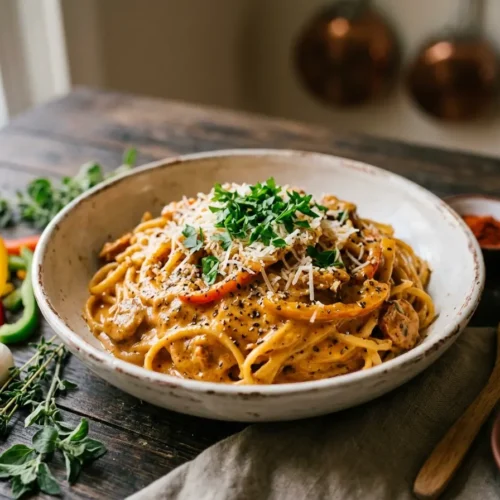
Creamy Cajun Pasta
Equipment
- Large Skillet or Sauté Pan
- Large Pot for Pasta
- Colander
- Wooden Spoon
- Sharp knife
- Cutting board
- Measuring cups and spoons
Ingredients
- 12 oz Penne or Fettuccine Pasta
- 1 lb Turkey Sausage or Chicken Sausage halal-certified, sliced into rounds
- 1 medium Bell Pepper any color, sliced
- 1 medium Yellow Onion diced
- 3 cloves Garlic minced
- 1 can Coconut Cream 14 oz, full-fat
- 1 cup Vegetable Broth low-sodium
- 2 tablespoons Cajun Seasoning adjust to taste preference
- 1 teaspoon Smoked Paprika
- 1/2 teaspoon Garlic Powder
- 1/4 teaspoon Cayenne Pepper optional, for extra heat
- 2 tablespoons Olive Oil
- 1/4 cup Fresh Parsley chopped, for garnish
- 1/2 cup Parmesan Cheese grated, optional
- 1 teaspoon Salt to taste
- 1/2 teaspoon Black Pepper freshly ground
Instructions
- Bring a large pot of salted water to boil. Cook pasta according to package directions until al dente (usually 8-10 minutes). Reserve 1/2 cup pasta water before draining.
- While pasta cooks, heat olive oil in a large skillet over medium-high heat. Add sliced sausage and cook for 3-4 minutes until browned on both sides.
- Add diced onion and bell pepper to the skillet. Cook for 4-5 minutes until vegetables are softened and onion is translucent.
- Add minced garlic, Cajun seasoning, smoked paprika, garlic powder, and cayenne (if using). Stir constantly for 30 seconds until fragrant.
- Pour in vegetable broth and coconut cream. Bring to a gentle simmer and cook for 3-4 minutes, stirring occasionally, until sauce begins to thicken slightly.
- Add the drained pasta to the skillet. Toss everything together for 2-3 minutes until pasta is well coated. If sauce seems too thick, add reserved pasta water 2 tablespoons at a time until desired consistency is reached.
- Season with salt and black pepper to taste. Remove from heat and garnish with fresh parsley and grated Parmesan cheese if desired.
- Serve immediately while hot. The sauce should coat the pasta without being too thin or too thick.
Notes
Start with 1 tablespoon Cajun seasoning for mild heat, use 2 tablespoons for medium, or 3 tablespoons for spicy. Add cayenne pepper only if you prefer extra heat. SAUCE THICKNESS INDICATORS:
Perfect sauce consistency coats the back of a spoon and clings to pasta without pooling at the bottom. If too thick, add pasta water; if too thin, simmer 1-2 minutes longer. STORAGE:
Refrigerate leftovers for up to 3 days in airtight container. Reheat gently on stovetop with splash of broth or coconut cream to restore creaminess. TROUBLESHOoting:
If sauce separates, whisk in 1-2 tablespoons hot pasta water. If too salty, add more coconut cream. If lacking flavor, boost with additional Cajun seasoning and fresh lemon juice.
Nutrition Highlights (Per Serving – Approximate)
Understanding your food’s composition is key to balanced eating. Here is an approximate nutritional breakdown calculated for a standard serving based on wholesome preparation guidelines:
Culinary Selection Notes
- Adjusting sweetener densities or using refined-sugar alternatives will directly optimize the overall glycemic load without breaking structural balance.
- Focusing on high-quality whole fats maximizes trace micronutrient retention across low-temperature or baking environments.
Tips for Meal Prep and Storage
Cajun pasta meal prep requires careful attention to sauce consistency and pasta texture over time. Proper storage techniques maintain quality for several days while preventing separation or sogginess. Understanding reheating methods preserves the original creamy texture and bold flavors effectively.
Make-Ahead Instructions
Prepare sauce components up to two days in advance, storing separately from cooked pasta for optimal results. Undercook pasta slightly when making ahead since it continues softening during storage and reheating. Cool components completely before refrigerating to prevent condensation and texture degradation.
Store cooked proteins separately from pasta and sauce to maintain proper textures throughout storage period. Portion individual servings in airtight containers for convenient weekday reheating and portion control. Label containers with dates and reheating instructions for family members or meal prep efficiency.
Prepare spice blends in larger batches and store in airtight containers for future 30 minute cajun pasta preparations. Pre-dice vegetables and store properly to reduce weeknight cooking time significantly. Keep sauce components at proper temperatures during assembly to prevent food safety issues.
Freezing and Reheating Tips
Cream-based sauces freeze acceptably for up to one month but may require texture adjustments upon thawing. Freeze in portion-sized containers to prevent repeated thawing and refreezing cycles that degrade quality. Thaw overnight in refrigerator rather than using microwave for better texture retention.
Add fresh cream or pasta water when reheating frozen portions to restore smooth consistency. Gentle stovetop reheating works better than microwave heating for maintaining proper sauce texture. Stir frequently during reheating to prevent scorching or separation issues.
Reheat individual portions at 50% microwave power for even heating without overcooking pasta components. Add splash of cream or milk during microwave reheating if sauce appears thick or separated. Fresh herbs and cheese added after reheating brighten flavors that may have dulled during storage.
Maintaining Sauce Consistency
Refrigerated creamy cajun sauce naturally thickens as it cools, requiring liquid additions during reheating processes. Reserve pasta water specifically for thinning purposes rather than using plain water that lacks starch content. Small amounts of cream restore richness while pasta water maintains proper binding properties.
Avoid vigorous stirring during reheating that can break emulsified sauce into grainy textures. Low heat and patience produce better results than high heat rushing that causes separation or curdling. Taste and adjust seasonings after reheating since flavors may have mellowed during storage.
Store sauce and pasta separately when possible to maintain individual component integrity throughout storage periods. Combine components during reheating rather than storing as complete assembled dish for better final texture. This method allows better control over final consistency and seasoning adjustments.
Common Troubleshooting
Understanding common issues helps prevent problems and provides solutions when things go wrong during preparation. Most pasta and sauce problems stem from temperature control or timing issues that are easily correctable. Quick fixes can salvage most dishes without starting completely over.
Fixing Sauce Thickness
Overly thick sauce responds well to reserved pasta water added gradually while stirring constantly over low heat. Warm cream or milk works as alternative thinning liquid but lacks the starch content that helps bind components. Add liquids slowly to prevent overcorrection that creates watery consistency.
Thin sauce requires gentle simmering to reduce excess liquid without breaking the cream base structure. Cornstarch slurry provides quick thickening but can create artificial texture if overused. Grated cheese helps thicken while adding flavor, making it preferable to starch-based thickeners.
Separated sauce often results from excessive heat or acid addition that breaks the cream emulsion. Gentle whisking with small amounts of fresh cream can sometimes restore smooth texture successfully. Prevention through proper temperature control works better than attempting repairs after separation occurs.
Avoiding Overcooked Pasta
Monitor pasta cooking time carefully since it continues cooking in hot sauce after draining from boiling water. Slightly firm pasta provides better texture in finished dish than fully cooked pasta that becomes mushy. Cold water shock stops cooking process if pasta reaches proper doneness before sauce completion.
Different pasta shapes require adjusted cooking times regardless of package directions for optimal texture in sauced applications. Fresh pasta cooks much faster than dried varieties and requires careful attention to prevent overcooking. Whole grain pasta takes longer and benefits from slightly longer cooking times.
Overcooked pasta cannot be reversed, but proper sauce consistency can mask minor texture issues effectively. Future batches benefit from setting timers and testing doneness frequently rather than relying solely on package timing. Experience with your specific equipment helps develop better timing intuition over multiple preparations.
Frequently Asked Questions (FAQ)
Can I make this dish without heavy cream?
Yes, substitute half-and-half, evaporated milk, or coconut cream for lighter alternatives. Coconut cream provides richness similar to heavy cream while maintaining dairy-free compatibility. You may need to adjust consistency with pasta water or additional liquid.
How do I reduce the spice level for children?
Start with paprika and garlic powder only, omitting cayenne pepper entirely for mild versions. Add small amounts of cayenne gradually until reaching desired heat level for family preferences. Sweet bell peppers and extra cream help balance any residual heat.
What pasta shapes work best for this recipe?
Penne, rigatoni, and fettuccine hold creamy sauces effectively due to their shape and surface texture. Short pasta shapes like rotini or shells work well for chunky vegetable additions. Avoid delicate pasta like angel hair that can become mushy in rich sauces.
Can I use pre-made Cajun seasoning instead of individual spices?
Store-bought Cajun seasoning works well but check sodium levels since many blends contain significant salt content. Start with smaller amounts and taste-test before adding more to prevent oversalting the dish. Quality varies significantly between brands, so choose reputable spice companies.
How long does leftover creamy cajun pasta keep in the refrigerator?
Properly stored leftovers maintain quality for 3-4 days in airtight containers in the refrigerator. Reheat gently with additional liquid to restore proper consistency and prevent drying out. Consume within this timeframe for best flavor and food safety.
Conclusion and Serving Suggestions
This versatile creamy cajun pasta delivers restaurant-quality flavors with straightforward home cooking techniques that anyone can master. The combination of bold spices, rich cream, and perfectly cooked pasta creates satisfying comfort food suitable for weeknight dinners or special occasions. Customization options ensure this recipe adapts to various dietary needs and heat preferences successfully.
Serve alongside crusty bread for soaking up extra sauce, or pair with simple green salad for balanced nutrition. Garlic bread complements the Cajun flavors beautifully while providing textural contrast to the creamy pasta. Consider marry me chicken pasta or fettuccine alfredo recipes for similar creamy pasta inspiration.
The techniques learned here apply to many other pasta preparations, making this an excellent foundation recipe for expanding your cooking repertoire. Master the spice balance and sauce consistency principles to create your own signature variations. For additional pasta inspiration, explore our ravioli carbonara recipe that showcases different cream sauce applications beautifully.