Pesto Recipe: Easy Homemade Basil Pesto Guaranteed Delicious
Learn how to make a quick, easy pesto recipe with fresh basil and simple ingredients. Perfect texture every time. Get the recipe today.
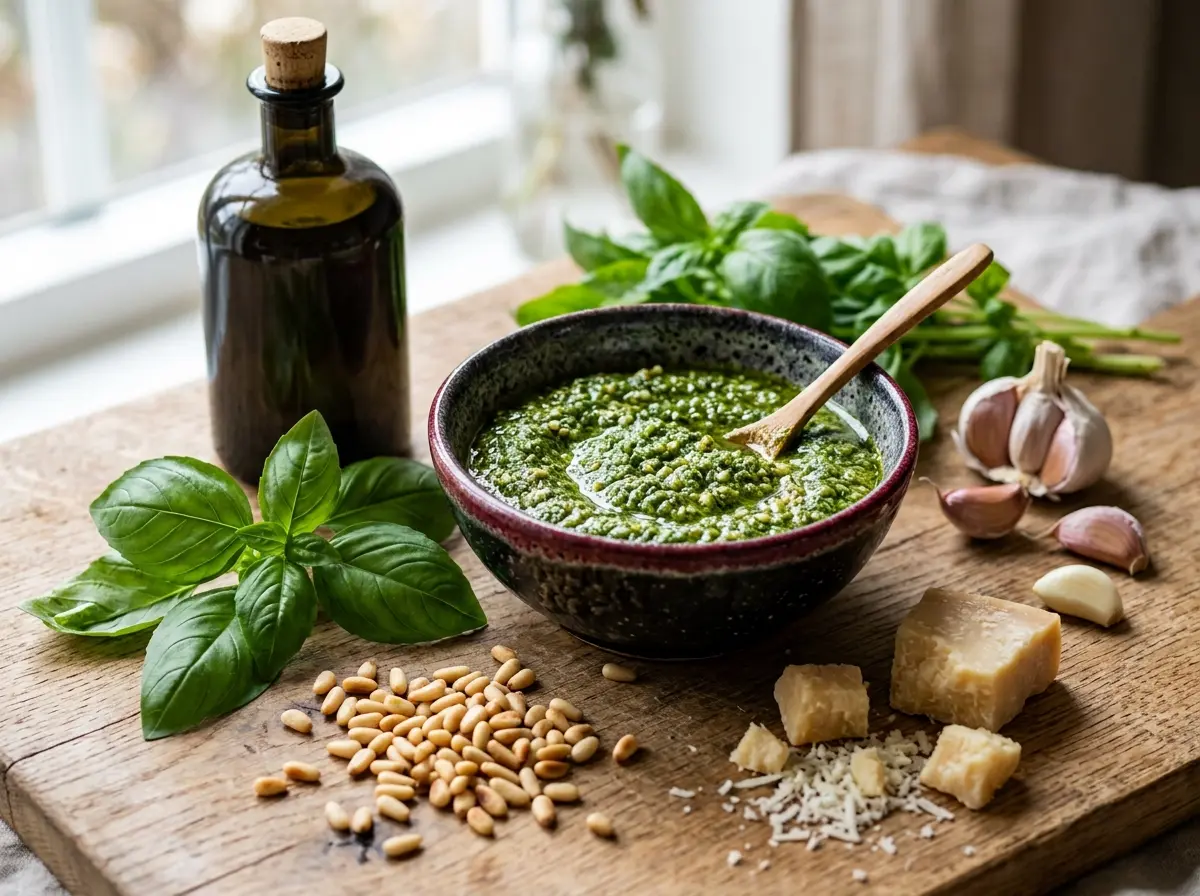
This authentic pesto recipe transforms fresh basil leaves into a vibrant, aromatic sauce that captures the essence of Italian cuisine. Made with simple, wholesome ingredients, this homemade pesto delivers restaurant-quality flavor in just minutes. The combination of fresh herbs, nuts, and quality olive oil creates a versatile condiment that elevates everything from pasta to grilled vegetables.
Nothing compares to the intoxicating aroma of fresh basil being blended with garlic and pine nuts. The emerald green color and silky texture tell you immediately that this isn’t store-bought pesto. Each spoonful bursts with herbaceous brightness balanced by nutty richness and sharp cheese notes.
Introduction to Pesto Recipe
Pesto originated in the coastal region of Liguria, Italy, where the warm Mediterranean climate produces exceptionally fragrant basil. The word “pesto” derives from the Italian verb “pestare,” meaning to crush or grind. Traditional preparation involved using a marble mortar and wooden pestle to slowly break down ingredients into a smooth paste.
This basil pesto recipe honors those ancient techniques while adapting to modern kitchens. Food processors and high-speed blenders can achieve the same silky consistency in seconds. The key lies in understanding how each ingredient contributes to the final flavor profile and texture balance.
Regional Authenticity
Authentic Genovese pesto follows strict guidelines that have been protected by Italian culinary traditions for centuries. The original recipe includes only seven ingredients: fresh basil, garlic, pine nuts, Parmigiano-Reggiano cheese, Pecorino Romano, coarse sea salt, and extra virgin olive oil. This simplicity allows each component to shine while creating perfect harmony.
Ingredients Spotlight
Quality ingredients make the difference between good pesto and extraordinary pesto. Fresh basil should be vibrant green without any dark spots or wilting edges. Young leaves offer the most delicate flavor, while mature leaves provide more intensity.
Fresh Basil Selection and Seasonal Tips
Choose basil with bright green leaves that feel firm and springy to the touch. Avoid yellowing or black-spotted leaves, which indicate age or damage. The best basil has a strong, sweet aroma when you gently bruise a leaf between your fingers.
Summer basil from local farmers markets often provides superior flavor compared to greenhouse varieties. If you grow your own, harvest basil in the morning after dew evaporates but before the heat intensifies. This timing captures peak essential oil concentration in the leaves.
Nut Alternatives and Cheese Options
Traditional pine nuts offer a buttery, delicate flavor that complements basil beautifully. However, walnuts, almonds, or pistachios work excellently as substitutes. Toast nuts lightly in a dry pan for 2-3 minutes to enhance their natural oils and deepen flavor complexity.
Parmigiano-Reggiano aged 24 months provides the ideal nutty sharpness for authentic pesto. Pecorino Romano adds a saltier, more pronounced sheep’s milk character. For plant-based versions, nutritional yeast creates similar umami depth while maintaining the creamy texture profile.
Essential Oil and Acid Balance
Extra virgin olive oil serves as both a flavor carrier and texture modifier in this easy pesto recipe. Cold-pressed varieties with low acidity levels prevent bitterness from overwhelming the delicate basil notes. Add oil gradually during blending to achieve proper emulsification.
Fresh lemon juice brightens the overall flavor while preventing oxidation that turns pesto brown. A small amount of acid helps balance the richness from nuts and cheese. Some recipes use lemon zest for additional citrus complexity without extra liquid.
Step-by-Step Method
Proper preparation technique ensures smooth, well-balanced results every time. Start by washing basil leaves gently in cool water, then pat completely dry with paper towels. Excess moisture can make pesto watery and dilute flavors.
Preparing Ingredients Correctly
Remove basil stems completely, keeping only the tender leaves. Garlic should be peeled and any green germs removed to prevent bitter aftertastes. Grate cheese finely using a microplane or food processor for better integration.
Measure ingredients precisely, especially salt and acid components. Too much salt overwhelms delicate herbs, while insufficient seasoning leaves pesto flat and one-dimensional. Start with less and adjust gradually during the blending process.
Using Food Processors Effectively
Add garlic and nuts first, pulsing until roughly chopped. This creates a foundation that prevents basil from becoming over-processed. Add basil leaves in batches, pulsing between additions to maintain control over texture development.
Pour olive oil in a slow, steady stream while the processor runs continuously. This technique creates proper emulsification, resulting in smooth, creamy consistency. Stop occasionally to scrape down sides and ensure even blending.
Achieving Perfect Texture
Ideal homemade pesto should be smooth enough to coat pasta evenly but retain slight texture from nuts and cheese. The color should be bright green without any brown oxidation. Proper texture flows easily from a spoon but doesn’t separate into oil and solids.
Taste and adjust seasoning before final processing. Add salt, lemon juice, or additional cheese as needed. Remember that flavors intensify after resting, so slight under-seasoning initially works better than over-seasoning.
Common Troubleshooting
Even experienced cooks encounter pesto challenges occasionally. Understanding common problems and their solutions helps you create consistent results every time. Most issues stem from ingredient ratios, processing technique, or storage methods.
Fixing Texture Issues
Oily pesto results from adding oil too quickly or using too much overall. Fix this by adding more basil, nuts, or cheese to absorb excess oil. Process briefly to incorporate without over-mixing, which can break the emulsion further.
Dry, grainy texture indicates insufficient oil or over-processed nuts. Add oil gradually while pulsing until smooth consistency returns. If nuts became powdery, fold in a few whole nuts at the end for pleasant texture contrast.
Separated pesto can be rescued by transferring to a bowl and whisking in warm water one tablespoon at a time. The gentle heat helps re-establish emulsification between oil and other ingredients.
Flavor Adjustments and Balance
Bitter pesto often results from old garlic with green germs or over-processed basil. Remove garlic germs completely and process basil more gently. A pinch of sugar can counteract mild bitterness without masking other flavors.
Bland pesto needs more salt, acid, or aged cheese. Add these elements gradually, tasting between additions. Sometimes the issue is oxidation from exposure to air – fresh lemon juice can restore brightness and vibrant color.
Pesto Variations
Classic pesto sauce provides an excellent foundation for creative variations. Different herbs, nuts, and add-ins create unique flavor profiles while maintaining the essential pesto character. These alternatives accommodate dietary restrictions and seasonal ingredient availability.
Nut-Free Alternatives
Sunflower seeds or pumpkin seeds replace pine nuts effectively for nut-free versions. Toast them lightly for enhanced flavor, just like traditional nuts. These seeds provide similar richness and texture while being more budget-friendly and allergy-conscious.
Avocado adds creaminess without nuts, creating a luxurious texture that coats pasta beautifully. Use ripe but firm avocados to prevent mushiness. This variation requires immediate consumption since avocado browns quickly even with lemon juice protection.
Vegan Pesto Alternatives
Nutritional yeast replaces cheese in vegan versions, providing similar umami depth and slight nuttiness. Use about half the amount compared to grated cheese, adjusting to taste preference. Some recipes combine nutritional yeast with cashews for extra creaminess.
Hemp hearts offer protein and healthy fats while creating smooth texture similar to traditional nuts. They have a mild, slightly nutty flavor that doesn’t compete with basil. Blend them with a small amount of miso paste for additional savory complexity.
Herb and Citrus Variations
Spinach-basil combinations stretch expensive fresh basil while adding nutritional value. Use a 50-50 ratio for mild flavor or increase spinach for more economical versions. Baby spinach works best due to its tender texture and mild taste.
Lemon zest and herbs like parsley or mint create bright, fresh variations perfect for spring and summer dishes. These lighter versions pair excellently with seafood and delicate vegetables. Try our homemade lemon vinaigrette for more citrus inspiration.
Storage Tips
Proper storage extends pesto’s freshness and maintains vibrant color for weeks. Fresh basil pesto contains volatile oils and delicate ingredients that degrade quickly when exposed to air, light, and temperature fluctuations.
Refrigeration Guidelines
Store pesto in airtight containers in the refrigerator for up to one week. Cover the surface directly with plastic wrap or drizzle a thin layer of olive oil to prevent oxidation. Glass containers work better than plastic for maintaining flavor integrity.
Always use clean utensils when removing pesto from storage containers. Contamination from used spoons can introduce bacteria that spoil the entire batch. Stir gently before each use to redistribute any separated oil.
Freezer-Friendly Preparation
Freeze pesto in ice cube trays for convenient single-serving portions. Once solid, transfer cubes to freezer bags labeled with the date. This method allows you to thaw exactly the amount needed for individual meals without waste.
Alternatively, freeze in small containers or silicone molds for larger portions. Leave some headspace since pesto expands when frozen. Frozen pesto maintains quality for up to six months, though flavor is best within three months.
For best results, omit cheese from pesto intended for freezing, adding it after thawing. Cheese can develop grainy textures during the freeze-thaw cycle, affecting the final consistency.
Thawing and Serving
Thaw frozen pesto gradually in the refrigerator overnight for best texture. Rapid thawing can cause separation or mushiness. Stir gently after thawing and adjust seasoning if needed, as freezing can dull some flavors.
Never refreeze previously frozen pesto, as this degrades quality significantly. Plan portions carefully to avoid waste. Consider our refrigerator pickles as another make-ahead condiment for meal planning.
Serving Suggestions
Fresh basil pesto transforms simple ingredients into extraordinary meals. Beyond traditional pasta applications, this versatile sauce enhances proteins, vegetables, breads, and even breakfast dishes. Understanding proper ratios and pairing principles maximizes pesto’s impact.
Classic Pasta Pairings
Linguine and spaghetti provide ideal surfaces for pesto coating, while short shapes like penne trap sauce in their ridges. Use about 2-3 tablespoons of pesto per serving of pasta, adjusting based on desired intensity.
Toss hot, drained pasta with pesto immediately, adding a splash of pasta cooking water to create silky consistency. The starchy water helps bind sauce to noodles while preventing clumping or dryness.
Creative Applications
Spread pesto on sandwiches and wraps as a flavorful alternative to mayonnaise. Mix with cream cheese for an instant appetizer spread or stir into yogurt for a healthy dip. These applications showcase pesto’s versatility beyond traditional uses.
Brush pesto on grilled vegetables, fish, or chicken during the last minutes of cooking. The heat intensifies herb flavors while creating appealing color contrast. Try it with our homemade worcestershire sauce for marinades with complex flavor layers.
Easy Homemade Basil Pesto
Equipment
- Food Processor or High-Speed Blender
- Measuring cups and spoons
- Rubber Spatula
- Airtight Storage Container
Ingredients
- 2 cups Fresh Basil Leaves packed, stems removed (about 60g)
- 3 cloves Garlic peeled, or 2 cloves roasted garlic for milder flavor
- 1/3 cup Pine Nuts or sunflower seeds for nut-free option (40g)
- 2/3 cup Freshly Grated Parmesan Cheese or nutritional yeast for dairy-free (65g)
- 1/2 cup Extra Virgin Olive Oil plus extra as needed (120ml)
- 2 tablespoons Fresh Lemon Juice or lime juice for citrus variation
- 1/2 teaspoon Salt or to taste
- 1/4 teaspoon Black Pepper freshly ground
Instructions
- Add garlic cloves to food processor and pulse 5-6 times until roughly chopped. This prevents large garlic chunks in the final pesto.
- Add pine nuts (or sunflower seeds) and pulse 8-10 times until coarsely ground. The texture should resemble coarse breadcrumbs, not powder.
- Add fresh basil leaves, salt, and pepper. Pulse 10-12 times until basil is roughly chopped and ingredients are combined.
- With processor running, slowly drizzle in olive oil through the feed tube. Process for 15-20 seconds until mixture reaches desired consistency - it should be smooth but retain some texture.
- Add grated Parmesan cheese (or nutritional yeast) and lemon juice. Pulse 3-4 times just to incorporate. Avoid over-processing at this stage.
- Taste and adjust seasoning with additional salt, pepper, or lemon juice as needed. For thinner consistency, add olive oil 1 tablespoon at a time while pulsing.
Notes
Proper pesto should be vibrant green with a smooth yet slightly textured consistency. It should coat the back of a spoon but still flow easily. Avoid over-processing, which creates a paste-like texture and can make the pesto bitter. STORAGE:
Refrigerate in airtight container for up to 1 week. Pour a thin layer of olive oil on top to prevent oxidation and maintain bright green color. Freeze in ice cube trays for up to 3 months - each cube equals about 2 tablespoons. TROUBLESHOOTING:
If pesto turns brown, add 1 tablespoon fresh lemon juice and pulse briefly. For too-thick consistency, add olive oil gradually. If too thin, add more cheese or nuts. Bitter taste indicates over-processing - next time pulse more gently and avoid running processor continuously.
Nutrition Highlights (Per Serving – Approximate)
Understanding your food’s composition is key to balanced eating. Here is an approximate nutritional breakdown calculated for a standard serving based on wholesome preparation guidelines:
Culinary Selection Notes
- Adjusting sweetener densities or using refined-sugar alternatives will directly optimize the overall glycemic load without breaking structural balance.
- Focusing on high-quality whole fats maximizes trace micronutrient retention across low-temperature or baking environments.
Conclusion and Final Tips
Making homemade pesto connects you to centuries of Italian culinary tradition while providing complete control over ingredients and flavors. This pesto recipe rewards attention to detail with restaurant-quality results that far surpass store-bought versions.
Start with the highest quality ingredients you can find, especially fresh basil and good olive oil. Practice the technique until you can adjust texture and seasoning instinctively. Remember that pesto should enhance dishes without overwhelming them – balance is everything.
Keep experimenting with different herbs, nuts, and seasonal variations to develop your personal pesto style. Document successful combinations for future reference. Most importantly, enjoy the process of creating something delicious from simple, wholesome ingredients.