Stuffing Recipe: Easy Homemade Cornbread Stuffing Perfect for Holidays
Discover a simple stuffing recipe with cornbread, savory herbs, and fresh vegetables. Perfectly moist and crispy every time. Get the recipe today!
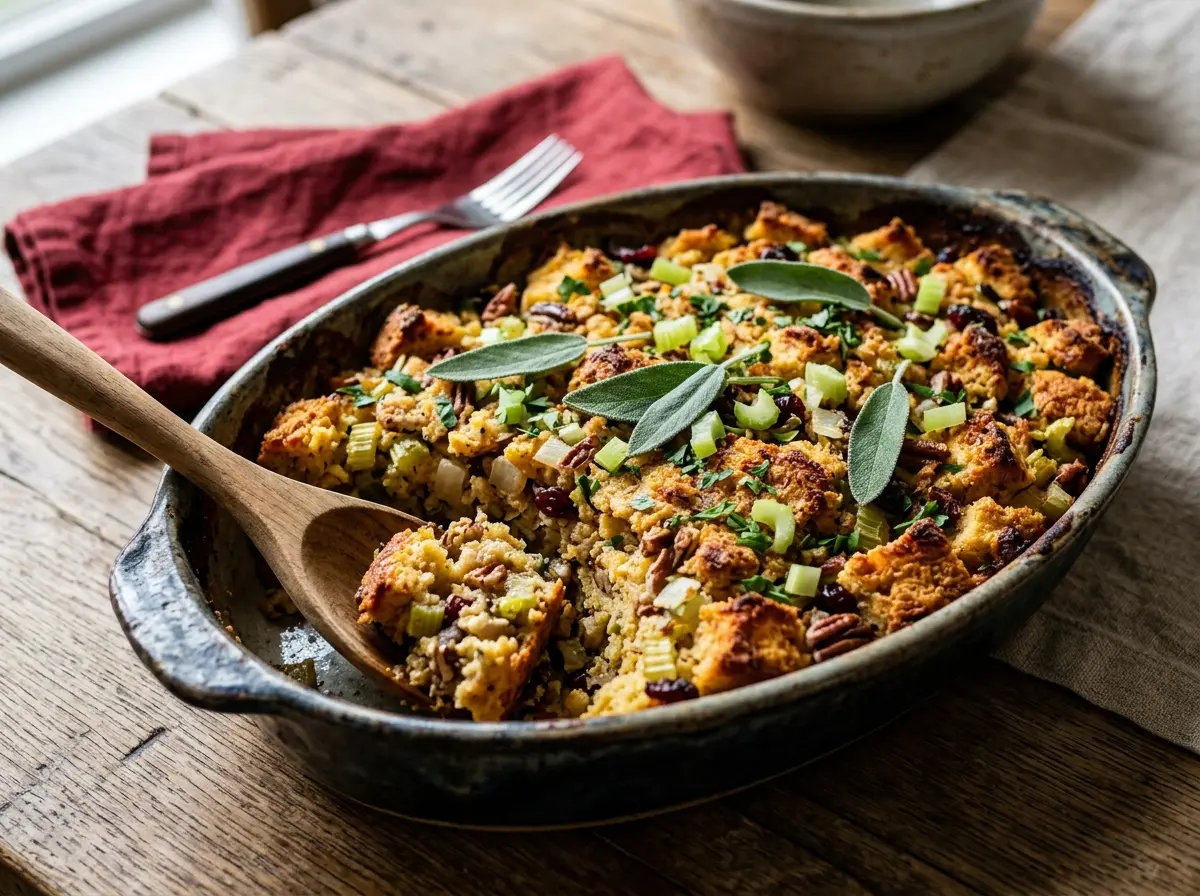
Nothing captures the warmth of holiday gatherings quite like a perfectly crafted stuffing recipe that brings together the comforting flavors of cornbread, fresh herbs, and aromatic vegetables. This homemade cornbread stuffing delivers that coveted balance of crispy golden edges and tender, flavorful interior that makes every bite memorable. Whether you’re preparing for Thanksgiving dinner or creating a special family meal, this easy stuffing recipe transforms simple pantry ingredients into a show-stopping side dish.
The magic begins with crumbled cornbread that soaks up savory broth while maintaining just enough structure to create delightful textural contrasts. Fresh sage and thyme infuse each morsel with earthy depth, while sautéed onions and celery provide that classic aromatic foundation. The result is a vegetarian stuffing recipe that satisfies everyone at the table without compromising on flavor or tradition.
Introduction
Creating an exceptional stuffing recipe starts with understanding the fundamental role cornbread plays in achieving optimal texture and flavor absorption. Unlike traditional bread-based versions, cornbread stuffing offers a naturally sweet undertone that balances savory herbs and vegetables beautifully. This homemade approach ensures you control every ingredient, from the quality of your cornbread base to the freshness of your seasonings.
The beauty of wholesome, homemade ingredients cannot be overstated when crafting memorable holiday dishes. Fresh herbs release essential oils that dried versions simply cannot match, while quality vegetable broth creates depth without overpowering the delicate cornbread foundation. Every component works harmoniously to create a side dish that complements rather than competes with your main course.
Why Cornbread Makes the Perfect Base
Cornbread’s slightly crumbly texture and subtle sweetness create an ideal canvas for absorbing flavors while maintaining structural integrity during baking. The natural corn flavor pairs exceptionally well with sage, thyme, and other traditional stuffing seasonings. Unlike dense wheat breads, cornbread allows moisture to distribute evenly throughout the dish.
Ingredients
The foundation of any exceptional thanksgiving stuffing recipe lies in selecting high-quality ingredients that work together to create complex, satisfying flavors. Each component serves a specific purpose in building layers of taste and texture. Fresh ingredients always outperform their processed counterparts when time and budget allow.
When sourcing your cornbread, either homemade or store-bought options work beautifully, though slightly stale cornbread actually performs better as it absorbs liquid without becoming mushy. The key lies in achieving the right moisture balance through quality broth and proper seasoning distribution. Consider preparing your cornbread a day ahead to achieve optimal texture.
Herb and Broth Options
Poultry broth alternatives include rich vegetable broth, mushroom broth for umami depth, or even a combination of both for complexity. These plant-based options ensure your gluten free stuffing recipe remains accessible to various dietary preferences. Always opt for low-sodium versions to maintain control over the final seasoning balance.
Butter substitutes work remarkably well in this application, with olive oil providing fruity notes or coconut oil offering subtle richness. For dairy-free options, high-quality plant-based butter alternatives maintain the desired texture while accommodating dietary restrictions. The fat component helps bind ingredients and promotes even browning during the final baking phase.
Fresh vs Dried Herb Considerations
Fresh herbs deliver vibrant flavors and aromatic oils that elevate the entire dish, though dried herbs offer convenience and concentrated flavor when fresh options aren’t available. Use a 3:1 ratio when substituting fresh herbs for dried versions. Always add fresh herbs toward the end of cooking to preserve their delicate flavors and bright colors.
Instructions
The preparation method for this easy stuffing recipe focuses on building flavors gradually while maintaining proper moisture levels throughout the process. Each step contributes to the final texture and taste profile. Patience during the sautéing phase allows vegetables to develop deep, caramelized flavors that form the aromatic foundation.
Temperature control plays a crucial role in achieving perfectly balanced results. The initial sautéing phase should occur over medium heat to prevent burning while allowing natural sugars in the onions and celery to develop. This caramelization process creates depth that cannot be rushed or replicated through higher heat cooking.
Moisture Control Techniques
Achieving the ideal moisture balance requires adding broth gradually while monitoring the cornbread’s absorption rate. The mixture should feel moist but not soggy when pressed gently with a spoon. Remember that additional moisture will be released during baking, so slightly under-moistening initially prevents a mushy final texture.
Visual cues help determine proper consistency: the mixture should hold together when squeezed but crumble easily when stirred. If the mixture appears too dry, add warm broth one tablespoon at a time. Conversely, if it seems overly wet, incorporate additional cornbread crumbs or let it rest for several minutes to allow absorption.
Texture Preference Guidelines
For those preferring crispy edges with a tender center, spread the mixture in a thinner layer and increase oven temperature slightly during the final 10 minutes. Alternatively, for uniformly soft texture throughout, cover with foil for the majority of baking time. The choice depends entirely on personal preference and family traditions.
Tips and Tricks
Mastering the art of moisture control separates exceptional stuffing from mediocre attempts. The cornbread should be slightly stale or deliberately dried in a low oven for 10-15 minutes before use. This preparation step prevents the dreaded soggy texture while ensuring optimal broth absorption throughout the mixture.
Temperature management during baking creates the perfect contrast between crispy exterior surfaces and tender interior textures. Start at a higher temperature (375°F) for the first 15 minutes to develop surface browning, then reduce to 350°F for even cooking throughout. This technique delivers restaurant-quality results in your home kitchen.
Common Troubleshooting Solutions
Dry stuffing results from insufficient liquid or over-baking at too high temperatures. To rescue dry stuffing, drizzle warm broth over the surface and cover with foil, then return to a 325°F oven for 10-15 minutes. The steam created will redistribute moisture throughout the dish without making it soggy.
Soggy texture indicates too much liquid was added initially or the cornbread wasn’t sufficiently dried before mixing. Prevention involves measuring broth carefully and testing consistency before transferring to the baking dish. If caught early, additional cornbread crumbs can absorb excess moisture effectively.
Uneven heating often occurs when the stuffing layer is too thick or the oven temperature fluctuates. Maintain a consistent 2-inch depth maximum and use an oven thermometer to verify accurate temperatures. Rotating the dish halfway through baking ensures uniform results across the entire surface.
Professional Texture Techniques
Creating textural variety within a single dish elevates the eating experience significantly. Reserve some coarser cornbread pieces alongside finely crumbled portions to create interesting contrasts. This technique mimics high-end restaurant presentations while maintaining homestyle comfort.
For enhanced flavor depth, toast nuts or seeds lightly before incorporating them into the mixture. Pecans, walnuts, or sunflower seeds add protein and healthy fats while contributing satisfying crunch elements. Always cool toasted additions completely before mixing to prevent texture degradation.
Variations
Adapting this versatile stuffing recipe to accommodate various dietary needs ensures everyone can enjoy this holiday favorite. Each variation maintains the essential character while addressing specific nutritional requirements or flavor preferences. The base technique remains consistent across all adaptations.
Gluten-free cornbread stuffing naturally accommodates those avoiding wheat products, provided you verify that your cornbread contains no wheat flour additives. Many commercial cornbreads include wheat flour for texture, so reading labels carefully or preparing homemade cornbread guarantees gluten-free compliance. The resulting dish offers identical satisfaction without dietary restrictions.
Vegetarian Adaptations
Creating a satisfying vegetarian stuffing recipe without sausage focuses on building umami depth through mushrooms, nuts, and aged cheeses. Sautéed mushrooms provide meaty texture while contributing natural glutamates that enhance overall flavor complexity. Nutritional yeast adds cheese-like richness for dairy-free versions.
Protein additions like chopped walnuts, pecans, or roasted chickpeas create substance without compromising the vegetarian profile. These ingredients also contribute healthy fats and fiber that support balanced nutrition. Season these additions separately before incorporating to ensure even flavor distribution throughout the final dish.
Regional and Cultural Variations
Southern-style variations often incorporate cornbread with jalapeños or green chiles for subtle heat, while Southwestern versions might include cumin, cilantro, and diced green peppers. These regional touches honor local preferences while maintaining the fundamental stuffing structure. Adjust spice levels according to family tolerances and traditions.
International influences can transform this classic American dish into globally inspired creations. Mediterranean herbs like rosemary and oregano pair beautifully with sun-dried tomatoes and olives. Asian-inspired versions might incorporate ginger, scallions, and sesame oil for completely different flavor profiles while using the same basic technique.
Make Ahead Stuffing Recipe Considerations
Preparing components in advance streamlines holiday cooking while maintaining quality results. Cornbread can be prepared and cubed up to three days ahead, stored covered at room temperature. Vegetables can be chopped and sautéed the day before, then refrigerated until assembly time reduces stress during busy cooking days.
Make-Ahead and Storage
Strategic advance preparation transforms holiday cooking from stressful to manageable while maintaining exceptional quality in your finished dish. The complete stuffing mixture can be assembled up to 24 hours before baking, covered tightly, and refrigerated until needed. This approach allows flavors to meld beautifully while reducing day-of-cooking demands significantly.
When preparing ahead, slightly under-moisten the mixture as it will continue absorbing liquid during refrigeration. Remove from refrigeration 30 minutes before baking to approach room temperature, which ensures even cooking throughout. Add an extra 10-15 minutes to the baking time if the mixture goes directly from refrigerator to oven.
Freezing Guidelines and Best Practices
Proper freezing techniques extend this recipe’s usability for up to three months without significant quality loss. Assemble the stuffing completely, then wrap the unbaked dish tightly with plastic wrap followed by aluminum foil. Label clearly with contents and date to maintain organization in your freezer inventory.
Thawing requires patience for optimal results: transfer frozen stuffing to the refrigerator 24-48 hours before intended use. Never attempt to thaw at room temperature, as this promotes bacterial growth in the moisture-rich environment. Thawed stuffing may require additional broth as freezing can affect moisture retention slightly.
Baked stuffing freezes successfully but requires careful reheating to prevent drying out. Wrap cooled, baked portions individually for convenient single-serving options. These freeze well for up to two months and reheat beautifully in the microwave or conventional oven when covered properly.
Reheating Techniques for Maximum Quality
Restoring proper texture and temperature in leftover stuffing requires gentle, moist heat application. Preheat your oven to 325°F and add 2-3 tablespoons of warm broth over the surface before covering with foil. This technique prevents surface drying while ensuring thorough internal heating throughout the dish.
Microwave reheating works well for individual portions when done carefully. Place portions in microwave-safe dishes, add a tablespoon of broth, cover with microwave-safe lids or vented plastic wrap, and heat in 30-second intervals. Stir between intervals to distribute heat evenly and prevent hot spots that can create unpalatable textures.
For crispy-topped preferences, finish reheated stuffing under the broiler for 2-3 minutes after warming through completely. Watch carefully to prevent burning while achieving that desirable golden-brown surface crunch. This technique recreates the fresh-baked experience even with day-old leftovers.
Serving Suggestions
This versatile cornbread stuffing complements a wide range of holiday main dishes while standing confidently as a substantial side option. Traditional pairings include roasted turkey, glazed ham, or herb-crusted chicken, where the stuffing’s subtle sweetness balances savory protein preparations beautifully. The cornbread base won’t compete with complex main dish seasonings.
For vegetarian holiday meals, this stuffing pairs excellently with roasted root vegetables, creamy pumpkin soup, or stuffed acorn squash preparations. The hearty texture provides satisfying substance while contributing essential carbohydrates to plant-based feast presentations. Consider serving alongside cranberry sauce for traditional flavor harmony.
Holiday Menu Integration
Planning serving quantities ensures adequate portions without excessive leftovers: calculate approximately 3/4 cup per person for standard side dish servings. This recipe scales beautifully for larger gatherings by maintaining ingredient ratios precisely. Double or triple the recipe using appropriately sized baking dishes for consistent results.
Complementary side dishes include green bean casseroles, roasted Brussels sprouts, or sweet potato preparations that provide color and nutritional variety. The neutral flavor profile of this stuffing allows it to coexist peacefully with stronger-flavored accompaniments. Balance textures by pairing with both soft and crispy side options.
Creative Leftover Applications
Transform leftover stuffing into breakfast hash by sautéing with eggs and vegetables for a satisfying morning meal. The cornbread base crisps beautifully in a skillet while absorbing flavors from added ingredients. Top with fresh herbs or hot sauce for personalized flavor enhancement.
Stuffing also works wonderfully as a base for creative casseroles or incorporated into soups for added texture and flavor complexity. Creative baking applications can transform leftovers into entirely new dishes that extend your holiday cooking investment efficiently.
FAQ
How long should I bake my stuffing for optimal texture?
Bake stuffing at 350°F for 25-35 minutes until the top achieves golden-brown color and the internal temperature reaches 165°F. Cooking time varies based on dish depth and desired crispiness level. Cover with foil if browning occurs too quickly before the interior heats through completely.
What temperature ensures food safety while maintaining quality?
Internal temperature should reach 165°F for food safety compliance, measured with a reliable instant-read thermometer inserted into the center of the dish. This temperature ensures any harmful bacteria are eliminated while preventing overcooking that leads to dry, unpalatable texture. Allow resting for 5-10 minutes before serving for optimal consistency.
How do I store leftover stuffing properly?
Cool stuffing to room temperature within two hours of baking, then refrigerate in airtight containers for up to four days. For longer storage, freeze portions in freezer-safe containers for up to three months. Label containers clearly with preparation date to maintain food safety standards and quality expectations.
Can I make this stuffing recipe dairy-free?
Absolutely! Substitute plant-based butter or high-quality olive oil for traditional butter while using vegetable broth instead of chicken broth. These modifications maintain the essential flavor and texture characteristics while accommodating dietary restrictions. Nutritional yeast adds depth without dairy products.
What’s the difference between stuffing and dressing?
Traditionally, stuffing cooks inside the bird cavity while dressing bakes separately in a dish. This recipe creates dressing by cooking independently, which ensures food safety and even cooking throughout. The terms are often used interchangeably in modern cooking, with technique being more important than terminology.
How can I prevent my stuffing from becoming too dry or too soggy?
Achieve proper moisture balance by adding broth gradually while monitoring absorption rates carefully. The mixture should hold together when pressed but crumble easily when stirred. If too dry, add warm broth incrementally; if too wet, incorporate additional cornbread crumbs or allow resting time for absorption.
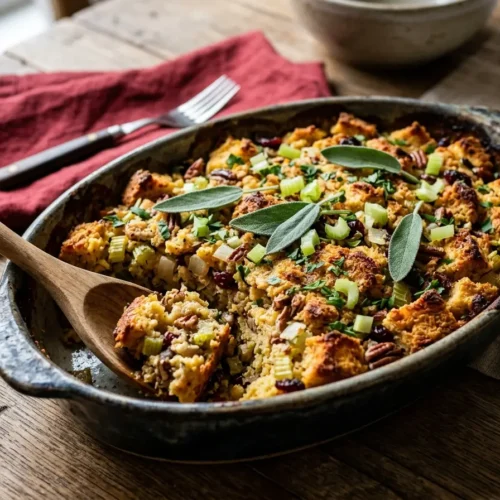
Easy Homemade Cornbread Stuffing
Equipment
- 9x13 inch Baking Dish
- Large skillet
- Large mixing bowl
- Sharp chef's knife
- Cutting board
- Wooden Spoon
- Measuring cups and spoons
Ingredients
- 8 cups Cornbread day-old, cut into 1-inch cubes (homemade or store-bought)
- 6 tablespoons Butter or dairy-free alternative like vegan butter
- 1 large Yellow Onion diced (about 2 cups)
- 3 stalks Celery diced (about 1 cup)
- 2 large Carrots diced (about 1 cup)
- 4 cloves Garlic minced
- 8 ounces Turkey Sausage casings removed, or chicken sausage alternative
- 3 cups Vegetable Broth low-sodium, or chicken broth
- 2 large Eggs lightly beaten
- 2 tablespoons Fresh Sage chopped, or 2 teaspoons dried sage
- 2 tablespoons Fresh Thyme chopped, or 2 teaspoons dried thyme
- 1 tablespoon Fresh Rosemary chopped, or 1 teaspoon dried rosemary
- 1 teaspoon Salt or to taste
- 1/2 teaspoon Black Pepper freshly ground
- 1/4 cup Fresh Parsley chopped, for garnish
Instructions
- Preheat oven to 350°F (175°C). Grease a 9x13 inch baking dish with butter or cooking spray.
- Cut day-old cornbread into 1-inch cubes and place in a large mixing bowl. If using fresh cornbread, spread cubes on a baking sheet and toast for 10 minutes to dry them out.
- In a large skillet over medium heat, melt 6 tablespoons of butter. Add diced onion, celery, and carrots. Cook for 8-10 minutes, stirring occasionally, until vegetables are softened and onion is translucent.
- Add minced garlic and cook for 1 minute until fragrant. Add turkey sausage, breaking it up with a wooden spoon, and cook for 6-8 minutes until browned and cooked through.
- Stir in fresh sage, thyme, and rosemary. Cook for 1 minute to release the herb oils. Season with salt and pepper. Remove from heat.
- Add the cooked vegetable and sausage mixture to the bowl with cornbread cubes. Toss gently to combine.
- In a separate bowl, whisk together vegetable broth and beaten eggs. Gradually pour this mixture over the cornbread, stirring gently until evenly moistened. The mixture should be moist but not soggy.
- Transfer the stuffing mixture to the prepared baking dish, spreading it evenly. Cover with foil and bake for 25 minutes.
- Remove foil and continue baking for 15-20 minutes until the top is golden brown and crispy, and the internal temperature reaches 165°F (74°C). The center should be set when gently shaken.
- Let rest for 5 minutes before serving. Garnish with fresh chopped parsley.
Notes
The finished stuffing should have a crispy golden top with a moist, cohesive interior. If the mixture seems too dry before baking, add broth 1/4 cup at a time until properly moistened. MAKE-AHEAD:
Assemble the stuffing up to 1 day ahead, cover and refrigerate. Add 10-15 minutes to baking time if cooking from cold. Can be frozen for up to 3 months. STORAGE:
Store leftover stuffing covered in the refrigerator for up to 4 days. Reheat in a 350°F oven for 15-20 minutes until warmed through, covering with foil to prevent over-browning. SUBSTITUTIONS:
For gluten-free version, use certified gluten-free cornbread. Fresh herbs can be substituted with dried at a 3:1 ratio (use 1/3 the amount of dried herbs). Vegetarian option: omit sausage and add 1 cup diced mushrooms or chopped walnuts.
Nutrition Highlights (Per Serving – Approximate)
Understanding your food’s composition is key to balanced eating. Here is an approximate nutritional breakdown calculated for a standard serving based on wholesome preparation guidelines:
Culinary Selection Notes
- Adjusting sweetener densities or using refined-sugar alternatives will directly optimize the overall glycemic load without breaking structural balance.
- Focusing on high-quality whole fats maximizes trace micronutrient retention across low-temperature or baking environments.
Conclusion
This homemade stuffing recipe represents the perfect balance of tradition and accessibility, delivering restaurant-quality results through straightforward home cooking techniques. The cornbread foundation provides natural sweetness and ideal texture while accommodating various dietary preferences effortlessly. Every family gathering deserves the warmth and satisfaction that comes from preparing beloved dishes from scratch.
The techniques outlined here ensure consistent success whether you’re preparing your first holiday meal or adding to decades of cooking experience. Quality ingredients combined with proper moisture control and temperature management create memorable results that become cherished family traditions. Homemade holiday baking connects us to our culinary heritage while creating new memories around shared meals.
The versatility of this recipe means it adapts beautifully to your family’s unique preferences and dietary needs without sacrificing flavor or satisfaction. Whether served alongside traditional holiday proteins or featured as part of a vegetarian feast, this stuffing recipe delivers the comfort and nourishment that makes special occasions truly memorable. The investment in homemade preparation pays dividends in both flavor and the joy of sharing something made with care.