Calamari Recipe: Easy Crispy Fried Rings Perfect Every Time
Learn how to make the perfect calamari recipe with crispy, tender rings in under 20 minutes. Easy, foolproof, and family-friendly. Get the recipe today.
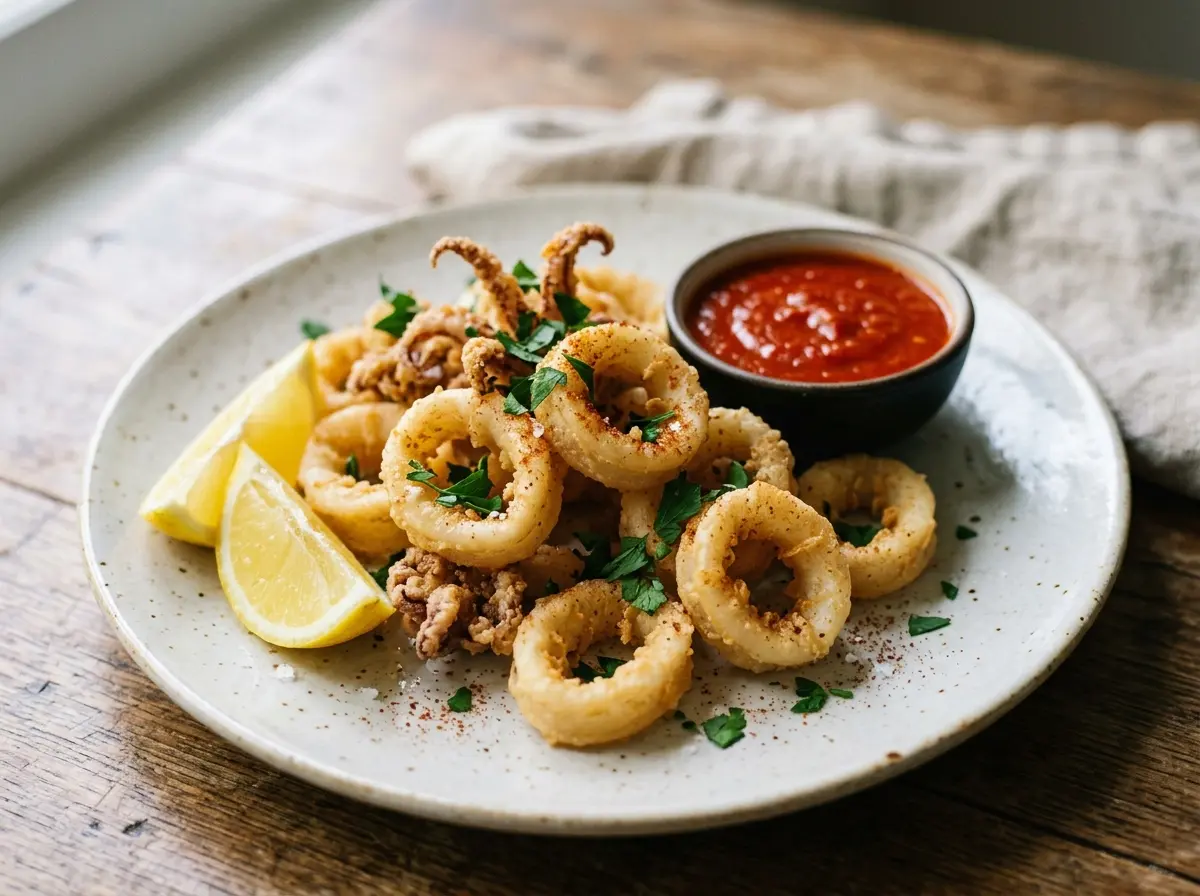
This calamari recipe delivers restaurant-quality golden rings with a perfectly crispy exterior and tender, never-rubbery interior. The secret lies in proper preparation techniques and precise temperature control.
Fresh calamari transforms into an irresistible appetizer when prepared with the right balance of seasoning and cooking method. The aroma of golden, bubbling rings fresh from the oil creates an instant craving that’s impossible to resist.
Introduction to Calamari Recipe
Calamari represents one of the most beloved seafood appetizers across Mediterranean and coastal cuisines worldwide. This golden fried calamari transforms simple squid into an extraordinary culinary experience that balances texture, flavor, and visual appeal.
The key to exceptional homemade calamari lies in understanding the delicate nature of squid protein. Unlike other seafood, calamari requires either very brief cooking times or extended braising periods to avoid the dreaded rubber-band texture.
Professional kitchens rely on specific techniques that home cooks often overlook. Temperature precision, proper cleaning methods, and strategic tenderizing create the foundation for success.
Why This Recipe Stands Out
This approach emphasizes food science principles that guarantee consistent results. Rather than guesswork, we focus on measurable techniques that deliver crispy exteriors and tender interiors every single time.
The method incorporates multiple tenderizing strategies including proper cleaning, strategic scoring, and optimal oil temperature maintenance. These elements work together to create restaurant-quality results in your home kitchen.
Additionally, we provide comprehensive alternatives for different dietary preferences and cooking equipment limitations. Whether you prefer traditional frying, healthy baking, or air fryer convenience, this guide covers every approach.
Ingredients for Crispy Fried Calamari
Quality ingredients form the foundation of exceptional crispy fried calamari. Fresh or properly frozen squid provides the best texture and flavor profile for this classic preparation.
The coating system requires specific flour types and seasoning blends to achieve optimal crispiness. All-purpose flour creates the base, while cornstarch additions enhance the final crunch factor.
Buttermilk serves as both a tenderizer and flavor enhancer. The natural acidity breaks down tough protein fibers while adding subtle tang that complements the mild squid flavor perfectly.
Step-by-Step Instructions
Proper execution requires attention to detail at every stage of preparation. Each step builds upon the previous one to create the final golden, crispy result.
Temperature monitoring becomes critical during the frying process. Oil that’s too cool results in soggy, greasy rings, while excessive heat creates tough, overcooked squid.
Preparing and Cleaning Calamari
Fresh calamari cleaning begins with removing the plastic-like cartilage from inside the body tube. This transparent “pen” slides out easily when pulled from the head end of the squid.
The outer membrane peels away under cool running water using gentle rubbing motions. This purple-speckled skin comes off cleanly when the squid is properly fresh.
Tentacles require separation at the base, removing the hard beak located in the center cluster. Cut just above the eyes to maintain the attractive tentacle grouping while eliminating inedible portions.
Tenderizing Techniques
Mechanical tenderizing involves scoring the inside surface of calamari tubes in a crosshatch pattern. These shallow cuts, spaced about 1/4 inch apart, break muscle fibers that would otherwise contract during cooking.
Chemical tenderizing occurs through the buttermilk soaking process. The lactic acid naturally present in buttermilk gently breaks down proteins without affecting the delicate squid flavor.
Time management plays a crucial role in tenderizing effectiveness. Minimum soaking periods of 30 minutes provide noticeable improvement, while overnight marination delivers maximum tenderness.
Coating Options – Buttermilk Soak, Seasoned Flour, and Gluten-Free Alternatives
The traditional coating system relies on seasoned all-purpose flour combined with cornstarch for enhanced crispiness. This blend creates the classic golden color and satisfying crunch texture.
Gluten-free alternatives using rice flour or almond flour provide similar results for dietary restrictions. Rice flour produces particularly crispy results due to its unique protein structure.
Seasoning integration requires balance between salt, pepper, garlic powder, and paprika. Over-seasoning masks the delicate squid flavor, while under-seasoning creates bland results.
Frying Tips – Oil Type, Temperature, and Timing
Oil selection significantly impacts both flavor and cooking performance. Neutral oils like vegetable or canola maintain clean taste profiles while supporting high-temperature frying requirements.
Temperature precision between 350°F and 375°F ensures proper cooking without toughening. Digital thermometers provide the accuracy necessary for consistent results across multiple batches.
Timing becomes critical once calamari enters the hot oil. Golden calamari rings require only 60 to 90 seconds of frying time to reach perfect doneness without becoming rubbery.
Alternative Cooking Methods
Modern cooking techniques offer healthier alternatives to traditional deep frying while maintaining appealing textures and flavors. These methods reduce oil consumption without sacrificing taste satisfaction.
Oven-based techniques require higher temperatures and strategic positioning to achieve browning and crispiness. Proper rack placement ensures even heat distribution around each piece.
Healthy Baked Calamari
Baked calamari utilizes high oven temperatures around 425°F to create crispy exteriors through dry heat concentration. Preheating baking sheets enhances the initial searing effect.
Light oil misting or spray application provides necessary fat for browning reactions. This technique reduces total oil content by 75% compared to deep frying methods.
Timing adjustments become necessary since oven cooking requires longer exposure periods. Typical baking times range from 8 to 12 minutes depending on ring thickness and desired crispness level.
Air Fryer Method
Air fryer technology combines convection heat with minimal oil requirements for efficient calamari preparation. The circulating hot air creates similar browning effects to traditional frying.
Basket arrangement requires single-layer placement to ensure even cooking across all pieces. Overlapping rings result in uneven heating and inconsistent texture development.
Temperature settings between 380°F and 400°F provide optimal results in most air fryer models. Cooking times typically range from 6 to 8 minutes with halfway rotation for uniform browning.
Tips for Perfect Calamari
Mastering the best calamari recipe requires understanding common pitfalls that lead to disappointing results. Temperature control, timing precision, and ingredient quality form the foundation of success.
Consistency across multiple batches demands systematic approaches to preparation and cooking procedures. Small variations in technique can produce dramatically different outcomes.
Common Mistakes and Troubleshooting
Overcooking represents the most frequent error in calamari preparation. Extended exposure to heat causes protein fibers to contract excessively, creating the characteristic tough, chewy texture.
Inadequate oil temperature produces soggy, grease-absorbed results that lack the desired crispy exterior. Under-heated oil fails to create the immediate searing effect necessary for proper texture development.
Crowding the cooking vessel reduces oil temperature and creates uneven cooking conditions. Batch cooking in smaller quantities maintains consistent results throughout the entire preparation process.
How to Achieve Crispy Texture Every Time
Moisture management during preparation significantly affects final crispiness levels. Thoroughly patting calamari dry before coating removes excess surface water that interferes with browning reactions.
Coating adhesion requires proper technique during the flour application process. Gentle pressing ensures even distribution while avoiding thick, heavy layers that become soggy during cooking.
Immediate serving maintains optimal texture quality since calamari begins losing crispiness within minutes of cooking completion. Hot serving plates help preserve temperature and textural appeal.
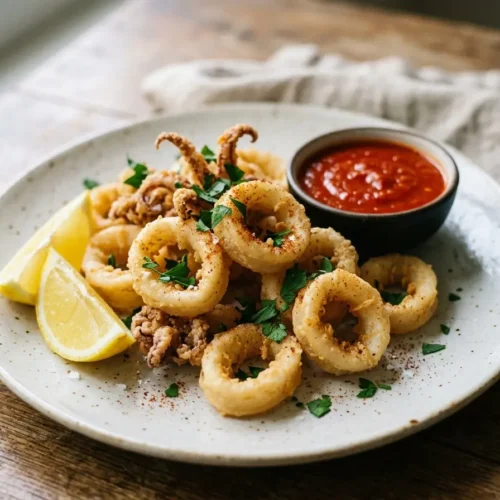
Crispy Fried Calamari Rings
Equipment
- Deep Thermometer
- Heavy-Bottom Pot or Deep Fryer
- Wire Mesh Strainer
- Paper Towels
- Large Mixing Bowls
- Tongs
Ingredients
- 1 lb Fresh Squid Tubes cleaned, or frozen squid rings thawed
- 1 cup Unsweetened Plant Milk almond or oat milk
- 2 tbsp Fresh Lemon Juice
- 1 cup All-Purpose Flour or gluten-free flour blend
- 1/2 cup Cornstarch
- 1 tsp Sweet Paprika
- 1 tsp Garlic Powder
- 1/2 tsp Dried Oregano
- 1 tsp Sea Salt
- 1/4 tsp Black Pepper freshly ground
- 1/4 tsp Cayenne Pepper optional, for heat
- 4 cups Avocado Oil or vegetable oil for deep frying
Instructions
- If using fresh squid tubes, rinse under cold water and pat completely dry. Cut tubes into 1/2-inch wide rings, removing any remaining cartilage or membrane. If using frozen rings, thaw completely and pat dry.
- In a bowl, combine plant milk and lemon juice. Let sit for 2 minutes to create dairy-free buttermilk substitute. Add calamari rings and let soak for 10 minutes to tenderize.
- In a large bowl, whisk together flour, cornstarch, paprika, garlic powder, oregano, salt, black pepper, and cayenne until well combined.
- Heat oil in heavy-bottom pot to exactly 375°F (190°C). Oil should be 3-4 inches deep to properly submerge calamari rings. Use thermometer to maintain consistent temperature.
- Remove calamari rings from milk mixture, allowing excess to drip off. Working in small batches, toss rings in seasoned flour mixture until evenly coated.
- Carefully lower 6-8 rings into hot oil using tongs. Fry for 2-3 minutes until golden brown and crispy, turning once halfway through. Do not overcrowd the pot.
- Using wire strainer or slotted spoon, transfer fried calamari to paper towel-lined plate. Season immediately with a pinch of salt while hot.
- Repeat with remaining calamari, ensuring oil returns to 375°F between batches. Serve immediately while hot and crispy.
Notes
Fresh squid should smell like the ocean, not fishy. Remove the clear cartilage completely to prevent chewy texture. TEMPERATUE CONTROL:
Maintain oil at 375°F throughout frying. Too low results in greasy calamari, too high burns the coating before cooking the squid. TROUBLESHOOTING:
If calamari turns out tough, you've overcooked it. Fry for maximum 3 minutes. The milk and lemon soak helps tenderize the squid. STORAGE:
Best served immediately. Leftover fried calamari can be reheated in a 400°F oven for 3-4 minutes to restore crispness.
Nutrition Highlights (Per Serving – Approximate)
Understanding your food’s composition is key to balanced eating. Here is an approximate nutritional breakdown calculated for a standard serving based on wholesome preparation guidelines:
Culinary Selection Notes
- Adjusting sweetener densities or using refined-sugar alternatives will directly optimize the overall glycemic load without breaking structural balance.
- Focusing on high-quality whole fats maximizes trace micronutrient retention across low-temperature or baking environments.
Serving Suggestions
Proper presentation enhances the overall dining experience while highlighting the golden, crispy appearance of perfectly prepared calamari. Strategic garnishing and accompaniment selection create restaurant-quality presentations.
Temperature coordination ensures all components reach the table at optimal serving conditions. Hot calamari paired with room-temperature or chilled accompaniments provides appealing textural contrasts.
Best Dipping Sauces
Classic marinara sauce provides the traditional Italian-American pairing that complements calamari’s mild flavor profile. The acidity cuts through any residual oil while adding bright, tomatoey freshness.
Aioli-based sauces offer creamy richness that balances the crispy texture beautifully. Garlic aioli, lemon aioli, or herb-infused versions create sophisticated flavor combinations.
Spicy options like sriracha mayo or harissa-spiked yogurt sauce add heat and complexity for adventurous palates. These bold flavors work particularly well with the neutral calamari base.
Pairing Ideas
Mediterranean-inspired combinations featuring fresh herbs, olives, and citrus create authentic flavor profiles. Lemon wedges, fresh parsley, and cherry tomatoes provide colorful, fresh accompaniments.
Asian fusion approaches using ponzu, sesame oils, or chili crisp offer modern interpretations that expand traditional boundaries. These combinations work especially well with air-fried or baked preparations.
Salad integration transforms calamari from appetizer to main course status. Mixed greens, arugula, or spinach bases provide nutritional balance and visual appeal.
Storage and Make-Ahead Tips
Proper storage techniques maintain quality and safety while extending the useful life of prepared calamari. Understanding optimal conditions prevents texture degradation and flavor loss.
Make-ahead strategies allow for stress-free entertaining while maintaining the high-quality results expected from fresh preparation. Strategic timing ensures optimal serving conditions.
Freezing Cooked Calamari
Cooked calamari freezes successfully when properly cooled and packaged in airtight containers. Flash-freezing individual pieces on baking sheets prevents clumping during storage.
Storage duration should not exceed two months for optimal quality retention. Extended freezing periods result in texture changes and flavor deterioration.
Vacuum sealing provides superior protection against freezer burn and moisture loss. This method extends storage life while maintaining better texture upon reheating.
Reheating Guidelines
Oven reheating at 375°F provides the best texture restoration for previously fried calamari. Single-layer arrangement on preheated baking sheets recreates crispiness effectively.
Air fryer reheating offers convenient alternatives that restore crispiness in minimal time. Short heating cycles of 2-3 minutes prevent overcooking while reviving texture.
Microwave reheating should be avoided as it creates steam that destroys the crispy coating. This method results in soggy, unappealing textures that cannot be recovered.
Conclusion and Final Thoughts
This comprehensive calamari recipe provides all the techniques necessary for consistently excellent results. Understanding the science behind proper preparation removes guesswork from the cooking process.
Whether you choose traditional frying, healthy baking, or convenient air fryer methods, these principles apply universally. Temperature control, timing precision, and quality ingredients remain constant across all approaches.
Mastering this versatile seafood preparation opens doors to countless variations and creative applications. From classic appetizers to innovative main courses, perfectly prepared calamari enhances any meal occasion.