Msemen Recipe: Easy Homemade Moroccan Pancakes Perfect Every Time
Learn how to make the perfect msemen recipe with our easy step-by-step guide for flaky, crispy Moroccan pancakes. Get the recipe today.
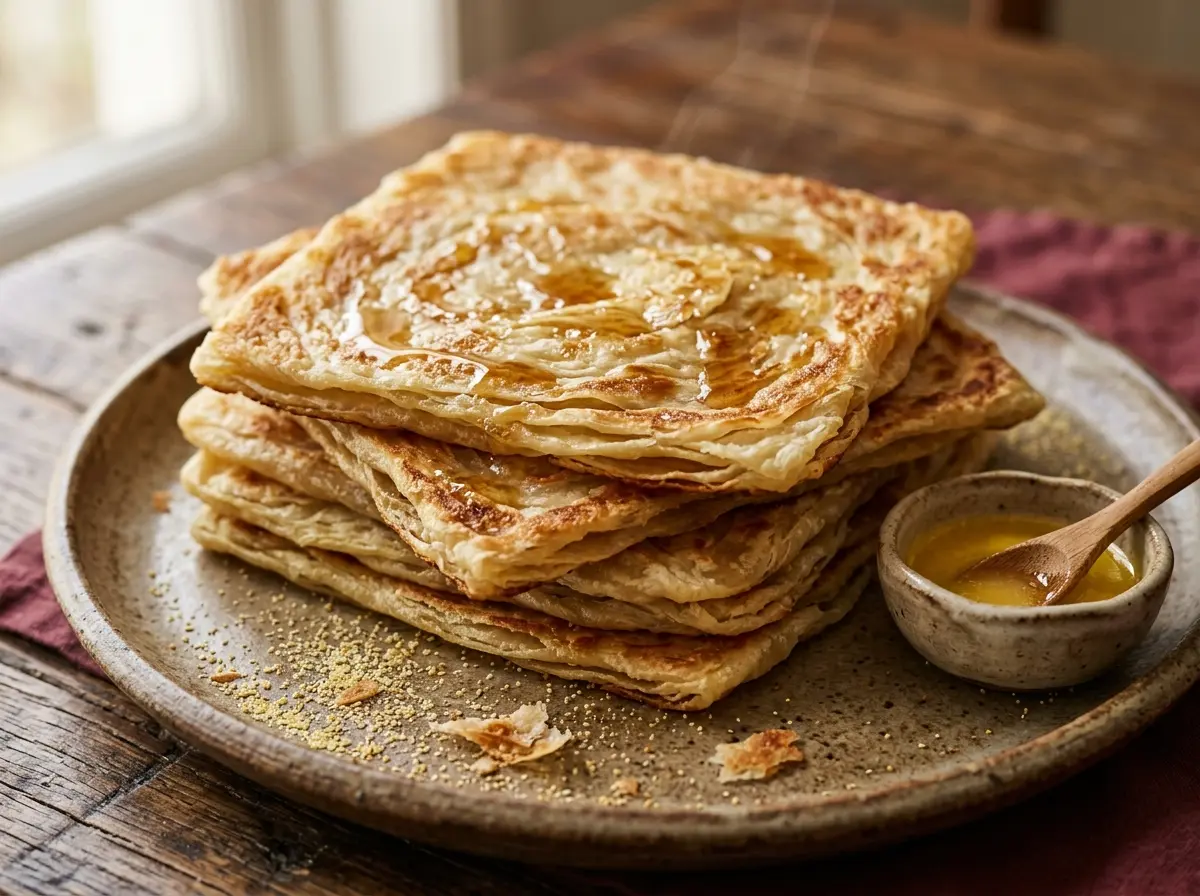
Creating an authentic msemen recipe at home brings the soul-warming comfort of Morocco’s most beloved breakfast bread straight to your kitchen. These golden, flaky moroccan pancakes deliver layers upon layers of buttery goodness that practically melt in your mouth with every bite.
The aroma of freshly cooked msemen fills your home with that unmistakable scent of toasted flour and warm butter. Each bite reveals delicate, paper-thin layers that separate beautifully, creating the perfect balance between crispy exterior and tender interior that makes homemade msemen so irresistible.
Introduction to Msemen
What is Msemen? Cultural Significance and Origins
Msemen represents one of Morocco’s most cherished culinary traditions, deeply woven into the fabric of daily life across North Africa. This flaky moroccan pancake serves as both a breakfast staple and an afternoon treat, often paired with traditional Moroccan mint tea during social gatherings.
The name “msemen” derives from the Arabic word “samn,” meaning clarified butter or ghee, highlighting the essential role that fat plays in creating those signature layers. Families across Morocco pass down their unique folding techniques from generation to generation, making each household’s version slightly different yet authentically traditional.
Street vendors throughout Moroccan cities prepare fresh rghaif recipe variations on large griddles, filling the air with enticing aromas that draw hungry passersby. The sight of skilled hands stretching and folding dough into perfect squares has become an integral part of Morocco’s vibrant street food culture.
Key Characteristics of Msemen – Texture, Flavor, and Shape
Authentic moroccan breakfast bread showcases a remarkable contrast between its golden, slightly crispy exterior and its tender, layered interior. When properly made, each bite reveals dozens of paper-thin layers that separate easily, creating an almost pastry-like experience.
The flavor profile remains deliberately mild and versatile, featuring subtle notes of butter and flour that complement both sweet and savory accompaniments. This neutral taste foundation allows msemen to pair beautifully with honey, jam, cheese, or even savory Moroccan soups.
Traditional msemen takes on a distinctive square or rectangular shape, achieved through a specific folding technique that creates multiple layers. The final thickness typically ranges from one-quarter to one-half inch, providing the perfect balance between structural integrity and delicate texture.
Ingredients Overview
Essential Ingredients and Their Roles
The foundation of any successful easy msemen for beginners starts with high-quality all-purpose flour, which provides the necessary protein structure for elasticity. The gluten development during kneading creates the stretchy dough that allows for those ultra-thin layers without tearing.
Room-temperature butter serves as the lamination agent, creating distinct layers while adding richness and flavor. The butter must be soft enough to spread easily but not so warm that it melts into the dough completely.
Fine salt enhances the overall flavor profile while also strengthening the gluten network, contributing to better dough handling properties. A small amount of sugar helps with browning and adds subtle sweetness that balances the butter’s richness.
Variations for Dietary Preferences (Vegan, Dairy-Free Options)
Creating a dairy-free msemen version requires substituting the butter with high-quality plant-based alternatives that maintain similar fat content and consistency. Coconut oil works exceptionally well when solid at room temperature, providing comparable layering properties.
Vegan butter substitutes made from coconut or olive oil deliver excellent results while maintaining the traditional flavor profile. These alternatives should be at the same consistency as regular butter—soft but not melted—for optimal layering.
For those avoiding refined oils, tahini or other nut-based spreads can create interesting flavor variations while still providing the necessary fat content for proper lamination. These alternatives may produce slightly denser results but remain deliciously authentic.
Step-by-Step Preparation Guide
Preparing the Laminated Dough
Successful authentic msemen techniques begin with proper dough hydration, which requires gradually adding warm water to the flour mixture while mixing continuously. The water temperature should feel comfortably warm to the touch—around 100°F—to activate gluten development without cooking the flour.
Kneading time plays a crucial role in developing the elasticity needed for stretching thin layers. The dough should be worked for at least 8-10 minutes until it becomes smooth, elastic, and slightly tacky but not sticky.
Resting periods allow gluten to relax, making the dough easier to stretch without snapping back. Cover the dough with a damp cloth and let it rest for at least 30 minutes at room temperature before attempting to shape individual portions.
Mastering the Folding Technique with Visual Tips
The signature layering technique requires stretching each dough portion into an almost transparent sheet, thin enough that you could read through it. Work from the center outward, using gentle pulling motions rather than aggressive stretching to prevent tearing.
Visual cues for proper thickness include being able to see your hand clearly through the stretched dough. If the dough tears during stretching, it may need additional resting time or more thorough kneading to develop sufficient gluten strength.
The folding sequence creates the characteristic layers: spread butter evenly across the stretched surface, then fold into thirds lengthwise, and finally fold into thirds widthwise to create a compact square. Each fold should be pressed gently to maintain layer separation.
Cooking on a Warm Skillet – Temperature Control
Medium-low heat provides the optimal cooking temperature for developing golden color while ensuring thorough cooking of interior layers. Too high heat results in burnt exteriors with raw centers, while too low heat creates pale, tough pancakes.
A properly heated surface should make a few drops of water dance and evaporate within 2-3 seconds. Cast iron or heavy-bottomed pans distribute heat most evenly, preventing hot spots that could burn the delicate layers.
Cooking time varies between 2-4 minutes per side, depending on thickness and heat level. The msemen is ready to flip when the bottom develops an even golden-brown color and the edges begin to crisp slightly.
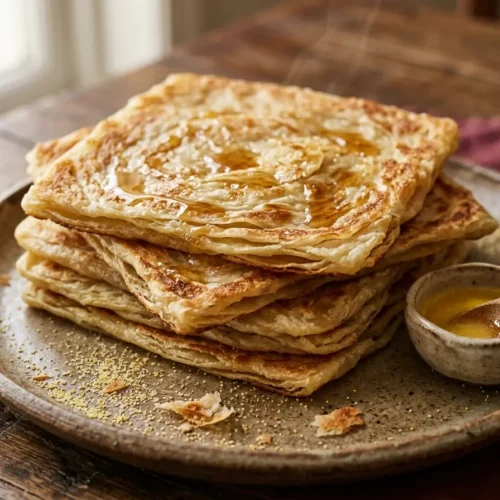
Traditional Moroccan Msemen Pancakes
Equipment
- Large mixing bowl
- Kitchen Scale
- Measuring cups and spoons
- Clean kitchen towel
- Rolling Pin
- Non-stick skillet or griddle
- Pastry Brush
- Clean work surface
Ingredients
- 2 cups All-purpose flour 240g, or substitute with 1 cup all-purpose + 1 cup whole wheat flour for added nutrition
- 1 teaspoon Fine sea salt 5g
- 1 tablespoon Coconut sugar 15g, or substitute with maple syrup or date sugar for natural sweetening
- 3/4 cup Warm water 180ml, room temperature to slightly warm
- 2 tablespoons Extra virgin olive oil 30ml, for the dough
- 4 tablespoons Unsalted butter 60g, melted, or substitute with vegan butter or coconut oil for dairy-free option
- 2 tablespoons Fine semolina flour 30g, for dusting between layers
- 1 tablespoon Neutral oil 15ml, for cooking, such as avocado or sunflower oil
Instructions
- In a large mixing bowl, whisk together 2 cups (240g) flour, 1 teaspoon (5g) salt, and 1 tablespoon (15g) coconut sugar until evenly combined.
- Create a well in the center and add 3/4 cup (180ml) warm water and 2 tablespoons (30ml) olive oil. Mix with a wooden spoon until a shaggy dough forms.
- Turn the dough onto a clean work surface and knead for 8-10 minutes until smooth and elastic. The dough should feel slightly tacky but not sticky - add 1-2 tablespoons flour if too wet, or 1 tablespoon water if too dry.
- Place the kneaded dough in a lightly oiled bowl, cover with a damp kitchen towel, and let rest for 20 minutes to relax the gluten.
- Divide the rested dough into 8 equal portions (about 60g each). Roll each portion into a smooth ball and cover with a damp towel.
- On a lightly floured surface, roll one ball into a thin circle about 8 inches (20cm) in diameter. The dough should be thin enough to see your hand through it, but not tearing.
- Brush the entire surface with melted butter and sprinkle lightly with semolina flour. This creates the flaky layers.
- Fold the circle in half to create a semicircle, then fold in half again to form a quarter-circle triangle. Gently press to seal the layers without squashing.
- Repeat with remaining dough balls. Let the folded triangles rest for 10 minutes before the final rolling.
- Gently roll each triangle into a circle about 6 inches (15cm) in diameter, being careful not to press too hard and break the layers.
- Heat a non-stick skillet or griddle over medium heat. Lightly brush with neutral oil.
- Cook each msemen for 2-3 minutes on the first side until golden brown spots appear and the edges start to crisp.
- Flip carefully with a spatula and cook for another 1-2 minutes until the second side is golden and the pancake puffs slightly.
- Transfer to a plate and cover with a clean kitchen towel to keep warm while cooking the remaining pancakes.
- Serve immediately while warm with honey, jam, or your favorite accompaniment.
Notes
Look for golden brown spots and slightly puffed layers when the msemen is ready to flip. The edges should appear set and lightly crispy. TROUBLESHOOTING:
If dough tears during rolling, let it rest 5 more minutes. If msemen turns out tough, reduce cooking heat and ensure dough was properly rested. For extra flaky layers, chill shaped triangles for 15 minutes before final rolling. MAKE-AHEAD:
Shaped triangles can be refrigerated for up to 24 hours or frozen for up to 1 month. Thaw frozen triangles completely before final rolling and cooking. STORAGE:
Store leftover cooked msemen in refrigerator for up to 3 days. Reheat in a dry skillet over low heat to restore crispiness.
Nutrition Highlights (Per Serving – Approximate)
Understanding your food’s composition is key to balanced eating. Here is an approximate nutritional breakdown calculated for a standard serving based on wholesome preparation guidelines:
Culinary Selection Notes
- Adjusting sweetener densities or using refined-sugar alternatives will directly optimize the overall glycemic load without breaking structural balance.
- Focusing on high-quality whole fats maximizes trace micronutrient retention across low-temperature or baking environments.
Tips, Variations, and Troubleshooting
Common Msemen Problems and How to Fix Them
Dough tearing during stretching typically indicates insufficient gluten development or inadequate resting time. Allow the dough to rest for an additional 15-20 minutes and ensure thorough kneading during the initial mixing phase.
Thick, heavy pancakes often result from insufficient stretching or overly thick butter application. The stretched dough should be nearly transparent, and butter should be spread in the thinnest possible layer while still covering the entire surface.
Uneven cooking or burnt spots usually stem from inconsistent heat distribution or temperature that’s too high. Use a heavy-bottomed pan and maintain steady medium-low heat throughout the cooking process.
Ingredient Adjustments for Different Climates
Humid environments require slightly less water in the initial dough mixture, as flour naturally absorbs moisture from the air. Start with 10-15% less liquid and add gradually until achieving the proper consistency.
Dry climates may necessitate additional hydration and longer resting periods to prevent the dough from becoming too stiff. Cover dough portions with damp cloths during all resting phases to maintain proper moisture levels.
High-altitude locations benefit from increased liquid content and reduced resting time, as lower air pressure affects gluten development and water evaporation rates. Adjust water content upward by approximately 2-3 tablespoons per cup of flour.
Alternative Sweeteners and Butter Substitutes
Msemen troubleshooting tips for dietary restrictions include using coconut sugar instead of regular sugar for a lower glycemic impact. This substitution adds subtle caramel notes while maintaining proper browning characteristics.
Ghee provides an excellent butter alternative that offers superior high-heat stability and enhanced nutty flavor. The clarified butter creates equally effective layers while adding depth to the overall taste profile.
Plant-based butter alternatives work best when they contain similar fat percentages to dairy butter—around 80% fat content. Avoid spreads with high water content, as they can interfere with proper layer formation.
Serving Suggestions and Pairings
Traditional Moroccan Breakfast Ideas
Classic Moroccan breakfast presentations feature fresh msemen alongside honey, homemade preserves, and soft white cheese. The contrast between the flaky pancakes and creamy cheese creates a perfect balance of textures and flavors.
Amlou—a traditional almond and argan oil paste—provides an authentic accompaniment that highlights Morocco’s indigenous ingredients. This nutty spread complements the butter layers while adding protein and healthy fats to the meal.
Fresh mint tea serves as the quintessential beverage pairing, with its refreshing qualities balancing the rich, buttery pancakes. The warm, aromatic tea enhances the overall dining experience and aids digestion.
Modern Twists and Family-Friendly Variations
Contemporary presentations might include fresh fruit compotes, yogurt parfaits, or even savory applications with scrambled eggs and vegetables. These adaptations make homemade msemen accessible to diverse palates while maintaining cultural authenticity.
Family-friendly versions can incorporate cinnamon-sugar dusting or serve alongside other pancake varieties for variety-seeking children. The mild flavor profile makes msemen an excellent introduction to international cuisines.
Savory preparations might feature herb-infused butter layers or serve as wraps for grilled vegetables and proteins. These creative applications demonstrate the versatility inherent in traditional flaky moroccan pancakes.
Storage and Make-Ahead Tips
Proper Storage for Maintaining Crispiness
Msemen storage methods require careful attention to preventing moisture buildup, which can make the layers soggy. Allow completely cooled pancakes to rest at room temperature for 10-15 minutes before storing to prevent condensation.
Paper towel layering between individual pancakes absorbs excess moisture while allowing air circulation. Place wrapped stacks in airtight containers and refrigerate for up to 3 days or freeze for up to 3 months.
Freezing works exceptionally well for make-ahead msemen recipe preparation. Wrap individual portions in plastic wrap, then place in freezer bags with dates clearly marked for easy meal planning.
Reheating Instructions
Dry skillet reheating maintains the best texture, using medium-low heat for 1-2 minutes per side until warmed through. This method helps restore some crispiness to the exterior layers without overcooking.
Oven reheating at 350°F for 5-7 minutes provides even heating for multiple portions simultaneously. Wrap in aluminum foil to prevent excessive drying while still allowing some surface crisping.
Microwave reheating should be avoided when possible, as it creates steam that makes the layers soft and chewy. If necessary, use 15-20 second intervals with a paper towel underneath to absorb moisture.
Frequently Asked Questions (FAQ)
Can I prepare the dough in advance?
Yes, prepared dough can be refrigerated for up to 24 hours or frozen for up to 1 month. Allow refrigerated dough to come to room temperature before stretching, and thaw frozen dough completely in the refrigerator overnight.
Why does my dough keep snapping back when I try to stretch it?
This indicates insufficient gluten relaxation. Allow the dough to rest for an additional 15-30 minutes, covered with a damp cloth, before attempting to stretch again.
How thin should I stretch the dough?
The dough should be stretched until nearly transparent—thin enough that you can see your hand clearly through it. This creates the maximum number of layers and the most authentic texture.
What’s the difference between msemen and rghaif?
Both are essentially the same dish with regional naming variations. Rghaif is more commonly used in some areas of North Africa, while msemen is the preferred term in Morocco and other regions.
Can I make msemen without butter?
Yes, various alternatives work well including ghee, coconut oil (solid at room temperature), or high-quality plant-based butter substitutes. The key is maintaining similar fat content and consistency.
How do I know when the pan is the right temperature?
Sprinkle a few drops of water on the surface—they should dance and evaporate within 2-3 seconds. If they evaporate instantly, the heat is too high; if they sit without movement, increase the temperature.