Baklava Recipe: Easy Homemade Delight with Crispy Layers
Learn how to make the perfect baklava recipe with crispy layers and sweet honey syrup. A simple, foolproof dessert to make today.
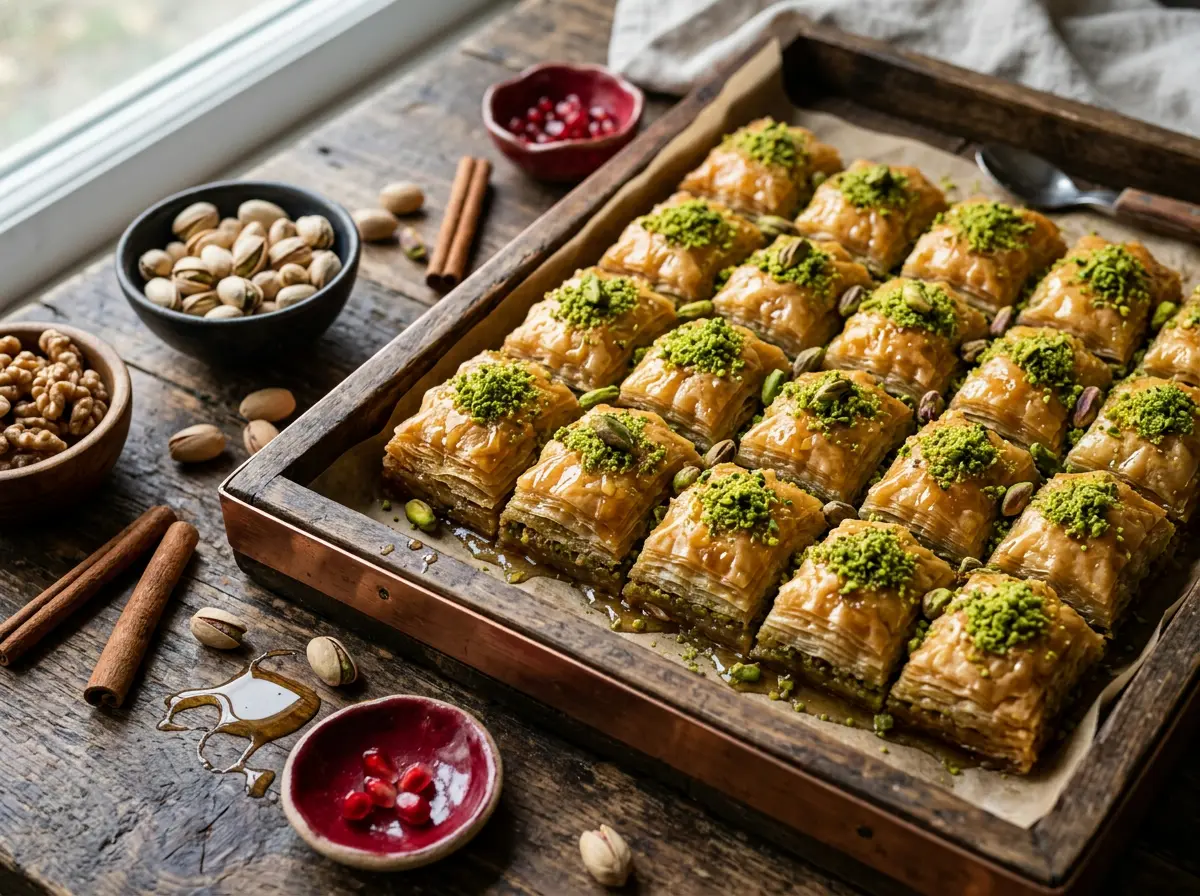
This authentic baklava recipe transforms simple ingredients into layers of golden, flaky pastry filled with aromatic nuts and soaked in fragrant honey syrup. Every bite delivers the perfect balance of crispy phyllo, rich nuts, and sweet syrup that defines this beloved Mediterranean dessert.
The magic happens when buttered phyllo sheets create dozens of paper-thin layers that bake into incredible crispiness. Combined with perfectly spiced nuts and a citrus-infused honey syrup, this homemade baklava rivals any bakery version while giving you complete control over ingredients and sweetness levels.
Introduction to Baklava Recipe
Creating the perfect baklava recipe requires understanding the delicate balance between crispy phyllo layers, aromatic nut fillings, and properly absorbed syrup. This ancient pastry represents centuries of Mediterranean culinary artistry, where each paper-thin layer contributes to an extraordinary textural experience.
History and Mediterranean Origin
Baklava originated in the Ottoman Empire, spreading throughout Greece, Turkey, and the broader Mediterranean region. Each culture developed unique variations, from Greek versions featuring walnuts and cinnamon to Turkish styles with pistachios and rose water.
The technique of creating ultra-thin pastry layers dates back over 800 years. Traditional bakers would stretch dough so thin you could read through it, a skill that modern phyllo manufacturers have perfected for home cooks.
Why This Recipe Stands Out
This easy baklava approach simplifies traditional methods without compromising authenticity. The recipe addresses common home baking challenges like phyllo handling, even syrup distribution, and proper storage techniques.
Unlike many versions that rely on excessive sweetness, this balanced formula lets the nutty flavors shine through. The honey syrup contains just enough sweetness to complement rather than overpower the delicate pastry layers.
Ingredients Overview
Quality ingredients make the difference between good and exceptional homemade baklava. Each component serves a specific purpose in creating the signature texture and flavor profile that defines this Mediterranean masterpiece.
Essential Ingredients and Substitutions
Phyllo dough forms the foundation, creating dozens of paper-thin layers when properly handled. Fresh phyllo produces superior results compared to frozen varieties, though both work when thawed completely and kept moist during assembly.
Clarified butter provides the richest flavor and prevents burning at high temperatures. Regular butter works as a substitute, but clarified butter creates more professional results with better browning and crispiness.
Mixed nuts offer complexity and texture variation. Traditional combinations include walnuts, pistachios, and almonds, each contributing unique flavors and oils that enhance the overall taste profile.
Using Organic and Healthier Alternatives
Organic nuts provide cleaner flavors without chemical residues that can affect taste. Raw, unsalted varieties allow better control over the final seasoning balance.
Pure honey creates superior syrup compared to corn syrup blends. Local wildflower honey adds regional character, while orange blossom or clover varieties offer subtle floral notes that complement the nut filling beautifully.
Preparing the Phyllo Dough
Proper phyllo handling determines whether your greek baklava achieves professional-level flakiness or becomes a soggy disappointment. Temperature, humidity, and timing all affect how these delicate sheets behave during assembly.
Handling and Storing Phyllo Dough
Thaw frozen phyllo completely in the refrigerator overnight, never at room temperature which causes uneven moisture distribution. Remove from packaging only when ready to use, keeping unused sheets covered with barely damp towels.
Room temperature phyllo works more easily than cold sheets straight from the refrigerator. Allow 30 minutes of warming time, but never let sheets sit uncovered longer than this timeframe.
Handle each sheet gently to prevent tearing, which weakens the layer structure. Minor tears can be patched by overlapping edges, but extensive damage requires starting with a fresh sheet.
Tips for Working in Humid Environments
High humidity makes phyllo sticky and difficult to separate. Run air conditioning or use a dehumidifier in the kitchen before starting assembly to create optimal working conditions.
Work quickly but deliberately in humid climates, completing assembly within 45 minutes of opening the phyllo package. Extended exposure to moisture causes sheets to become gummy and unmanageable.
If sheets become slightly sticky, dust lightly with cornstarch between layers. This prevents sticking without affecting the final texture or flavor of your best baklava recipe.
Nut Filling Preparation
The nut mixture creates the heart of authentic baklava, providing richness, texture, and aromatic complexity. Proper preparation techniques ensure even distribution and optimal flavor release during baking.
Nut Combinations for Flavor and Texture
Walnuts offer earthy richness and tender texture when chopped to medium-fine consistency. Pistachios add vibrant color and distinctive flavor that pairs beautifully with honey and citrus elements.
Almonds contribute subtle sweetness and pleasant crunch, especially when mixed with softer nuts like walnuts. Toast nuts lightly before chopping to intensify their natural oils and deepen the flavor profile.
Chop nuts by hand for the best texture control, aiming for pieces roughly the size of coarse breadcrumbs. Food processors can over-process quickly, creating nut butter instead of the desired chunky texture.
Spices and Natural Flavor Enhancers
Cinnamon provides warmth and classic Mediterranean flavor that complements all nut varieties. Use Ceylon cinnamon for more delicate, sweet notes, or cassia for stronger, spicier character.
Orange zest brightens the nut mixture without adding moisture that could make phyllo soggy. Fresh zest works best, providing essential oils that distribute evenly throughout the filling.
A pinch of ground cardamom adds exotic complexity without overwhelming the primary flavors. Start with small amounts since this potent spice can easily dominate more subtle ingredients.
Assembly Process
Layering technique transforms individual components into cohesive pistachio baklava or walnut baklava masterpieces. Systematic assembly ensures even cooking and proper syrup absorption throughout all layers.
Layering Techniques for Flaky Texture
Brush each phyllo sheet completely with melted butter, paying attention to edges which tend to dry out and burn. Use a pastry brush with natural bristles for even coverage without tearing delicate sheets.
Layer 8-10 sheets for the bottom foundation, creating a sturdy base that supports the nut filling without becoming soggy. Each sheet should overlap slightly with the previous one for complete coverage.
Distribute nut filling evenly, leaving a small border around edges to prevent spillover during cutting and baking. Gentle spreading with a spatula ensures uniform thickness without compressing the nuts too heavily.
Cutting and Portion Control Before Baking
Cut through all layers before baking using a sharp knife in smooth, decisive strokes. Pre-cutting prevents crushing the delicate top layers and ensures clean, professional-looking portions.
Traditional diamond patterns create elegant presentation and practical serving sizes. Cut parallel diagonal lines in one direction, then repeat in the opposite direction to form diamond shapes.
Make cuts completely through to the bottom of the pan, but avoid dragging the knife which can pull and tear the phyllo layers. Clean the blade between cuts to maintain sharp edges.
Baking Instructions
Proper baking transforms assembled layers into golden, crispy honey baklava with perfectly cooked phyllo and aromatic nut filling. Temperature control and timing ensure even browning without burning delicate edges.
Oven Settings and Baking Tips
Preheat to 350°F (175°C) for consistent results across different oven types. This moderate temperature allows thorough cooking without scorching the top layers before the bottom sheets become crispy.
Position the baking dish in the center rack to promote even air circulation. Avoid placing too close to heating elements which can cause uneven browning or burnt spots.
Bake for 45-55 minutes until the top achieves deep golden brown color. The phyllo should sound crispy when tapped gently, indicating proper moisture evaporation from all layers.
Ensuring Even Golden Brown Color
Rotate the pan halfway through baking to compensate for oven hot spots. Most home ovens have slight temperature variations that can cause uneven browning without this adjustment.
If edges brown too quickly, tent with aluminum foil while allowing the center to continue cooking. This prevents burning while ensuring complete cooking throughout the entire pastry.
Check doneness by looking for uniform golden color across the surface. The finished baklava should have no pale or wet-looking areas that indicate undercooking.
Syrup Preparation and Soaking
The honey syrup transforms baked pastry layers into the signature moist, sweet dessert that defines exceptional baklava. Timing and technique determine whether the syrup absorbs properly or creates soggy results.
Making Honey Syrup from Scratch
Combine honey, water, and sugar in equal proportions for balanced sweetness that doesn’t overpower the nut flavors. Heat gently until sugar dissolves completely, avoiding rapid boiling that can create unwanted crystallization.
Add lemon juice to prevent crystallization and provide subtle acidity that balances the intense sweetness. Fresh lemon juice works better than bottled versions for cleaner flavor and better preservation properties.
Simmer for 10-15 minutes until slightly thickened, then cool to room temperature before using. Hot syrup on hot baklava creates steam that makes phyllo soggy instead of maintaining crispiness.
Best Practices for Soaking Baklava
Pour cooled syrup over hot baklava immediately after removing from the oven. This temperature contrast allows optimal absorption while maintaining structural integrity of the baked layers.
Pour slowly and evenly across the surface, allowing time for initial absorption before adding more. Rushing this process can cause pooling that leads to uneven sweetness distribution.
Allow complete cooling before serving, typically 4-6 hours or overnight. This resting period lets the syrup distribute evenly while the phyllo maintains its crispy texture.
Storage and Make-Ahead Tips
Proper storage maintains the delicate balance between crispy phyllo and moist, flavorful filling that makes baklava storage tips essential for long-term enjoyment. Temperature and humidity control prevent common storage problems.
How to Store Baklava for Freshness
Store covered at room temperature for up to one week in dry climates. Airtight containers prevent moisture loss while maintaining the crispy texture that refrigeration would compromise.
In humid environments, refrigerate after the first day to prevent spoilage, but allow pieces to come to room temperature before serving. Cold baklava loses much of its textural appeal and flavor intensity.
Layer pieces between parchment paper if stacking to prevent sticking. The honey syrup can make pieces adhere to each other during storage without proper separation.
Freezing and Reheating Guidelines
Freeze assembled, unbaked baklava for up to three months, wrapping tightly in plastic wrap and aluminum foil. Bake directly from frozen, adding 10-15 minutes to the standard baking time.
Finished baklava freezes well for up to two months when properly wrapped. Thaw overnight in the refrigerator, then bring to room temperature before serving for optimal texture and flavor.
Avoid reheating in the microwave, which creates steam and destroys the crispy phyllo texture. Brief warming in a low oven (200°F) can refresh day-old baklava if desired.
Troubleshooting Common Issues
Understanding make ahead baklava challenges and their solutions helps home bakers achieve consistent results. Most problems stem from moisture control, timing, or temperature management during preparation and storage.
Fixing Soggy or Too Dry Baklava
Soggy baklava usually results from adding hot syrup to hot pastry, creating steam that destroys crispiness. Always cool syrup to room temperature before pouring over freshly baked, hot baklava for proper absorption.
Overly dry baklava indicates insufficient syrup or syrup that was too thick to absorb properly. Thin additional syrup with a small amount of water and drizzle lightly over dry areas.
Phyllo that becomes leathery during storage needs humidity adjustment. Store with a slice of apple in humid climates, or add a damp paper towel to the storage container in very dry conditions.
Preventing Nut Filling Spillover
Overfilled layers cause nuts to spill during cutting and baking, creating uneven portions and messy presentation. Use slightly less filling than seems necessary, as nuts compress during baking.
Leave a half-inch border around all edges when spreading nut mixture. This prevents spillover while ensuring adequate filling distribution throughout the interior portions.
Press filling gently into place without compacting too heavily. Light pressure helps nuts adhere to the buttered phyllo without creating dense spots that bake unevenly.
Variations
Creative adaptations allow dietary accommodations and personal preferences while maintaining the essential character of this beloved dessert. These baklava troubleshooting approaches address common modification challenges.
Gluten-Free Baklava Options
Commercial gluten-free phyllo sheets work adequately, though they’re more fragile than wheat-based versions. Handle extra gently and expect slightly different texture in the final product.
Rice paper makes an interesting alternative for those avoiding traditional phyllo entirely. Brush with butter and layer similarly, though the final texture will be unique rather than traditional.
Ensure all other ingredients are certified gluten-free, including spices and any flavoring extracts that might contain gluten-based ingredients.
Alternative Nut Mixtures and Sweeteners
Pecans create rich, buttery variations popular in American adaptations. Their softer texture works well combined with crunchier nuts like almonds for textural contrast.
Maple syrup can replace honey for different flavor profiles, though it creates slightly different absorption characteristics. Reduce the water content slightly when using maple syrup as the primary sweetener.
Sugar-free alternatives using stevia or monk fruit require recipe adjustments, as these sweeteners don’t provide the same moisture and preservation qualities as traditional honey and sugar combinations.
FAQs
Common Questions Answered
Can I make baklava without nuts? Seed-based fillings using sunflower seeds, pumpkin seeds, or sesame seeds create interesting alternatives for those with nut allergies, though the flavor profile will be distinctly different.
How do I know when the syrup is ready? Properly cooked syrup coats the back of a spoon lightly and drips in a steady stream rather than individual drops when lifted with a spoon.
Why is my phyllo tearing constantly? Phyllo tears when it’s too cold, too dry, or handled too roughly. Allow it to reach room temperature and work with slightly damp towels covering unused sheets.
Can I reduce the sugar content? Reduce syrup sweetness gradually, testing with small batches first. The syrup provides preservation as well as flavor, so dramatic reductions may affect storage life.
What’s the best pan size for baklava? 9×13-inch pans work perfectly for standard phyllo sheets. Smaller pans require trimming the phyllo, while larger pans need multiple sheets overlapped to cover the bottom completely.
Looking for more delicious dessert inspiration? Try our classic butter tarts recipe for another sweet treat, or explore our rhubarb pie with perfect flaky crust for more pastry techniques.
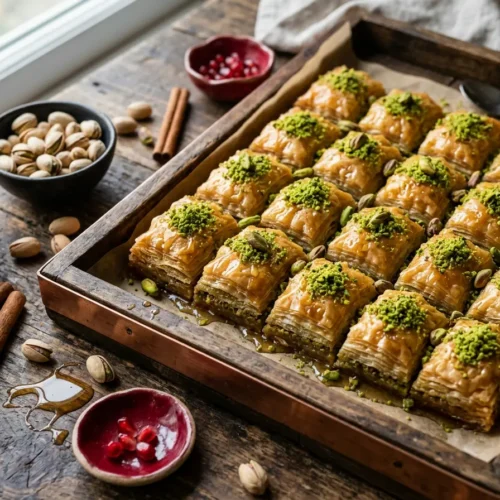
Easy Homemade Baklava
Equipment
- 9x13 inch Baking Dish
- Pastry Brush
- Sharp knife
- Food processor
- Small saucepan
- Kitchen towel
Ingredients
- 2 cups mixed nuts walnuts, pistachios, and almonds, finely chopped
- 1 tablespoon ground cinnamon
- 2 tablespoons granulated sugar
- 1 package phyllo pastry 16 oz, thawed if frozen, regular or gluten-free
- 1 cup unsalted butter melted, or ghee for richer flavor
- 1 cup organic honey or maple syrup for refined sugar-free option
- 1/2 cup water
- 1/4 cup granulated sugar
- 1 teaspoon pure vanilla extract
- 1 tablespoon fresh lemon juice
Instructions
- Preheat oven to 350°F (175°C). Butter the bottom and sides of a 9x13 inch baking dish thoroughly.
- In a food processor, pulse the mixed nuts until finely chopped but not powdered. Mix with cinnamon and sugar in a bowl. Set aside.
- Unroll phyllo pastry and cover with a damp kitchen towel to prevent drying. Work quickly to maintain moisture.
- Place 8 sheets of phyllo in the baking dish, brushing each sheet generously with melted butter before adding the next layer.
- Sprinkle half of the nut mixture evenly over the phyllo base.
- Add 6 more phyllo sheets, brushing each with butter, then add remaining nut mixture.
- Top with remaining phyllo sheets (about 8), brushing each layer with butter. Brush the top layer generously.
- Using a sharp knife, cut through all layers to create diamond or square shapes, making cuts about 2 inches apart.
- Bake for 45-50 minutes until golden brown and crispy on top.
- Meanwhile, make syrup by combining honey, water, sugar, vanilla, and lemon juice in a small saucepan. Bring to a boil, then simmer for 10 minutes until slightly thickened.
- Remove baklava from oven and immediately pour the hot syrup evenly over the hot pastry. You should hear it sizzle.
- Allow to cool completely at room temperature for at least 2 hours before serving to let syrup absorb fully.
Notes
Keep phyllo covered with damp towel at all times when not in use. Work quickly but gently to prevent tearing. If sheets tear, simply patch them together with butter. MAKE-AHEAD:
Baklava can be assembled and frozen unbaked for up to 1 month. Bake directly from frozen, adding 10-15 minutes to baking time. Finished baklava keeps covered at room temperature for up to 1 week. STORAGE:
Store covered at room temperature. Do not refrigerate as this will make the phyllo soggy. Best enjoyed within 3-4 days of making. TROUBLESHOoting:
If phyllo becomes soggy, the syrup was too cool or too much was used. Always use hot syrup on hot baklava. If too sweet, reduce honey by 1/4 cup next time.
Nutrition Highlights (Per Serving – Approximate)
Understanding your food’s composition is key to balanced eating. Here is an approximate nutritional breakdown calculated for a standard serving based on wholesome preparation guidelines:
Culinary Selection Notes
- Adjusting sweetener densities or using refined-sugar alternatives will directly optimize the overall glycemic load without breaking structural balance.
- Focusing on high-quality whole fats maximizes trace micronutrient retention across low-temperature or baking environments.
Conclusion
Encouragement for Home Baking Success
Mastering this baklava recipe opens doors to countless Mediterranean dessert possibilities and builds essential pastry skills. The techniques learned here apply to many other phyllo-based desserts and savory applications.
Don’t be discouraged if your first attempt isn’t perfect – even experienced bakers need practice to achieve consistent results. Each batch teaches valuable lessons about phyllo handling, timing, and flavor balance.
Share your homemade baklava with family and friends to appreciate the difference between store-bought versions and authentic, carefully crafted pastry. The satisfaction of creating this complex dessert from scratch makes every step worthwhile. For more delightful homemade desserts, check out our apple cinnamon cake recipe that pairs beautifully with coffee or tea.