Chia Pudding Secrets: Easy, Foolproof Recipe for Perfect Texture
Learn how to make perfect chia pudding with our easy, foolproof recipe for creamy texture in just a few simple steps. Get the recipe today.
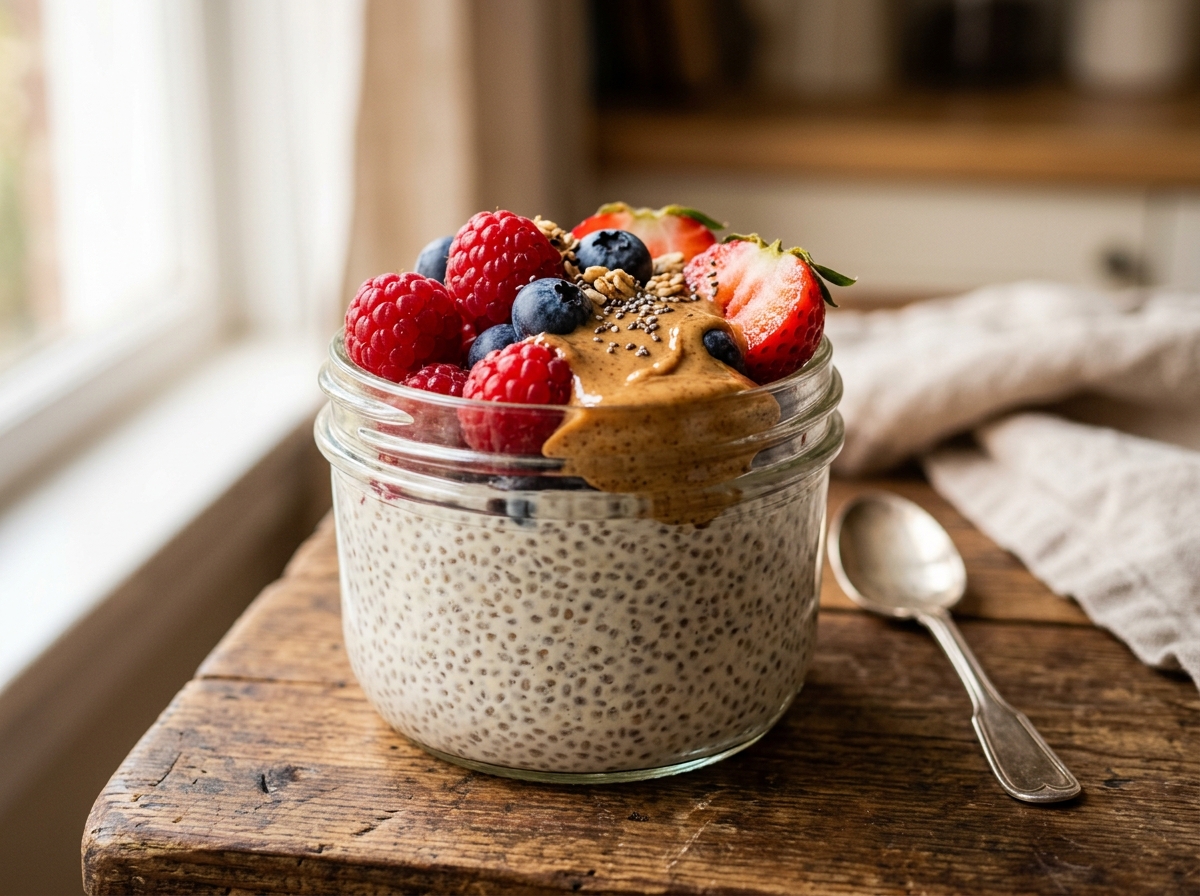
Creating the perfect chia pudding transforms these tiny superseeds into a creamy, satisfying treat that rivals traditional desserts. This nutritious powerhouse delivers complete protein, omega-3 fatty acids, and fiber in every spoonful.
The magic happens when chia seeds absorb liquid and develop their signature gel-like texture. Within hours, you’ll have a pudding-like consistency that’s naturally gluten-free, vegan-friendly, and endlessly customizable.
Introduction to Chia Pudding
What is Chia Pudding?
Chia pudding represents a simple yet ingenious way to transform nutrient-dense seeds into a creamy dessert or breakfast. The process relies on chia seeds’ natural ability to absorb up to 12 times their weight in liquid.
When combined with milk or plant-based alternatives, chia seeds develop a tapioca-like texture. This transformation occurs through the seeds’ mucilaginous coating, which creates the signature gel consistency that makes healthy chia pudding so satisfying.
Unlike traditional puddings that require cooking or gelatin, overnight chia pudding develops its texture through simple hydration. This makes it an ideal make-ahead breakfast or snack for busy schedules.
Health Benefits of Chia Seeds
Chia seeds pack an impressive nutritional profile into their tiny size. These ancient seeds provide complete protein containing all nine essential amino acids.
The omega-3 fatty acid content in chia seeds surpasses many fish sources, making them excellent for heart and brain health. Additionally, their high fiber content supports digestive wellness and helps maintain stable blood sugar levels.
Key nutritional benefits include calcium for bone health, antioxidants for cellular protection, and magnesium for muscle function. This makes vegan chia pudding particularly valuable for plant-based diets seeking complete nutrition.
Ingredients and Equipment
Essential Ingredients for Chia Pudding
The foundation of any excellent chia pudding starts with high-quality chia seeds. Look for organic, whole seeds that appear plump and uniform in size for the best texture development.
Liquid choices significantly impact both flavor and nutritional content. Whole milk creates the creamiest texture, while coconut milk adds richness and tropical notes.
Plant-based alternatives like almond, oat, or cashew milk work beautifully for dairy-free versions. Each brings unique flavor characteristics and varying protein content to your easy chia pudding creation.
Recommended Equipment and Containers for Preparation and Storage
Proper equipment ensures smooth preparation and optimal texture development. A fine-mesh whisk helps distribute seeds evenly and prevents initial clumping during mixing.
Glass mason jars make ideal preparation and storage containers, allowing you to mix, refrigerate, and serve in the same vessel. Their clear sides let you monitor texture development and seed distribution.
For meal prep enthusiasts, consider investing in portion-controlled containers with tight-fitting lids. This approach streamlines your weekly preparation routine and maintains freshness for multiple servings.
How to Make Chia Pudding
Step-by-Step Instructions
Success with chia pudding depends on proper technique rather than complex procedures. Begin by combining your liquid base with sweeteners and flavorings before adding the seeds.
This sequence ensures even flavor distribution and prevents seeds from clumping around concentrated sweetener areas. Stir thoroughly for at least 30 seconds to activate the gel formation process.
Allow the mixture to rest for 5 minutes, then stir again vigorously to break up any seed clusters. Refrigerate for at least 2 hours, though overnight development produces the smoothest texture.
The Perfect Chia Pudding Ratio Explained
The ideal chia pudding ratio balances seed concentration with desired thickness. A standard ratio of 1/4 cup chia seeds to 1 cup liquid creates a pudding-like consistency that’s neither too thick nor too thin.
For thicker results, increase the seed ratio to 1/3 cup per cup of liquid. Conversely, those preferring a lighter texture can reduce to 3 tablespoons of seeds per cup.
Temperature affects absorption rates, with room-temperature liquids hydrating seeds faster than cold ingredients. This knowledge helps you adjust timing for optimal texture development.
Mixing Techniques to Prevent Clumping
Preventing seed clumps requires strategic mixing at specific intervals. Start with a thorough initial mix, ensuring seeds are completely distributed throughout the liquid.
Return after 10 minutes for a second vigorous stirring session. This breaks up gel pockets that form around seed clusters and promotes even hydration.
The third and final stir occurs after 30 minutes, addressing any remaining clumps before the overnight setting period. This technique ensures uniformly smooth vanilla chia pudding every time.
Flavor Variations
Classic Vanilla Chia Pudding
Vanilla serves as the perfect introduction to homemade chia pudding, offering familiar comfort while showcasing the seeds’ natural texture. Pure vanilla bean paste provides deeper flavor than standard extracts.
The natural sweetness of dates or maple syrup complements vanilla’s warm notes beautifully. These whole-food sweeteners blend seamlessly and add complexity beyond simple sugar.
Consider layering vanilla pudding with fresh berries or green smoothie bowl toppings for visual appeal and nutritional variety.
Chocolate Chia Pudding Recipe
Chocolate chia pudding transforms this healthy treat into an indulgent-tasting dessert that satisfies cocoa cravings. High-quality unsweetened cocoa powder provides rich flavor without added sugars.
The key to exceptional chocolate chia pudding recipe success lies in balancing cocoa’s natural bitterness with complementary sweeteners. Natural options like banana purée or coconut nectar enhance chocolate notes while adding nutritional value.
Dark cocoa powder creates more intense flavor profiles, while lighter versions offer milder chocolate notes. Experiment with different cocoa types to discover your preferred intensity level.
Seasonal and Fruit-Infused Variations
Seasonal ingredients keep chia pudding exciting throughout the year. Spring brings fresh strawberry purée and lemon zest combinations that brighten the base flavors.
Summer variations shine with tropical fruits like mango, pineapple, and coconut. These naturally sweet additions often eliminate the need for additional sweeteners.
Fall and winter call for warming spices like cinnamon, nutmeg, and ginger. Pumpkin purée and apple compote create comforting seasonal flavors that pair beautifully with the pudding’s creamy texture.
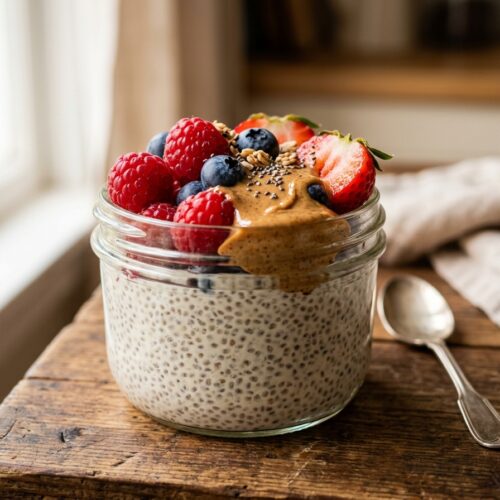
Perfect Chia Pudding
Equipment
- Medium Mixing Bowl
- Whisk or fork
- Glass jars or serving cups
- Fine mesh strainer
Ingredients
- 1/4 cup Chia seeds white or black, organic preferred
- 1 cup Unsweetened almond milk or coconut milk, oat milk, or dairy milk
- 2 tablespoons Pure maple syrup or 3-4 pitted dates, 1 tsp stevia, or 2 tbsp honey
- 1/2 teaspoon Pure vanilla extract or vanilla bean paste
- 1 pinch Sea salt enhances flavor
- 1/2 cup Fresh berries strawberries, blueberries, or raspberries
- 2 tablespoons Almond butter or peanut butter for swirling
- 1/4 cup Homemade granola or toasted nuts and seeds
- 1 tablespoon Unsweetened cocoa powder for chocolate variation
- 1 tablespoon Shredded coconut toasted or untoasted
Instructions
- In a medium mixing bowl, whisk together the milk, maple syrup, vanilla extract, and sea salt until well combined. This creates the liquid base that will properly hydrate the chia seeds.
- Add chia seeds to the liquid mixture and whisk vigorously for 30 seconds to prevent clumping. The key is to stir immediately and thoroughly to separate each seed.
- Let the mixture sit for 2 minutes, then whisk again for 15 seconds to break up any clusters that may have formed. This second mixing is crucial for smooth texture.
- Cover the bowl and refrigerate for at least 4 hours or overnight. For best results, stir once more after the first hour of chilling to ensure even gel formation.
- Before serving, give the pudding a final stir to achieve uniform consistency. If too thick, thin with additional milk 1 tablespoon at a time until desired consistency is reached.
- Divide between serving jars or bowls. Add desired toppings such as fresh fruit, nut butter swirls, granola, or a sprinkle of cocoa powder for variety.
Notes
The golden ratio is 1:4 (1/4 cup chia seeds to 1 cup liquid). Using less liquid creates thick pudding; more liquid yields a drink-like consistency. TEXTURE TROUBLESHOOTING:
Clumpy pudding means insufficient initial mixing. Always whisk immediately and vigorously when adding seeds. Thin pudding indicates too much liquid or insufficient chilling time. SWEETENER SUBSTITUTIONS:
For dates: blend 3-4 pitted Medjool dates with the milk first, then strain. For stevia: start with 1/2 teaspoon and adjust to taste. Liquid sweeteners work best for even distribution. STORAGE:
Refrigerate covered for up to 5 days. Pudding thickens over time, so thin with milk as needed. Do not freeze as texture becomes grainy when thawed. MILK COMPARISONS:
Coconut milk creates the richest texture, almond milk offers neutral flavor, oat milk provides natural creaminess, and dairy milk yields traditional pudding consistency.
Nutrition Highlights (Per Serving – Approximate)
Understanding your food’s composition is key to balanced eating. Here is an approximate nutritional breakdown calculated for a standard serving based on wholesome preparation guidelines:
Culinary Selection Notes
- Adjusting sweetener densities or using refined-sugar alternatives will directly optimize the overall glycemic load without breaking structural balance.
- Focusing on high-quality whole fats maximizes trace micronutrient retention across low-temperature or baking environments.
Storage Tips and Meal Prep
Best Containers for Storing Chia Pudding
Proper storage containers maintain texture quality and prevent flavor transfer during refrigeration. Glass containers with airtight seals preserve freshness while allowing easy texture monitoring.
Individual portion jars streamline morning routines and prevent cross-contamination between flavors. Mason jars work particularly well, offering durability and stackable convenience for meal prep sessions.
Avoid plastic containers for extended storage, as they can absorb flavors and affect taste quality over time. Chia pudding storage benefits from materials that maintain neutral environments.
How Long Does Chia Pudding Last?
Properly stored chia pudding maintains peak quality for up to 5 days in refrigerated conditions. The natural gel formation actually helps preserve freshness by creating a protective barrier around ingredients.
Signs of spoilage include off odors, unusual color changes, or separation that doesn’t resolve with stirring. Fresh fruit toppings should be added just before serving to prevent moisture-related texture changes.
For optimal meal prep efficiency, prepare base puddings in larger batches and divide into individual containers. This approach maximizes freshness while minimizing daily preparation time.
Troubleshooting Common Issues
Fixing Texture Problems
Texture issues typically stem from incorrect ratios or insufficient hydration time. Too-thin consistency indicates either insufficient seeds or premature serving before full gel development.
Overly thick results suggest excessive seed ratios or liquid evaporation during storage. Adding small amounts of liquid and mixing gently can restore proper consistency without starting over.
Grainy textures often result from inadequate mixing or poor-quality seeds. Ensure thorough initial mixing and consider blending the final product briefly for ultra-smooth chia pudding texture tips.
Nutritional Information Breakdown
Understanding nutritional variations helps customize recipes for specific dietary goals. Liquid choices significantly impact calorie density and macronutrient profiles of your final product.
Whole milk versions provide higher protein and calcium content, while plant-based alternatives often reduce calories but may require protein supplementation. Coconut milk increases healthy fats but also raises calorie density.
Sweetener selections affect both glycemic impact and overall nutritional value. Natural options like dates contribute fiber and minerals, while artificial sweeteners reduce calorie content without adding nutrients.
Frequently Asked Questions (FAQ)
Can I make chia pudding without refrigeration?
While refrigeration produces optimal texture, chia seeds will gel at room temperature within 2-3 hours. However, food safety requires refrigeration for storage beyond immediate consumption.
Why is my chia pudding watery after overnight setting?
Watery results typically indicate insufficient seed ratios or poor-quality seeds with reduced gel-forming ability. Try increasing seed quantity by 1-2 tablespoons per cup of liquid.
Can I freeze prepared chia pudding?
Freezing changes the texture significantly, creating a less creamy consistency upon thawing. For best results, prepare fresh batches rather than freezing prepared pudding.
What’s the difference between black and white chia seeds?
Nutritionally, black and white chia seeds are virtually identical. White seeds offer a more neutral appearance in light-colored puddings, while black seeds provide visual contrast in chocolate varieties.
How can I make my pudding sweeter without adding sugar?
Natural sweetness comes from pureed fruits like bananas, dates, or berries. These options add sweetness plus additional nutrients, fiber, and flavor complexity to your creations.
For additional healthy breakfast inspiration, explore our semifreddo or classic banana pudding recipe for more nutritious dessert alternatives.